
Green Heart of Kauai: Waterfalls, Canyons and an Unexpected Guide
Kauaʻi has a way of changing your plans.
Away from the coast.
Toward the mountains.
Toward the impossibly green center of the island, where clouds cling to the cliffs, rain drifts through the valleys, and waterfalls seem to appear out of nowhere. Some spill beside the road, unexpected. Others wait deep inside the rainforest, beyond muddy trails and river crossings.
At first, we thought we’d just chase a few waterfalls between beach days.
We had no idea the island was about to pull us into something much bigger.
Waterfalls Without Breaking a Sweat
Not every waterfall on Kauai requires a machete and a will to survive.
Some you can photograph from the car window.
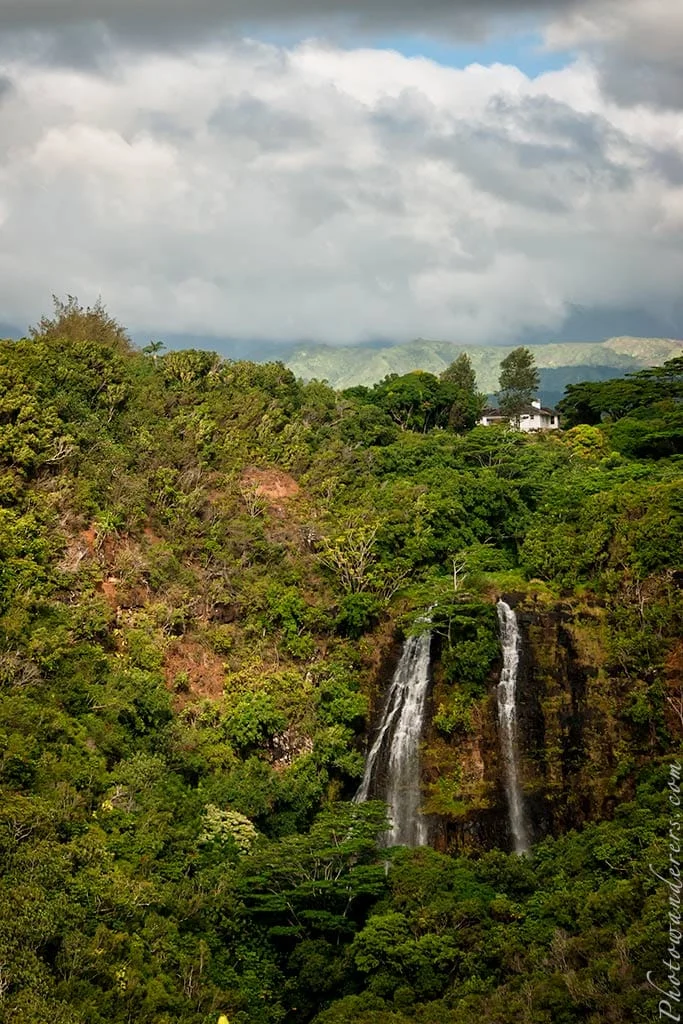
Opaekaa Falls sits right off the road — pull over, look left, there it is. Twin streams dropping through dense green into the valley below. Opaekaa means shrimp in Hawaiian. The stream below once ran thick with them.
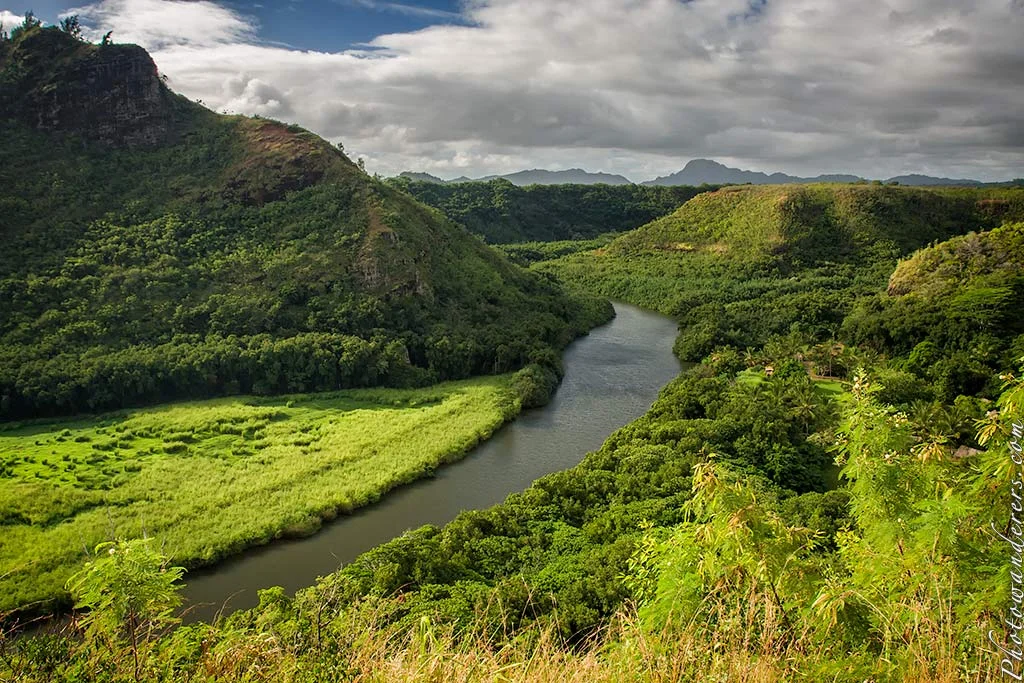
Across the road, the Wailua River winds through the valley like it has nowhere particular to be.
A few minutes further — Wailua Falls.
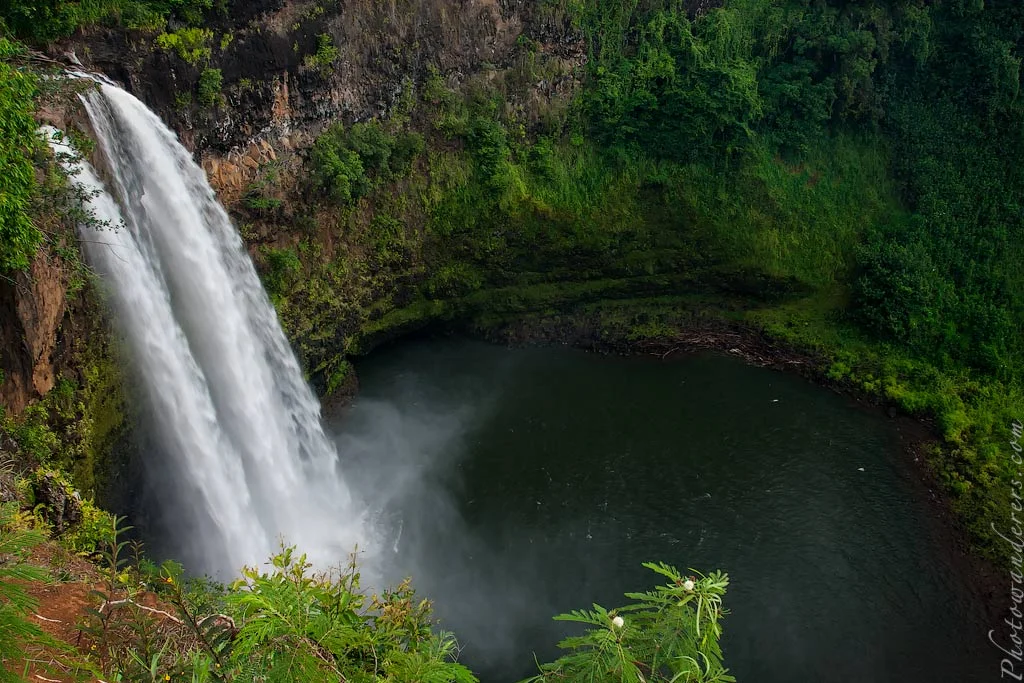
One powerful curtain of water dropping 26 meters into a dark pool below. Hawaiian legend says this was where men proved their courage — jumping from the top into that pool. Some of them didn't make it.
Standing at the edge looking down, that doesn't surprise you at all.
Into Jurassic Park
The road to Waialeale crater starts easily enough. Dirt and red, but smooth. Nothing that warns you of what's coming.
Then it crosses a stream.
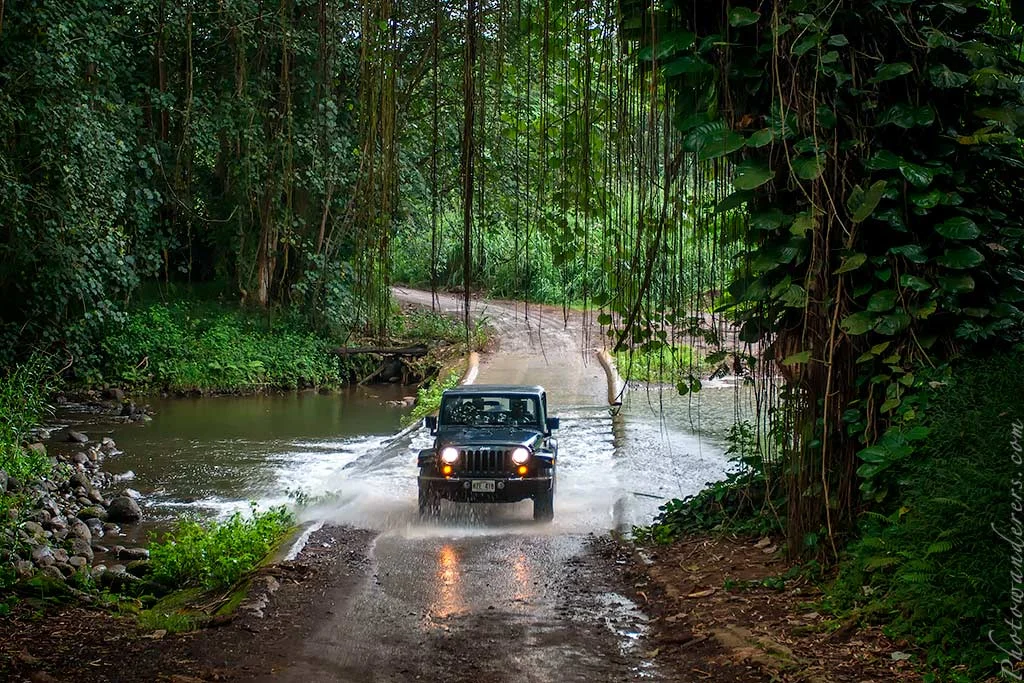
We stopped to check the depth. Beside the water, a couple from New Jersey stood next to their Prius, looking at the crossing the way you look at a problem with no obvious solution.
We had a Suzuki Samurai. We offered them a ride.
They left the Prius on the bank and climbed in.
A few bumpy miles later, the road ended at a gate.
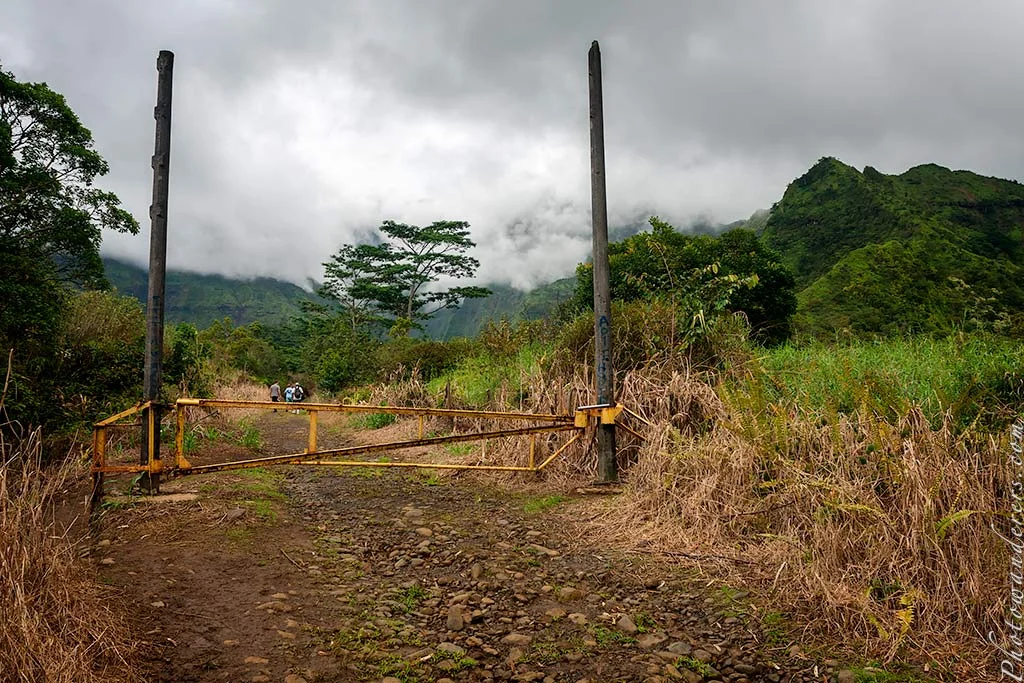
Two tall wooden posts. A yellow bar across the road. Beyond it — the mountains, the clouds, the beginning of something that felt genuinely wild.
The gate was built by a film crew. The first Jurassic Park was shot here. The crew left. The gate stayed. Beyond it, only on foot.
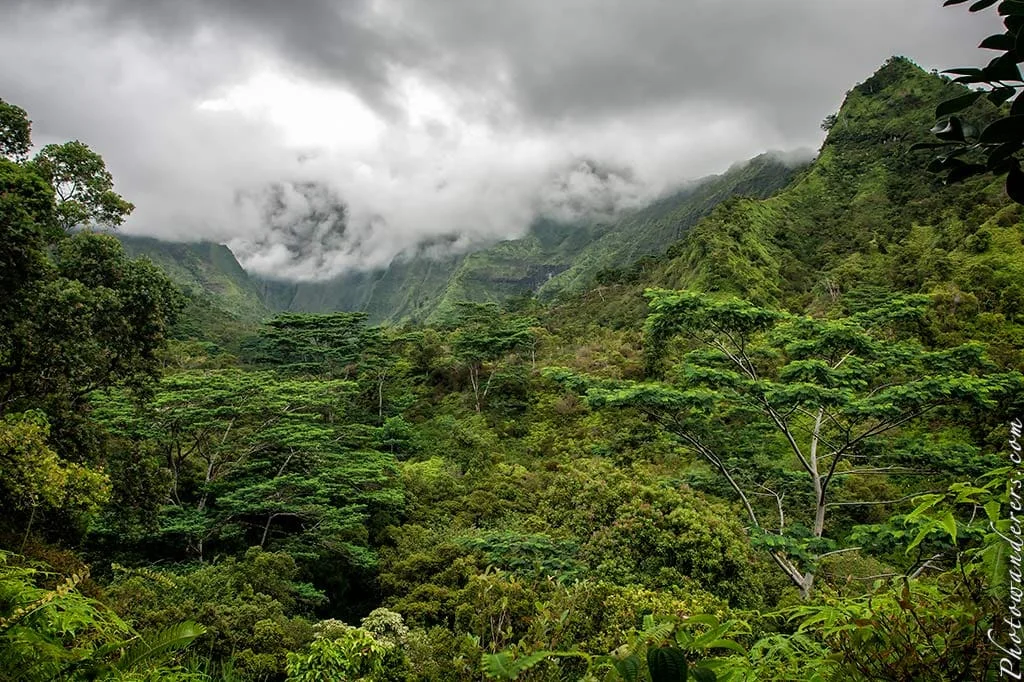
Beyond the gate, the trail pushed deeper into the rainforest. The air was thick with moisture — not rain exactly, just water everywhere, hanging in the air, soaking into everything. The camera went into the bag. We followed the Wailua River, crossing from bank to bank, stepping between boulders, pushing through vegetation so dense it was impossible to tell where one plant ended and another began.
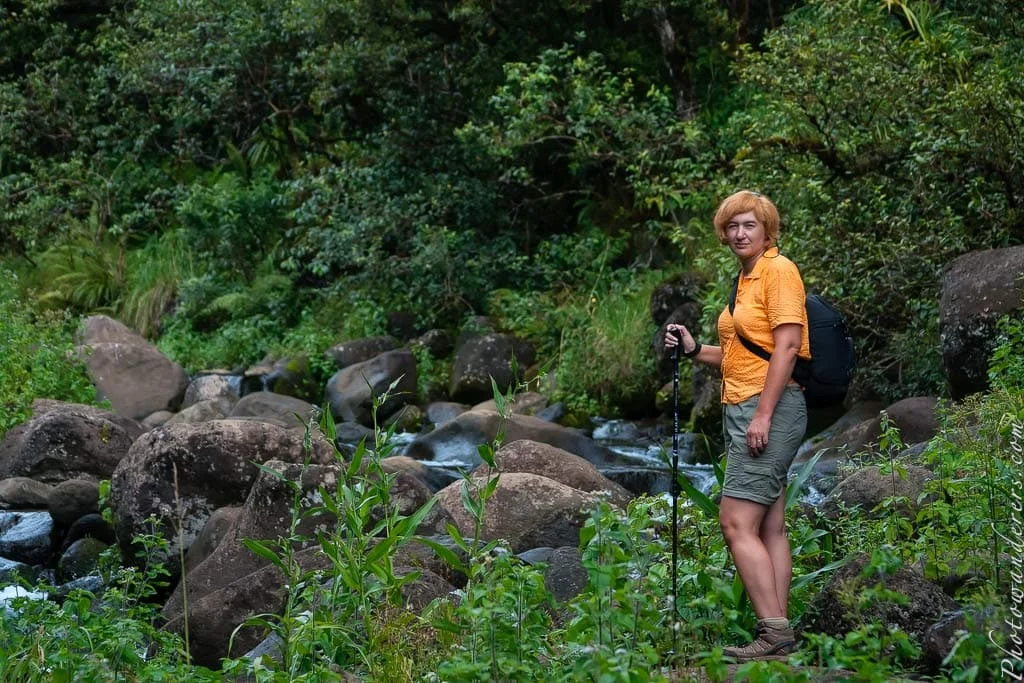
Then we hit the wall.
Three meters of vertical rock, slippery and dark, stretching in both directions as far as we could see. The men tried to climb it. The women searched for a way around — but the trees pressed right up against the rock on both sides, no gap, no passage. The wall went on and on.
We had known about the wall before we came. I had read about it. I wanted to see if it was really as impassable as people said.
It was.
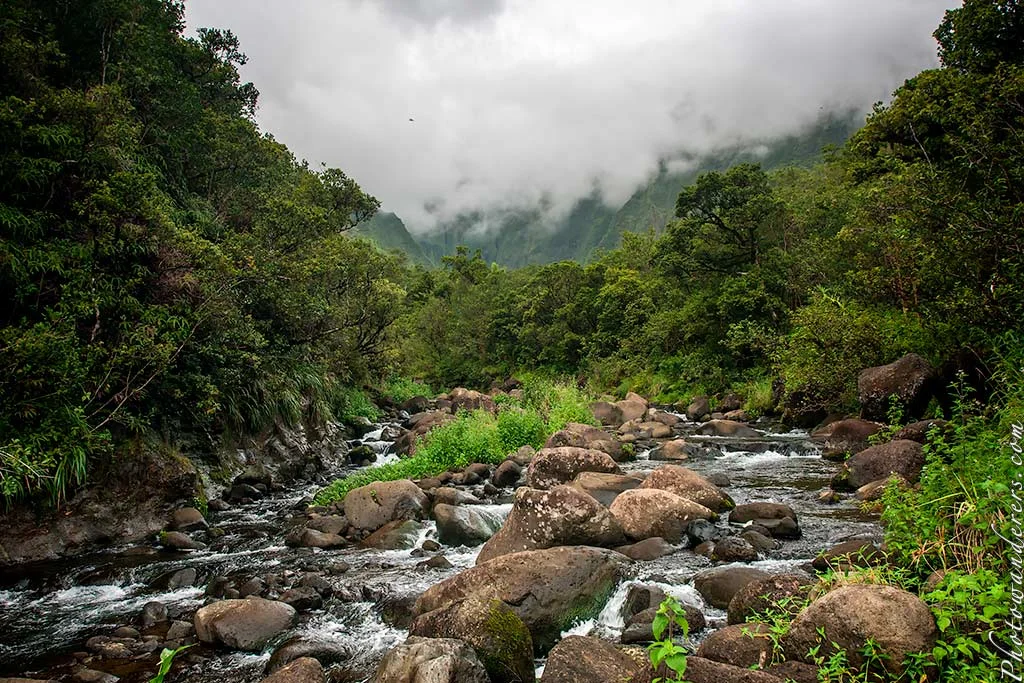
We turned back to the river opening. And there, far in the distance — the Weeping Wall. Dozens of thin waterfalls streaming down the green walls of the crater, visible only through a telephoto lens. Close enough to see. Too far to touch.
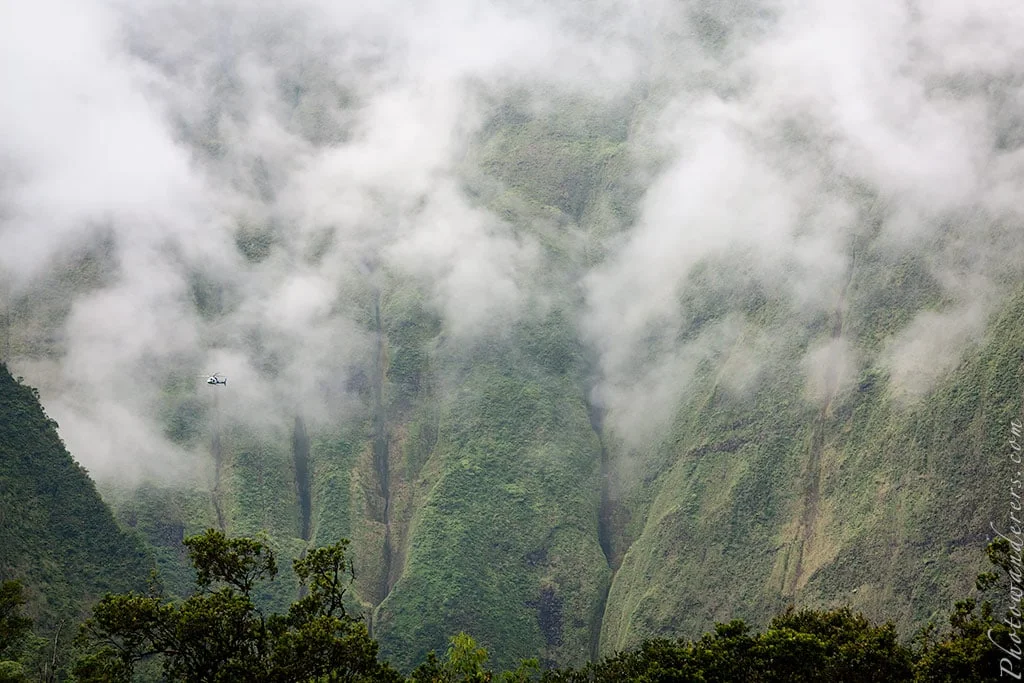
That tiny dot in the frame? A helicopter.
On the way back the Hawaiian spirits sent rain. It didn't matter. We were already soaked.
Walking Into Clouds
Alakai Swamp doesn't sound like something you'd find in Hawaii.
A high-altitude swamp. Moss forests. Wooden boardwalks disappearing into fog. The highest swamp on Earth — over 4,000 feet above sea level, in the middle of a tropical island.
Nothing about it makes immediate sense. That's what makes it extraordinary.
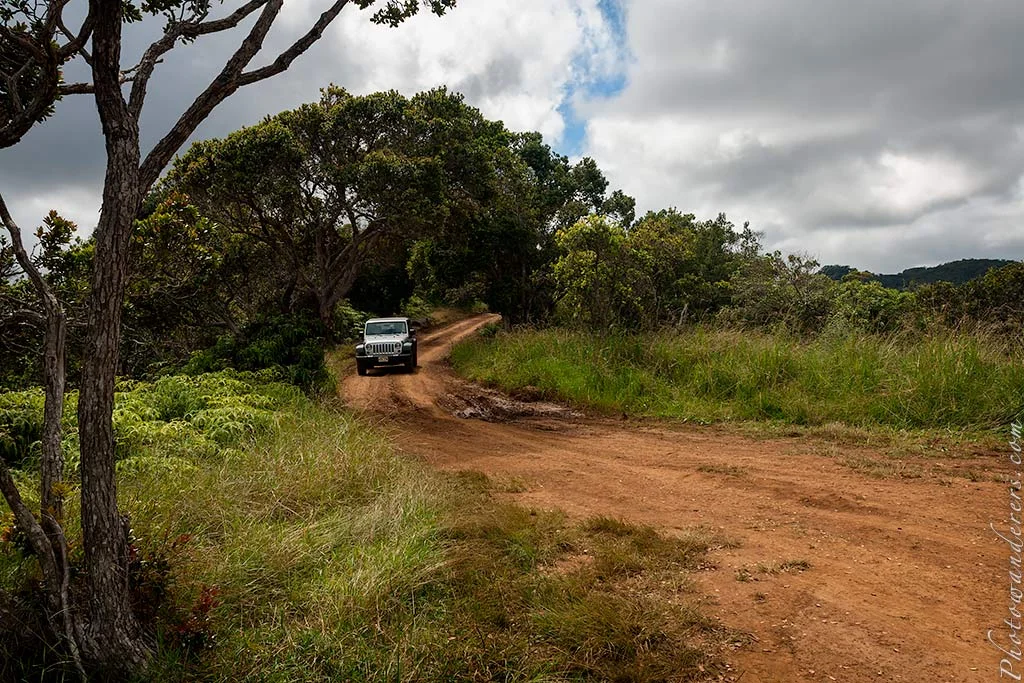
The trail starts on a red dirt road through scattered trees. Then the forest takes over — dim and dripping, every surface thick with moss. The boardwalk begins here, narrow wooden planks carrying you over ground too wet and soft to walk on directly.
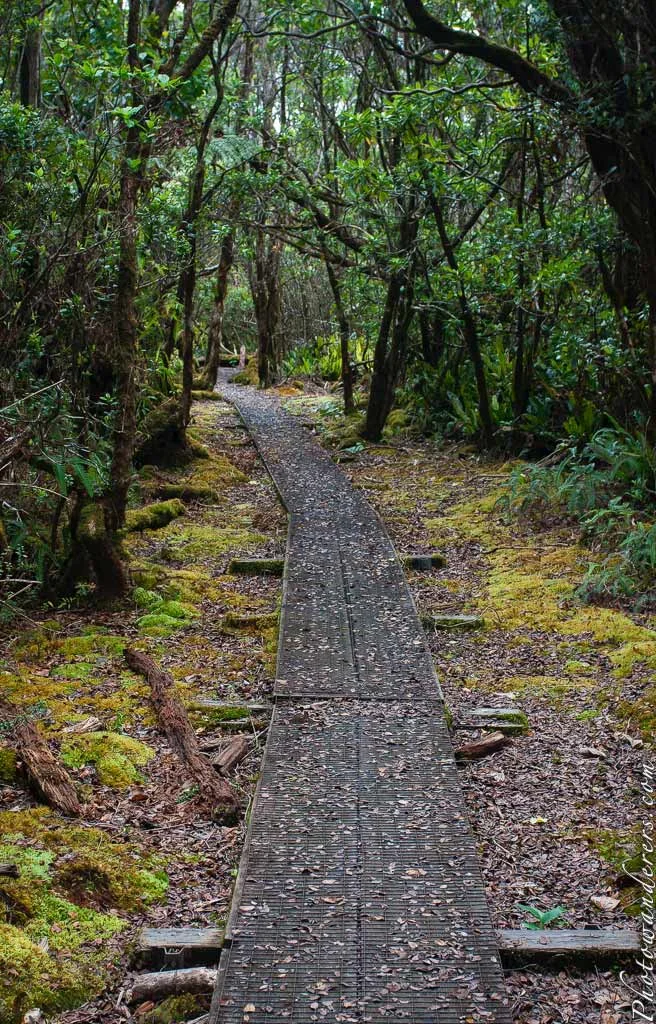
The path moves constantly up and down, never flat for long. Natural rock steps appear where the trail gets steep. It's peaceful in a way that requires effort to reach — quiet, green, completely unhurried.
Then the forest opens and the swamp begins.
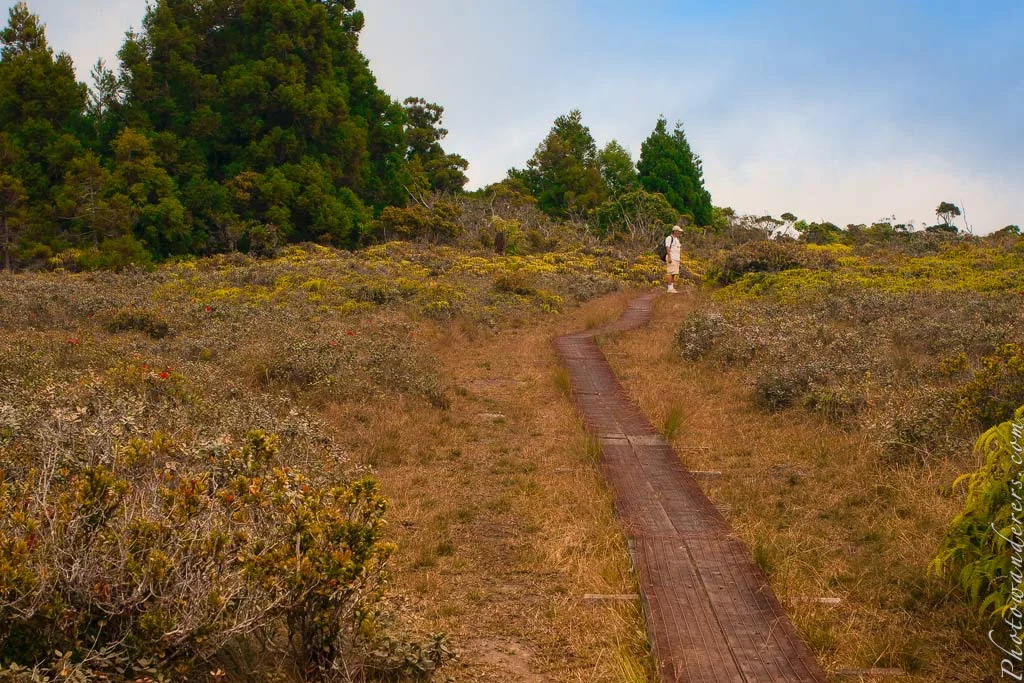
No trees here. Just low scrubby bushes, open sky, and the boardwalk continuing ahead. Step off the planks and you sink immediately — the highest swamp on Earth doesn't care how carefully you step.
3.5 miles one way. Four hours of climbing. 1,410 feet of elevation gain.
We arrived at Kilohana Lookout and found a white wall.
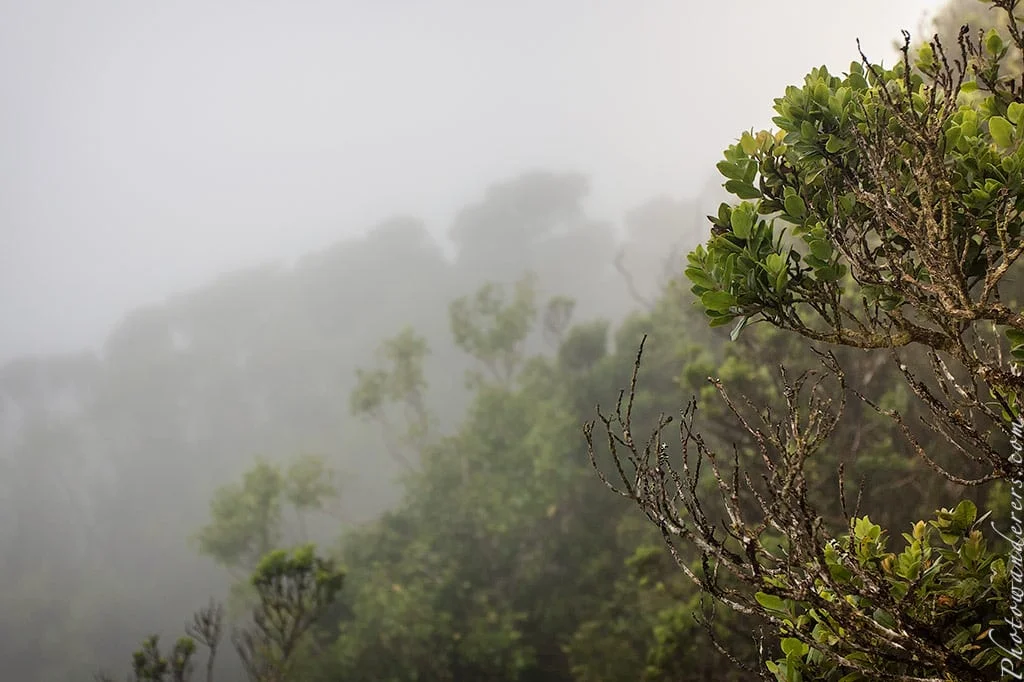
Just clouds. Thick, complete, going nowhere. The view of Hanalei Bay — the whole reason for the climb — completely swallowed. We sat and waited. The clouds sat with us. Then it started to rain.
On the way back the fog thickened. The boardwalk disappeared into white ahead of us. The swamp was silent except for our footsteps on the planks.
Then something moved in the fog.
Shapes. Low, fast, silent. Coming toward us.
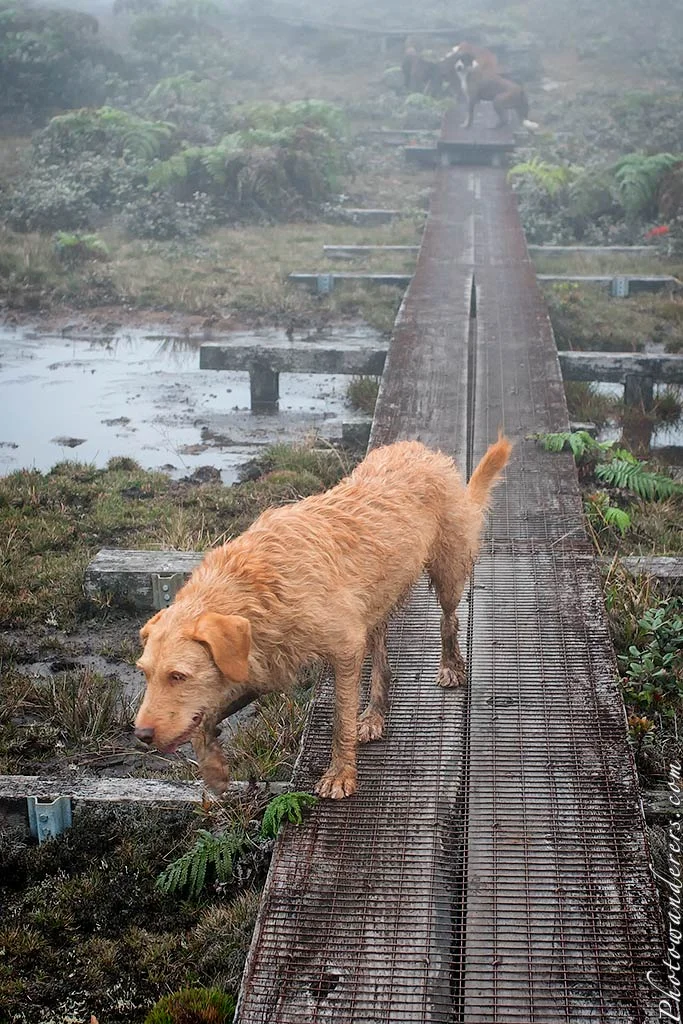
Not one. Not two. Ten, maybe fifteen dogs, materializing out of the white like shadows with wet fur. They flowed around us on the boardwalk and disappeared back into the fog without making a sound.
Behind them, a hunter. High boots, heavy pack, completely at ease in a place where we had been thoroughly lost for four hours.
He told us the dogs were being trained to hunt wild boar. Only bow and crossbow allowed — no firearms in the swamp. We nodded and thought privately how glad we were that nobody had mistaken us for a boar in the fog.
The hunter and his pack disappeared ahead. The fog began to lift a little. We walked in silence, just the two of us again.
Except we weren't alone.
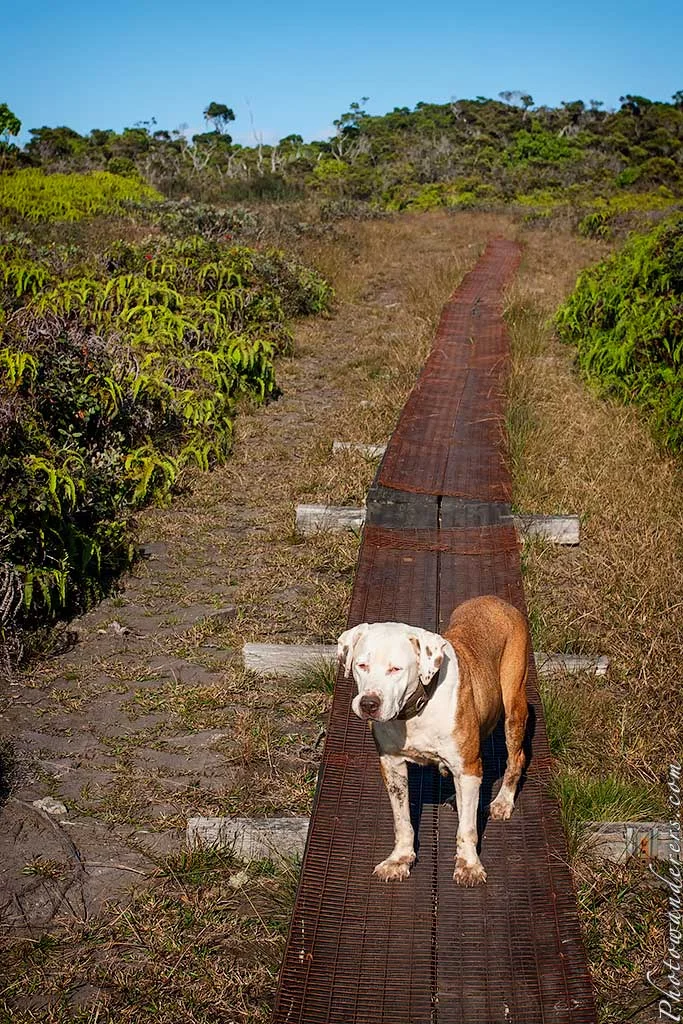
One dog had stayed behind. Walking behind us. Stopping when we stopped. Sitting when we tried to step off the boardwalk — planting itself firmly on the planks, going nowhere, waiting for us to return.
We reached the car. The hunter was already there, leaning against it, smiling.
The dog was the pack leader, he explained. Responsible for keeping everyone together. Making sure nobody got lost.
Apparently, that included us.
Waimea Canyon
They call it the Grand Canyon of the Pacific.
It sounds like tourist brochure language. Then you stand at the edge and understand why nobody bothered to think of a better name.
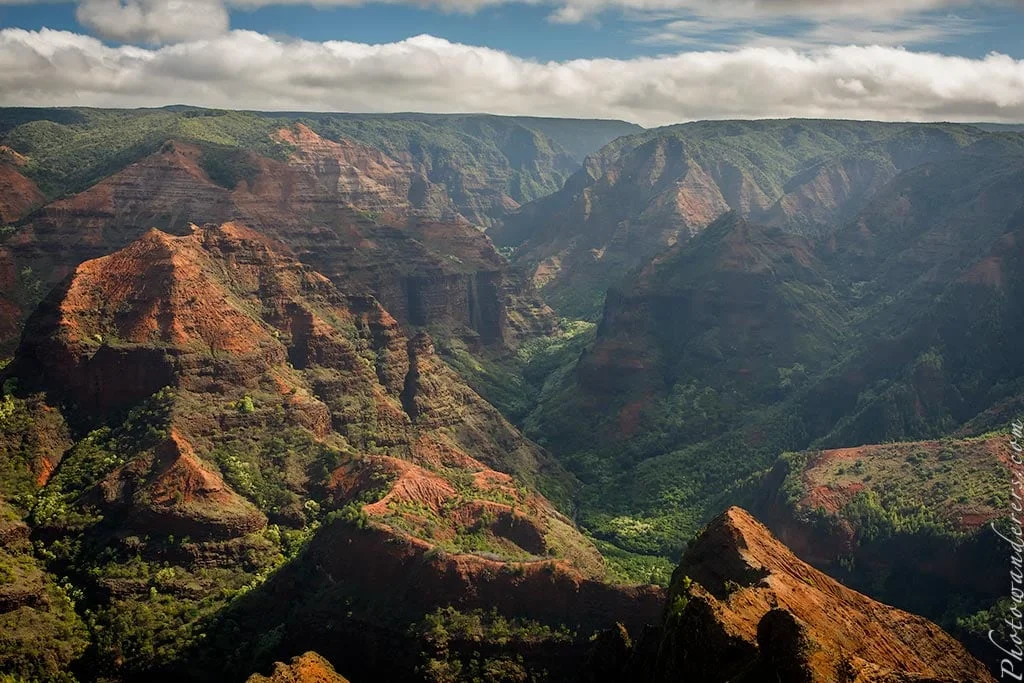
Red. Deep, layered, impossible red. Green pushing through every crack and ledge. A thin silver thread of river far below, still cutting, still going deeper.
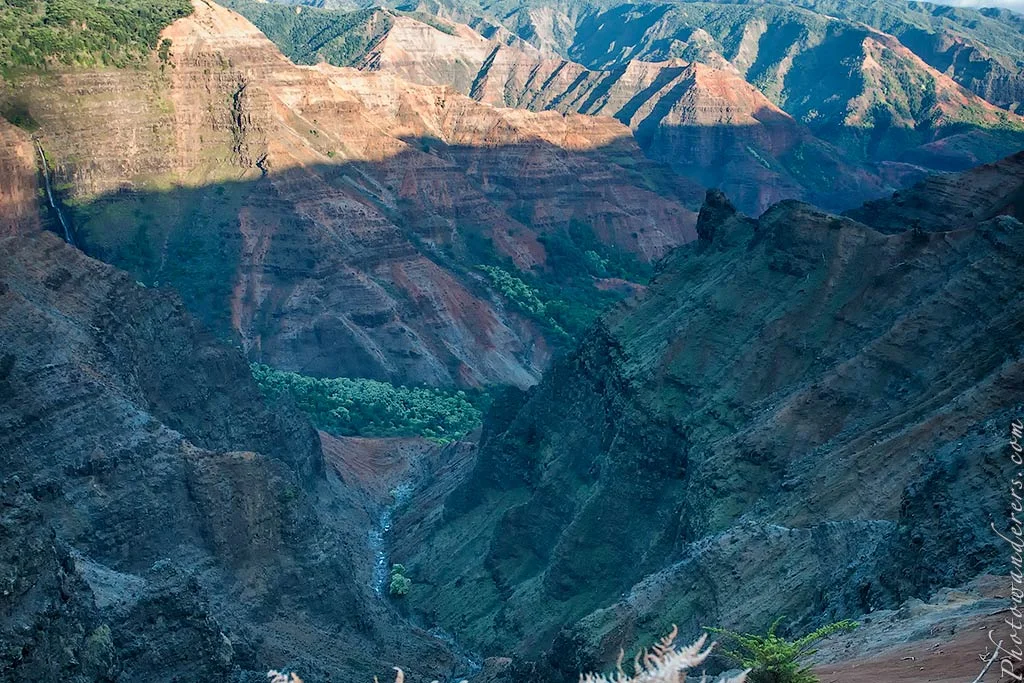
Waimea Canyon is ten miles long and over 3,000 feet deep. A massive earthquake long ago redirected several streams into one river, and that river spent millions of years doing what rivers do — cutting downward, layer by layer, until this appeared
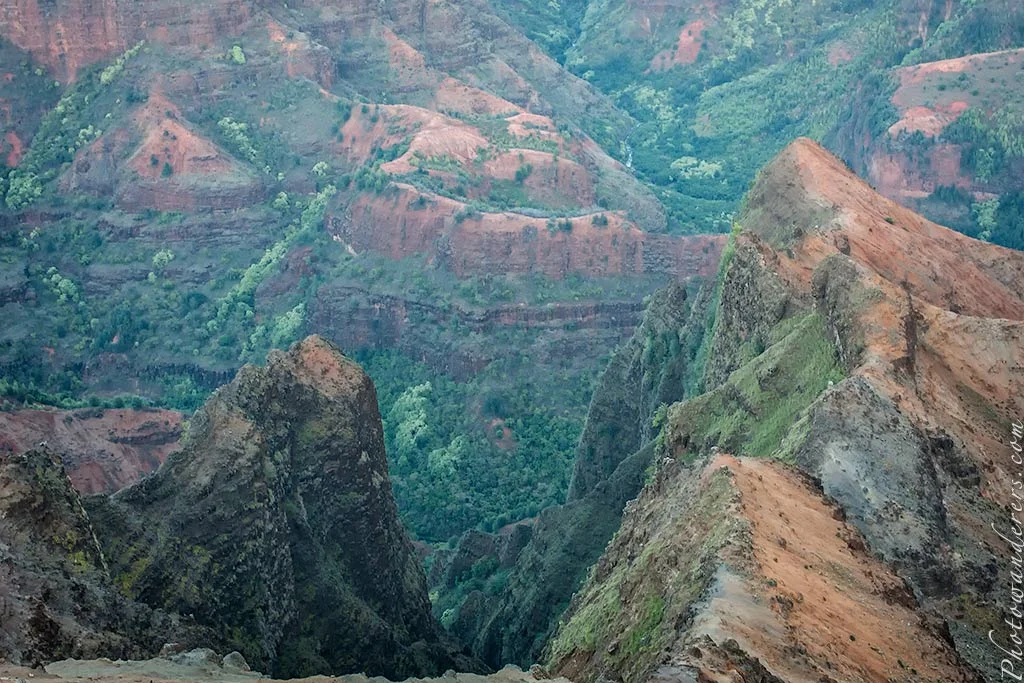
We stopped at one lookout. We could have stayed for hours.
The sun was already low. We headed back.
Then the colors appeared.
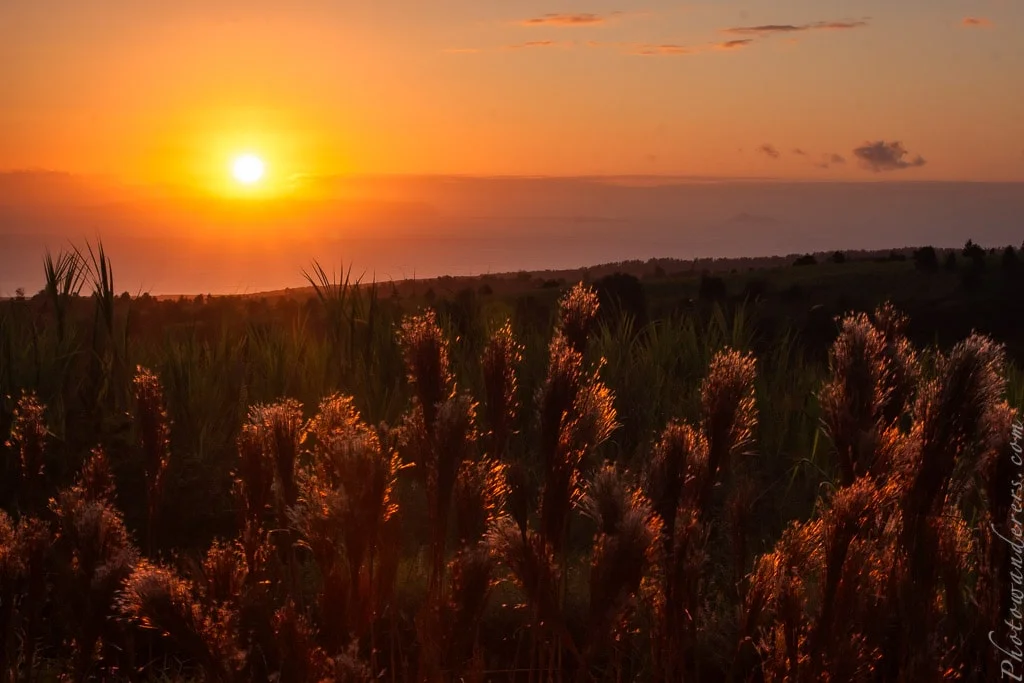
The light turned everything gold, and we stopped the car in the middle of the road. Not carefully pulled over — just stopped. There was no other option. You can't drive past a sky like that.
Then, just before the sun disappeared completely, something appeared on the horizon.
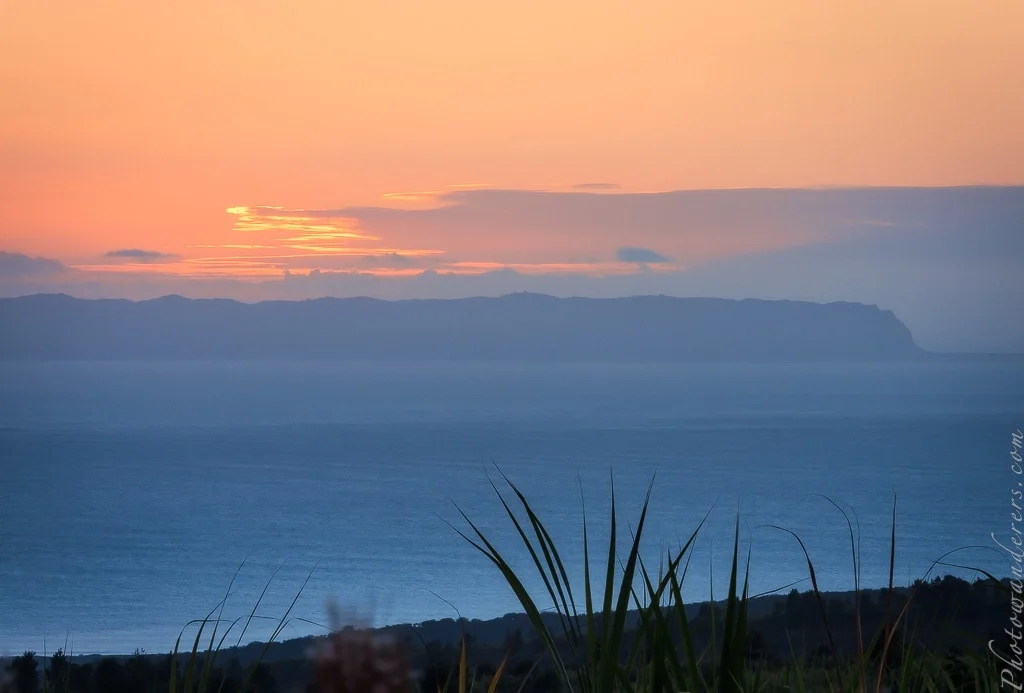
A dark shape. An island. Barely visible, just a silhouette of mountain ridges against the last light.
Niihau. The forbidden island.
For over 150 years it has been privately owned by a single family. No tourists. No visitors unless personally invited. Most Hawaiians have never set foot on it. The only way most people ever see it is exactly like this — a shadow on the horizon at sunset, there and then gone.
We drove home in the dark.
Comments
Leave a comment