
The ceiling glows red. Crimson walls, low light, the faint coolness of climate-controlled air. I walked in and something shifted — the noise of Wilshire Boulevard, the parking lot, the whole sprawl of Los Angeles — it all dropped away.
Three mounted samurai are charging straight at me.
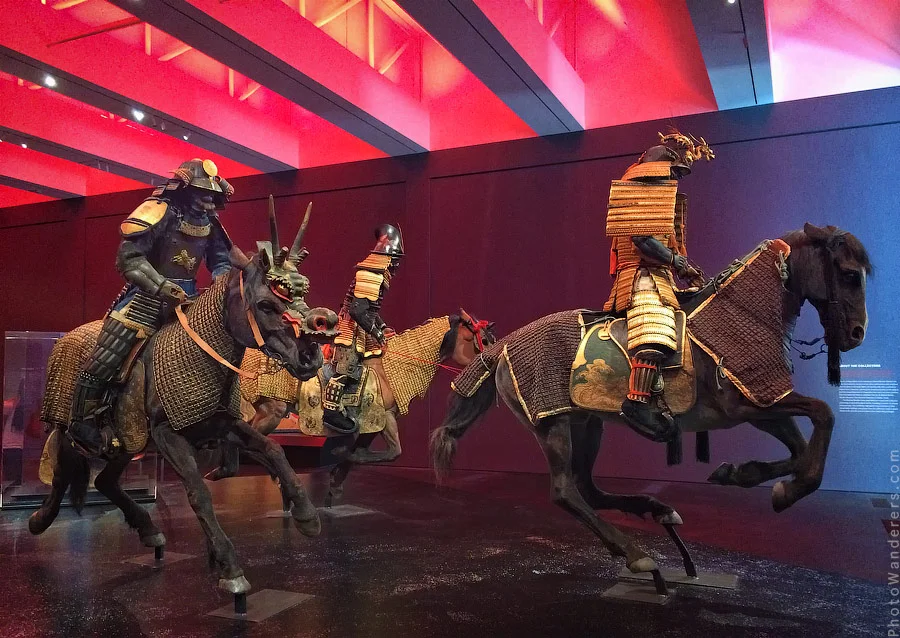
I stopped. Everyone stops. That's what they do to you.
The room is washed in deep red — skylights blacked out, the whole hall sunk in the color of a battlefield at dusk. The hour after the fighting, before the dark. Partly to protect armor too fragile for daylight. Mostly, I suspect, for the effect.
When the Horse Became a Weapon
The first thing I noticed was the scale. A mounted warrior dominates the center of the hall, frozen in motion. Horse and rider seem ready to surge forward at any moment.
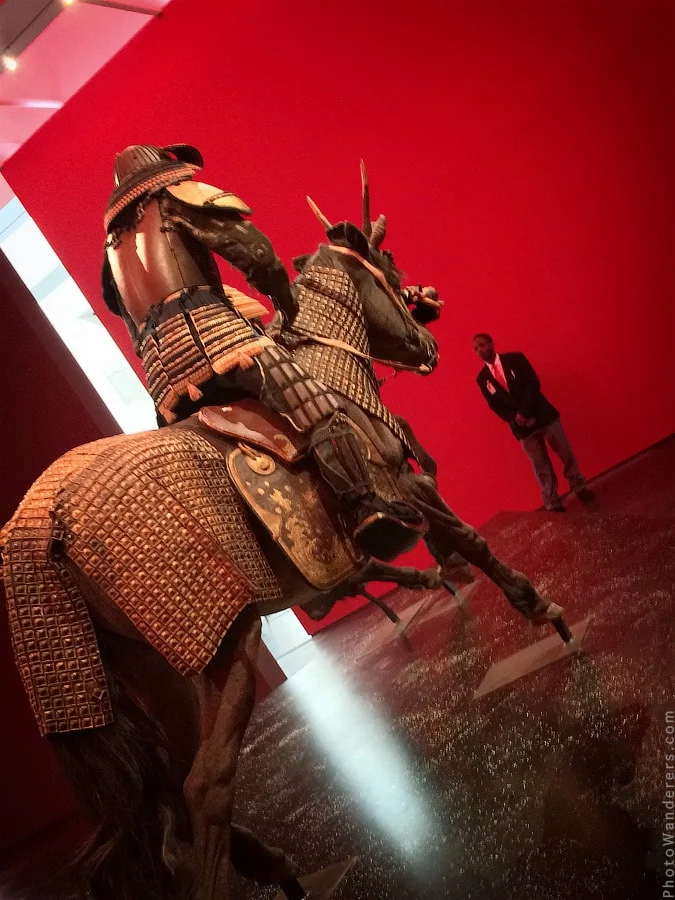
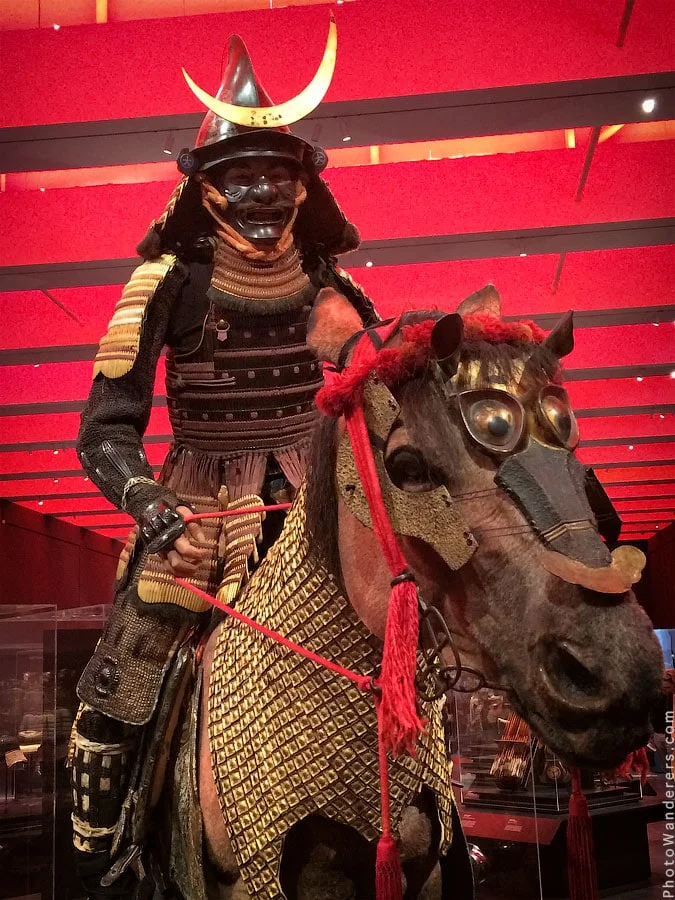
The animal is armored almost as heavily as its rider — lacquered leather and chain from neck to flank, turning it from a means of transport into a weapon of war.
The bamen — a horse mask — sat alone in a nearby case. Lacquered leather. Curving horns. Gilded fangs. Wide, staring eyes. This was strapped to a horse's face.
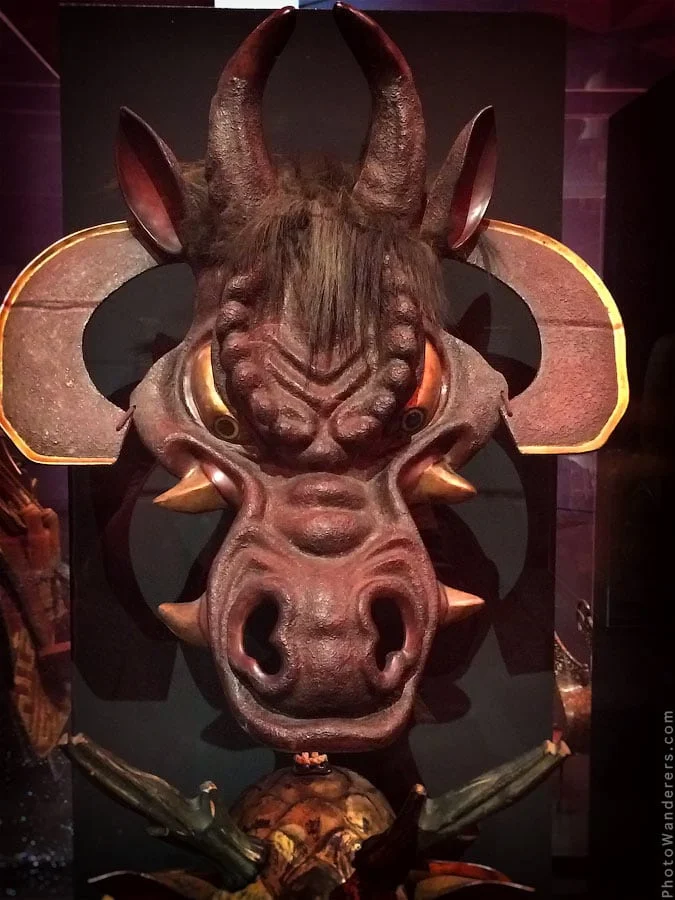
In the confusion of a battlefield — through dust, noise, the pounding of hooves — I could imagine the effect it must have had.
Plate by Plate
Those riders wore the oldest armor in the room.
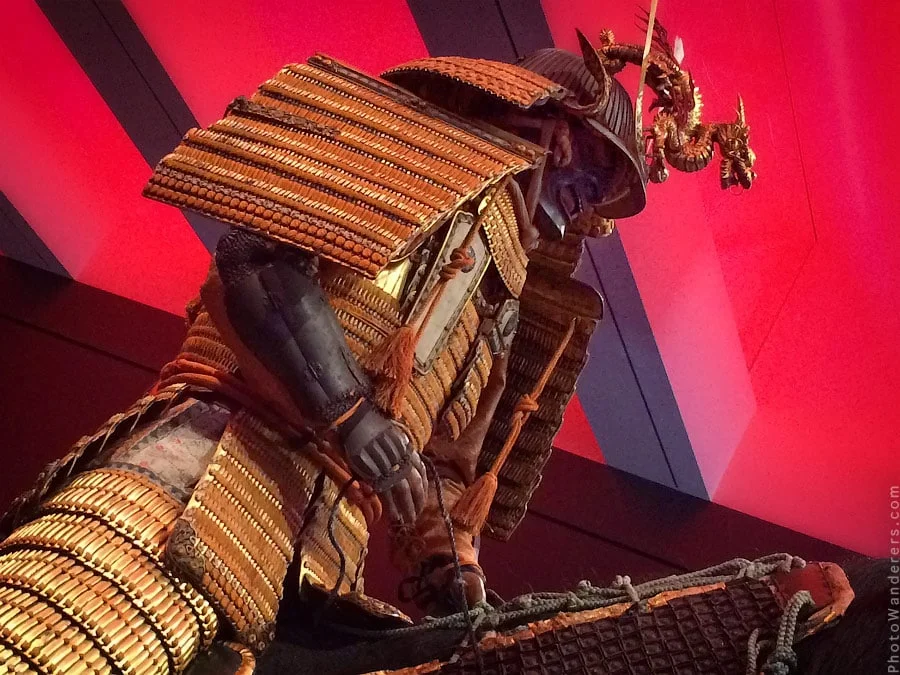
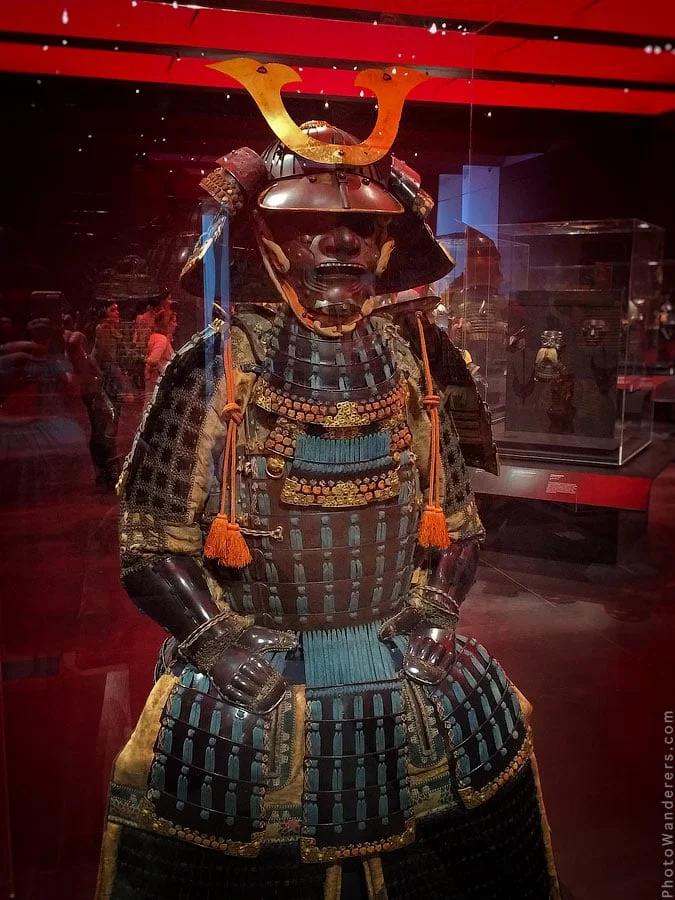
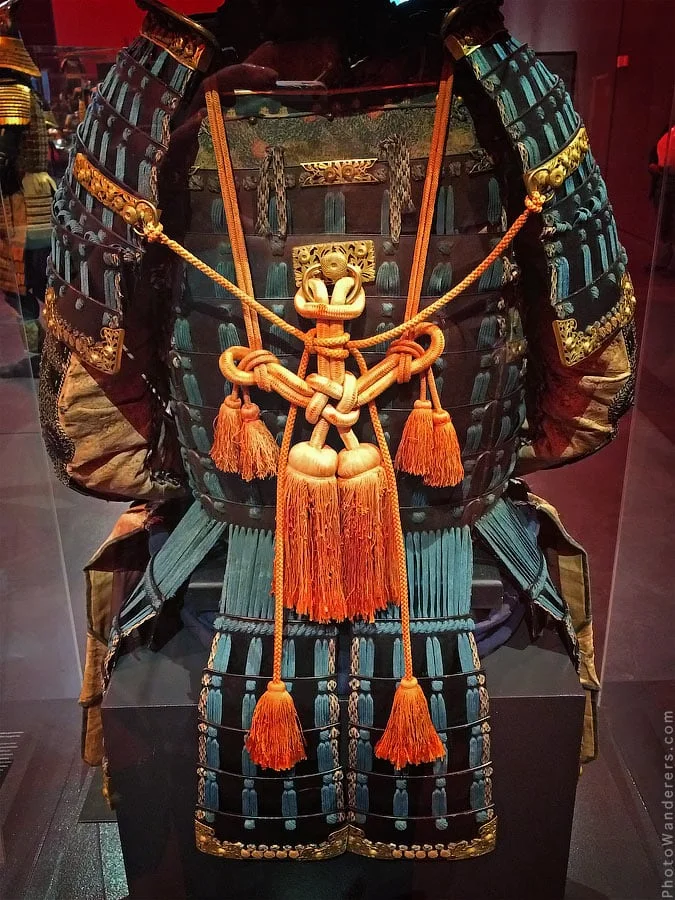
Up close, the tachi-do stopped looking like armor and started looking woven. Hundreds of small iron plates, each one lacquered, each one laced to the next by hand. I stopped thinking about the warrior. I started thinking about whoever sat and tied all of it, plate by plate, for weeks.
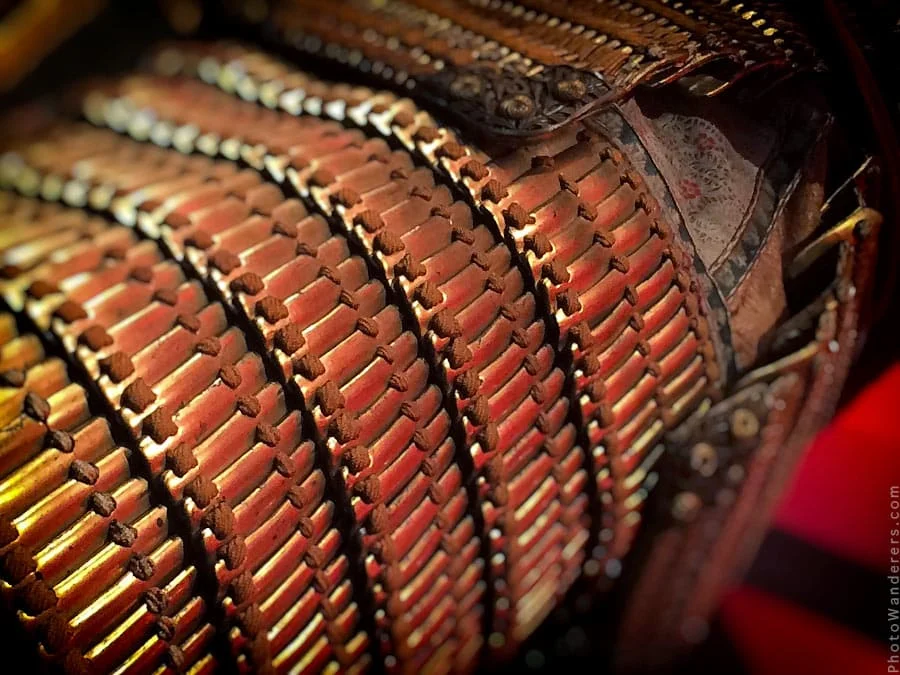
Beautiful — and not just decoration. Overlapped and laced, the small plates were the best defense anyone had against arrows.
The do-maru armor is the same idea, loosened. The same small plates — but I saw it was made to move. Lighter. Looser at the waist. This was armor for foot soldiers, built to run and bend and fight on the ground, fitted close to whoever wore it.
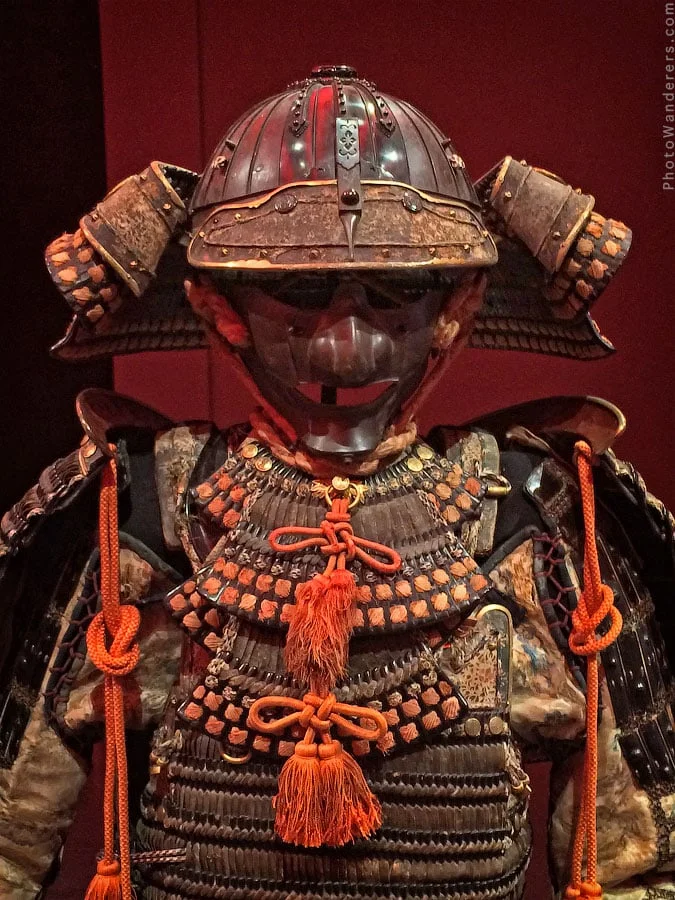
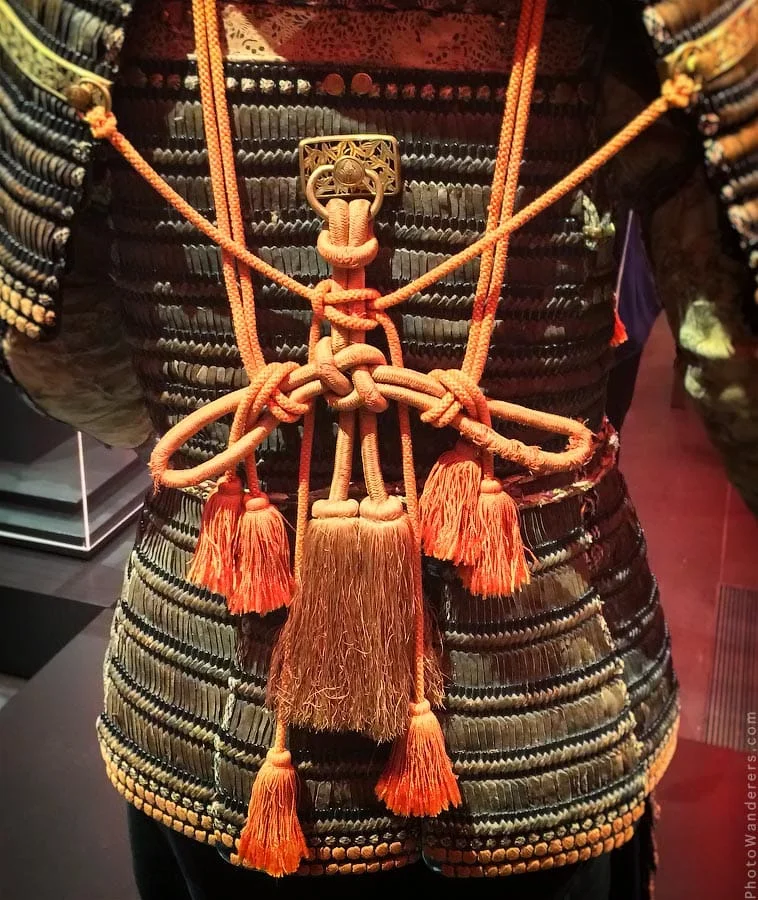
The silk had to be tied by an attendant. The knots sat on the back, out of reach. A warrior couldn't put this on alone.
And then, a few cases on, something that looks almost lazy by comparison. Where the others have hundreds of small plates, this one has solid horizontal strips — wide bands instead of tiny plates. The Mogami-do armor. Four times faster to make, and I could see the shortcut with my own eyes.
The strange part: the man who forged its helmet later made the suit a shogun sent across the world to Queen Victoria. Two worlds, one pair of hands.
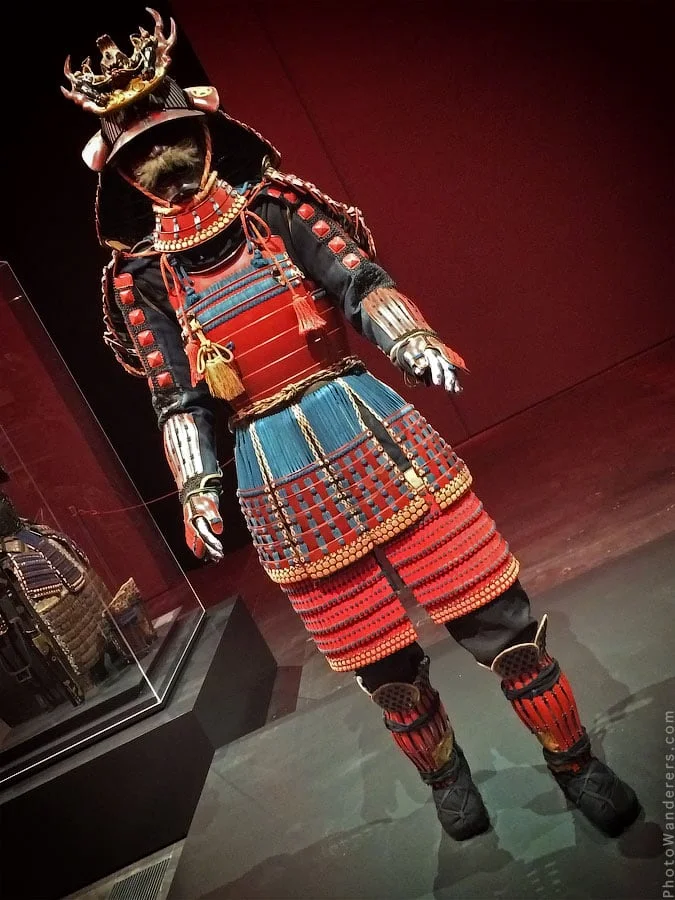
And all of it — every plate, every strip — still wearing the same silk: burnt orange, electric blue, the color somehow surviving four hundred years.
The Helmets
No two helmets in the room agreed on anything. One was a screaming beast. One was a bare human head. One was covered in dragonflies.
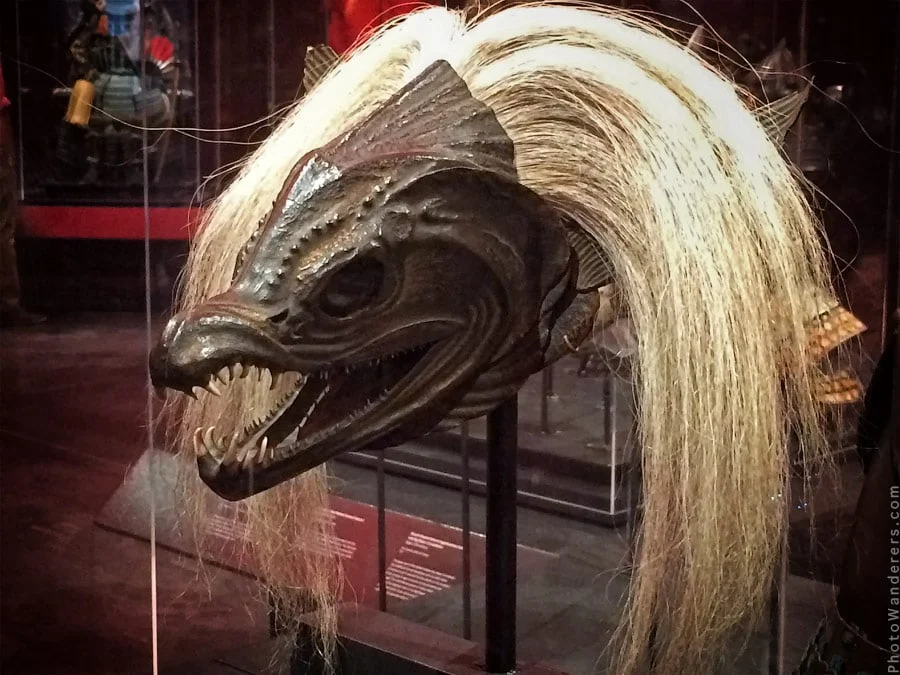
Some went straight for terror. This one is a creature that never existed — part bird, part fish, fanged, maned in white horsehair, built in layers of lacquer to catch the light and the eye.
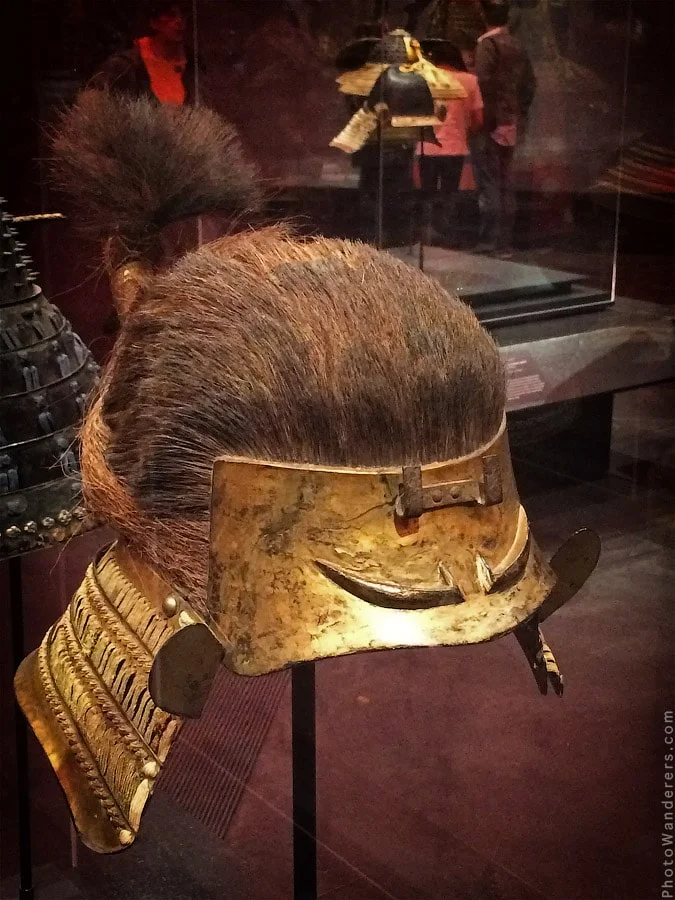
This one I almost walked past. A head, basically — bear fur dressed in a warrior's own topknot. To bare your head in battle meant you were beaten, so a helmet that looked like a bare, hairy head made its wearer seem unkillable. He only seemed unprotected.
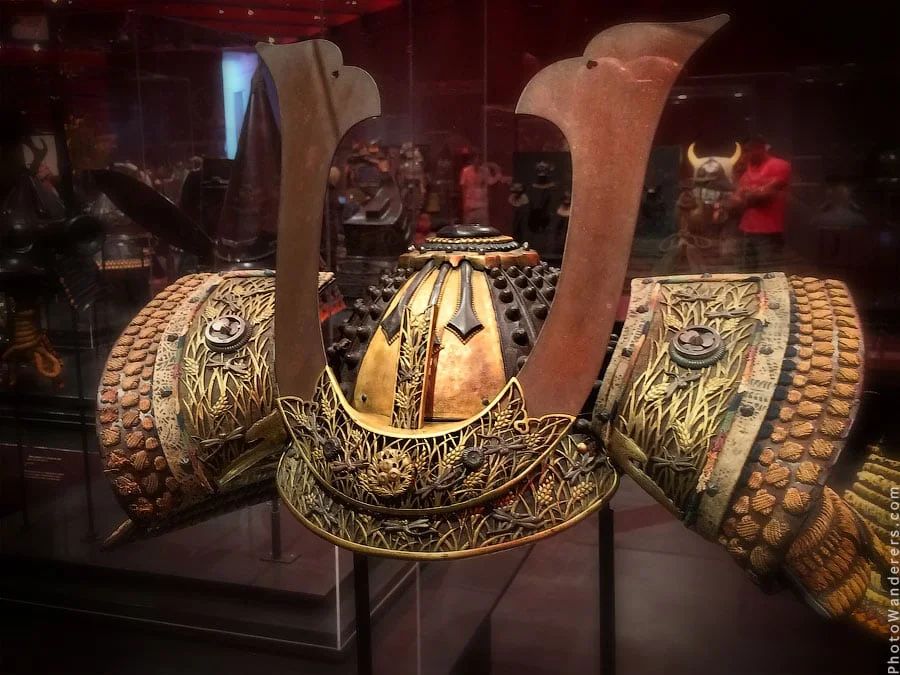
And two cases over, the opposite — impossible to miss. Silvered dragonflies scattered across gilded grasses, two great crests swept up like horns. Not made to frighten. Made to announce.
The Faces
Armor protects. Helmets shield. But the masks do something else. They turn the warrior into a character — part man, part myth, part warning.
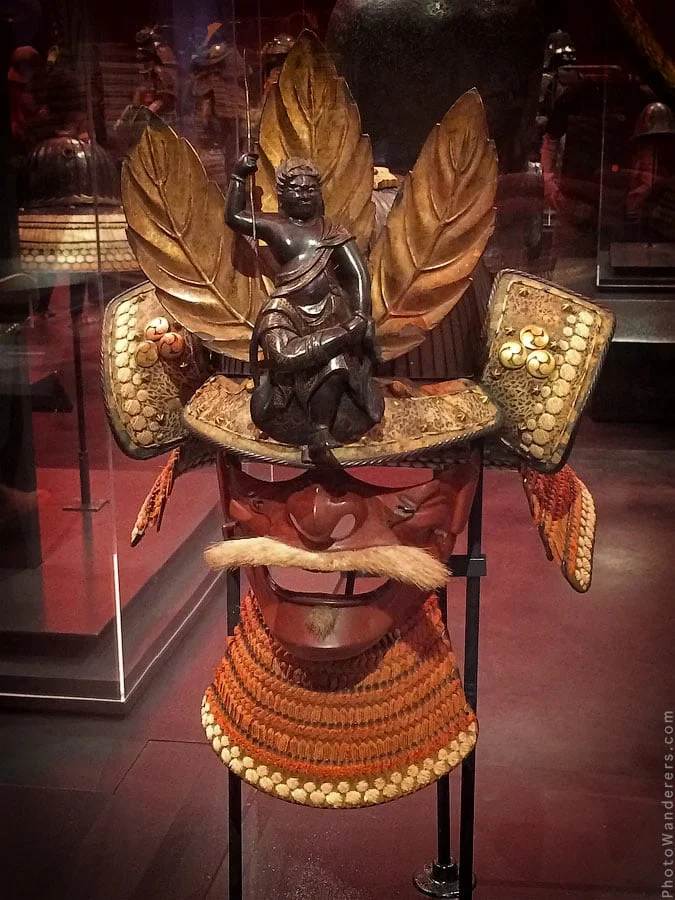
Some are furious. Some strangely serene. Many wear mustaches fashioned from horsehair — an uncanny touch of realism on something built purely to frighten.
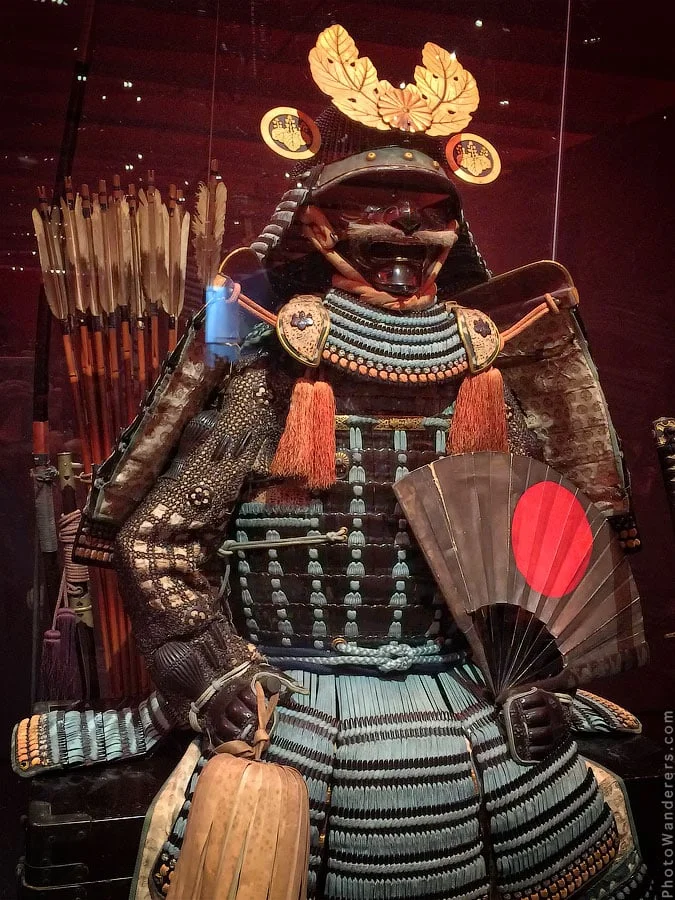
One suit stood out immediately. Face mask lacquered deep red, mouth frozen in a fierce grimace. Above it, a Chinese guardian lion crouched on the helmet crest, poised as if about to leap.
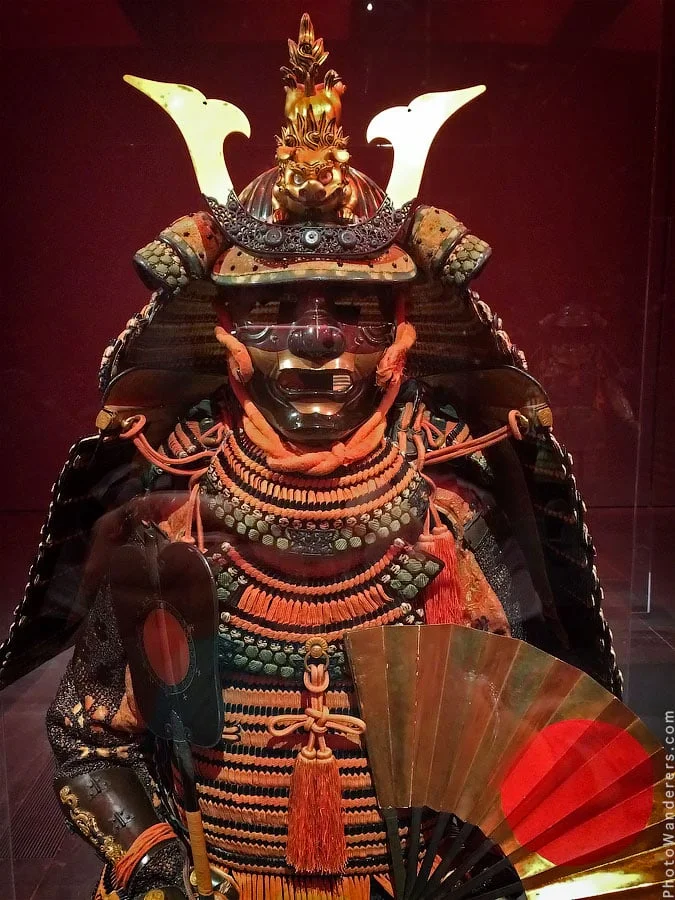
It was the banner rising behind it that caught my eye. Three towering feathers of gilded washi paper reinforced with bamboo. At first glance almost metallic. Up close, surprisingly delicate.
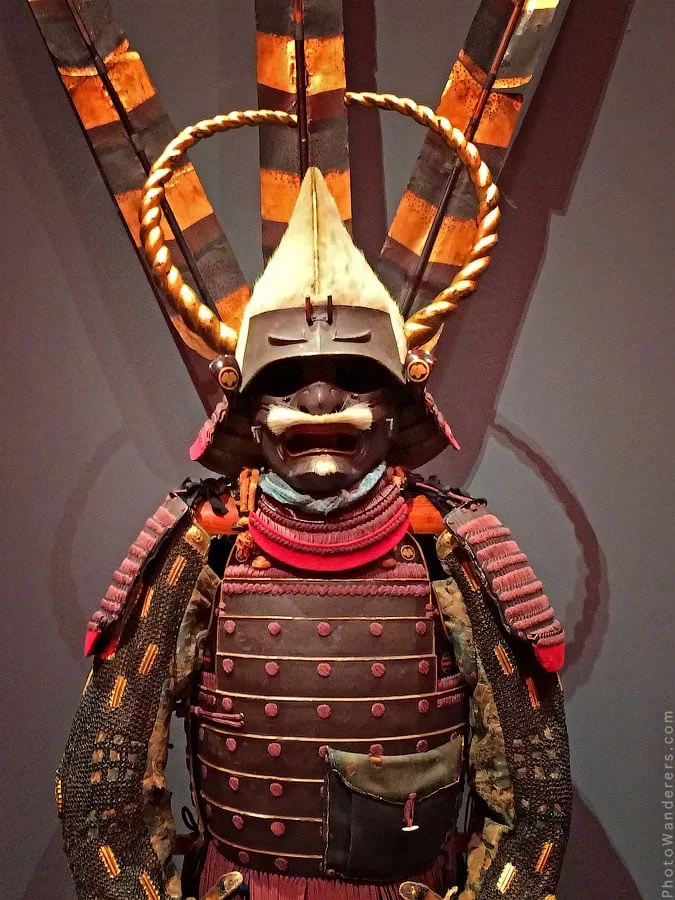
None of it was decoration. A clan crest, a family color, a deity chosen before battle — each suit is a sentence — once you know how to read it.
Before We Left
Near the exit: bows and quivers marked with the Tokugawa crest.
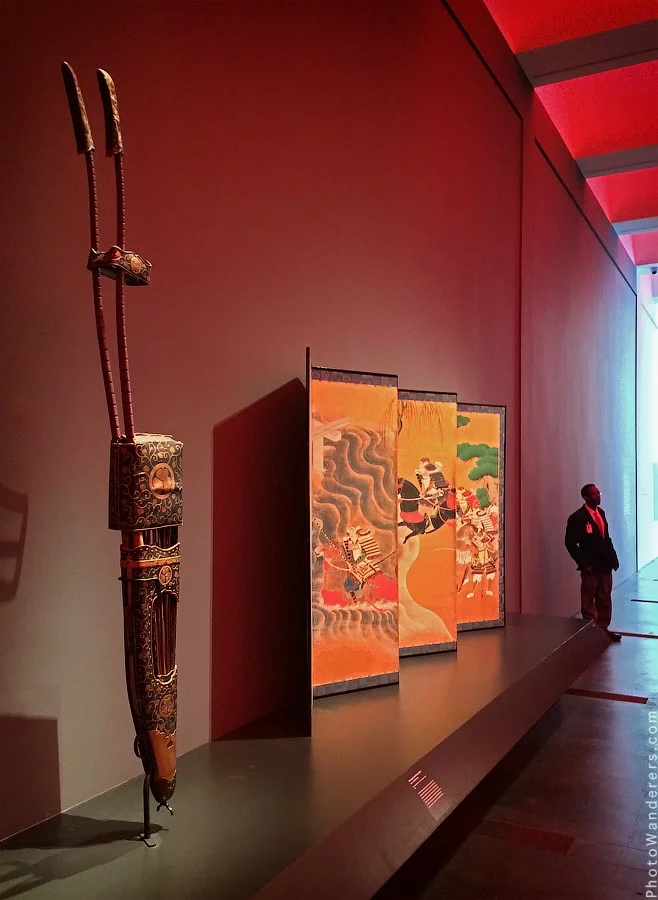
Japanese bows are asymmetrical, taller than the men who drew them — over two meters, nearly seven feet. An expert archer could strike a target from 80 meters, almost 90 yards. From horseback. At full speed.
And under the armor, they wore silk.
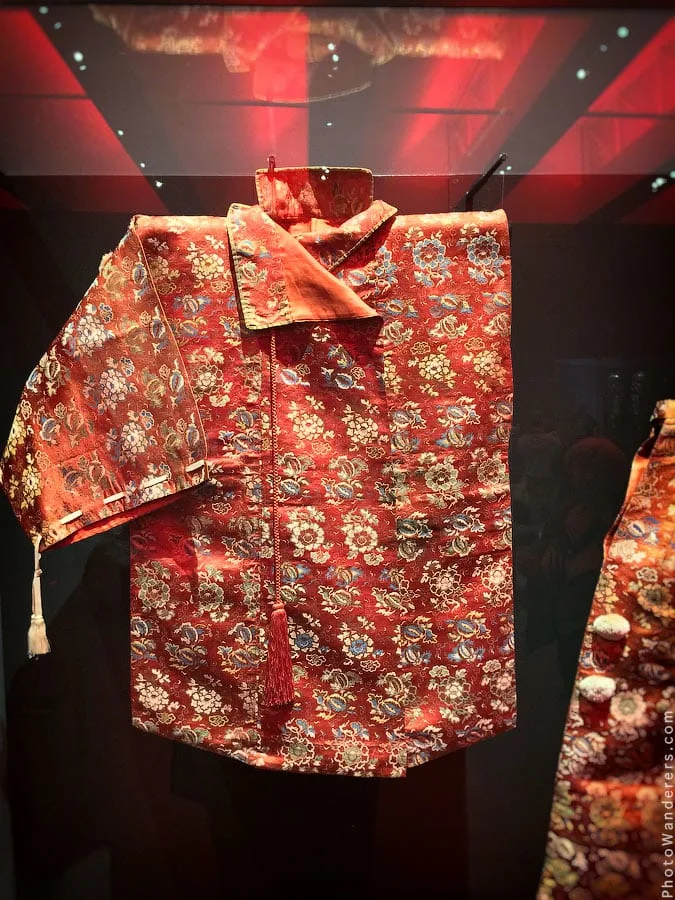
Silk beneath 55 pounds of iron, lacquer, and leather. Stronger than linen, useful for binding wounds.
And unexpectedly intimate. Beneath everything built to intimidate, one layer that still spoke of the man wearing it.
Centuries later, it still does.
LACMA — Los Angeles County Museum of Art, 5905 Wilshire Blvd, Los Angeles, CA.
Check what's currently on at lacma.org.
Comments
Leave a comment