
Eleven Days Below Sea Level
Before we left, I disappeared into maps, guidebooks, and late-night rabbit holes. I'd thought Holland began and ended with Amsterdam, canals, and the red-light district. I was wrong.
The more I read, the longer the list became. Medieval towns. North Sea dunes. Hidden courtyards. Windmills standing alone against wide skies. Then Belgium slipped into the plan almost by accident, close enough to tempt us across the border. By the time I had laid the whole thing out day by day, the trip stretched across most of a summer.
Then Alex looked at it.
With a few calm strokes, he cut it in half. Then a little more.
I negotiated for Belgium, for the Flanders Fields, for a handful of places I couldn't bear to leave behind. Most of the castles didn't survive the edit.
What remained was leaner and simpler — eleven days, one small car, and a base in Leiden.
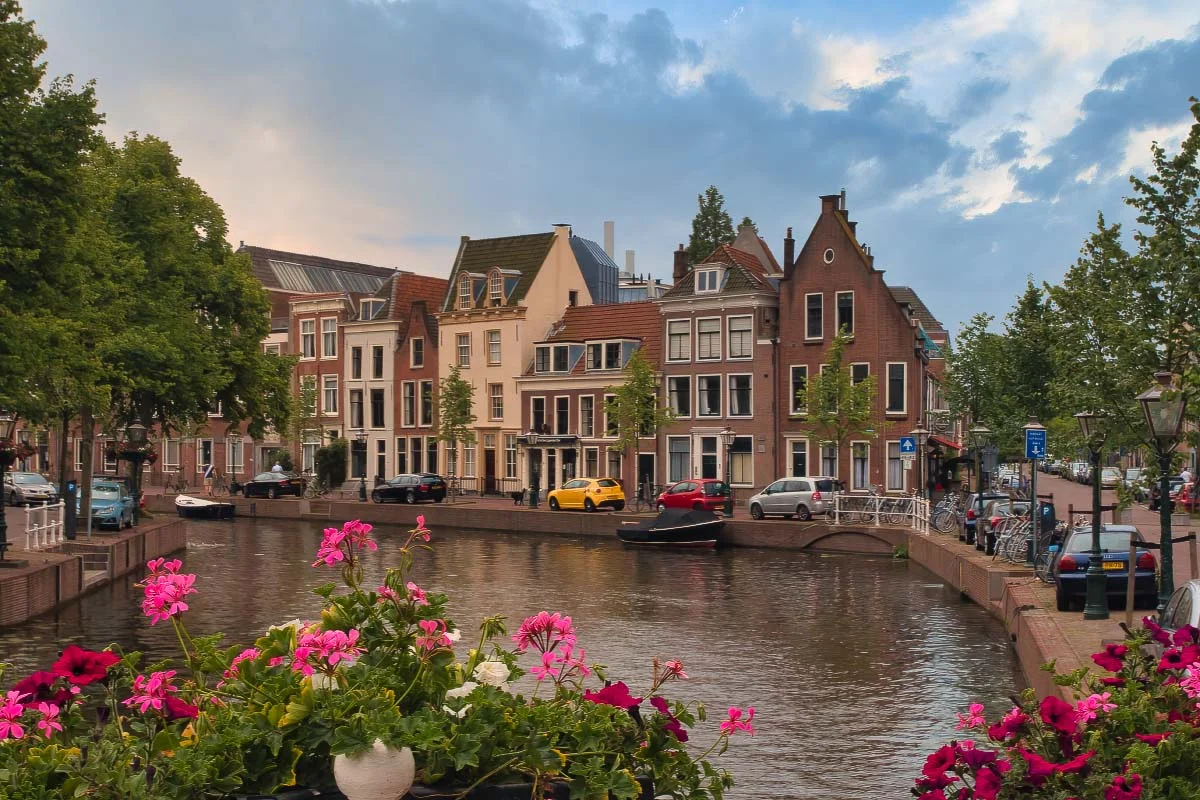
But first — Amsterdam. Two days of it.
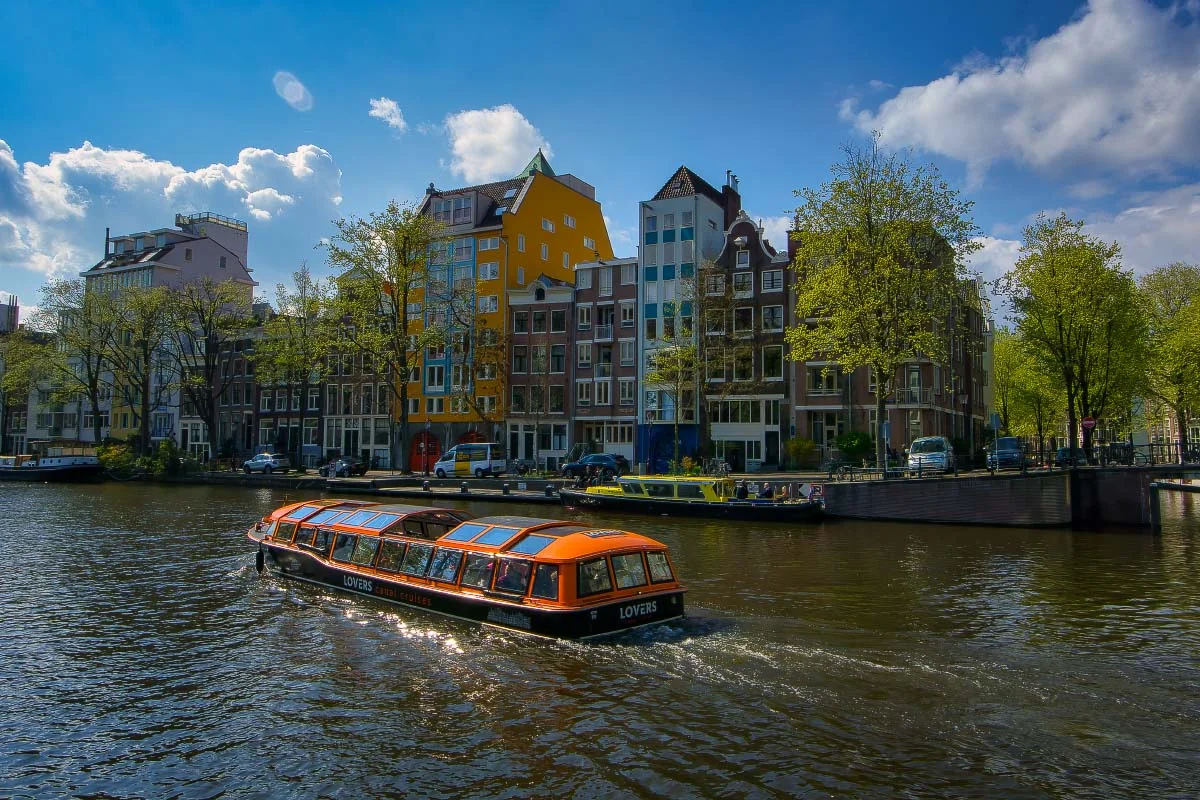
We walked until our feet gave out — canals, narrow brick houses, water at every turn. Then we gave in to the boat tour, the one every visitor takes, sliding low under the bridges with the city passing at a different angle.
And then the museums — the Van Gogh first, then the Rijksmuseum, and somewhere in there the trip quietly began for me.
Alex planted himself in front of the Night Watch and stayed. I drifted off into the other rooms and got lost.
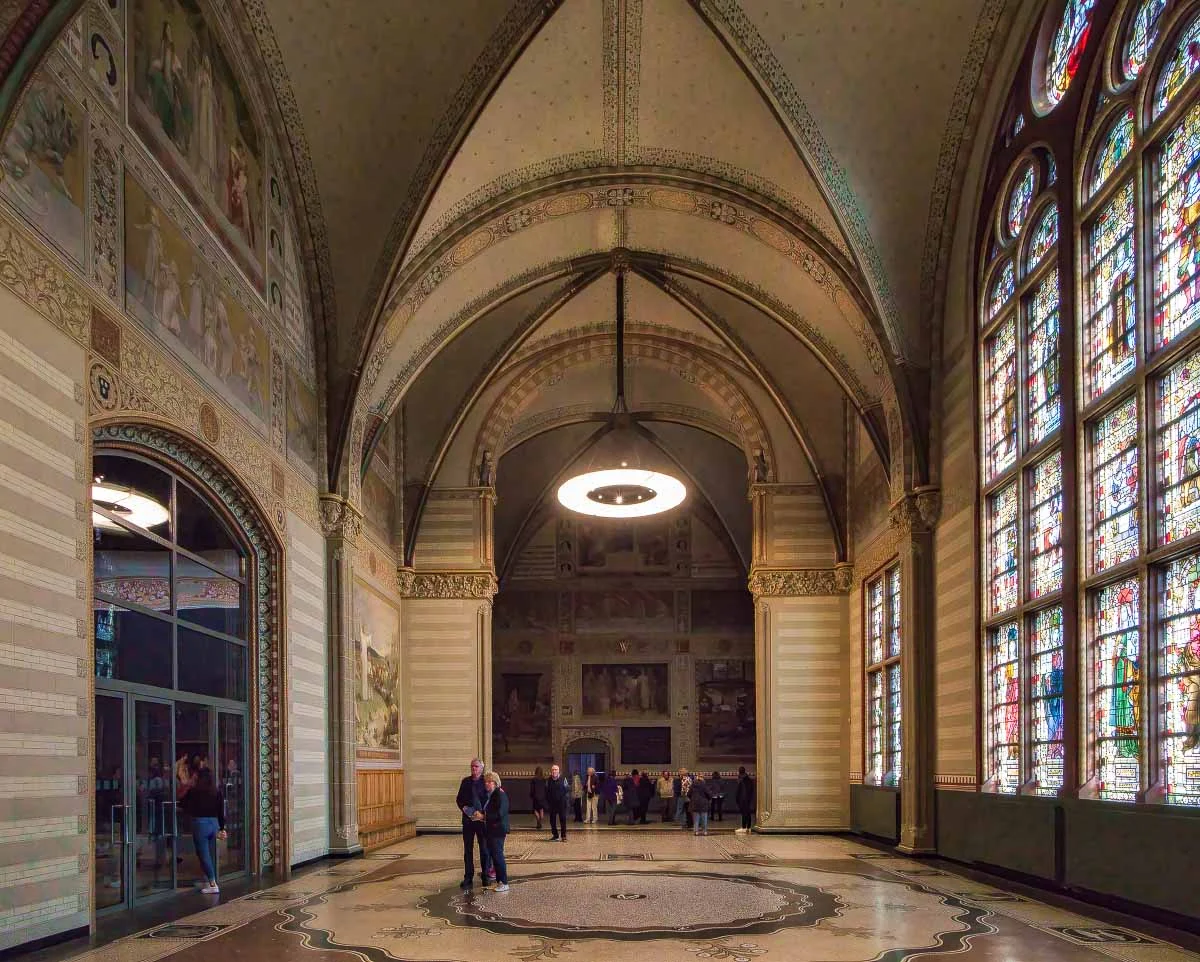
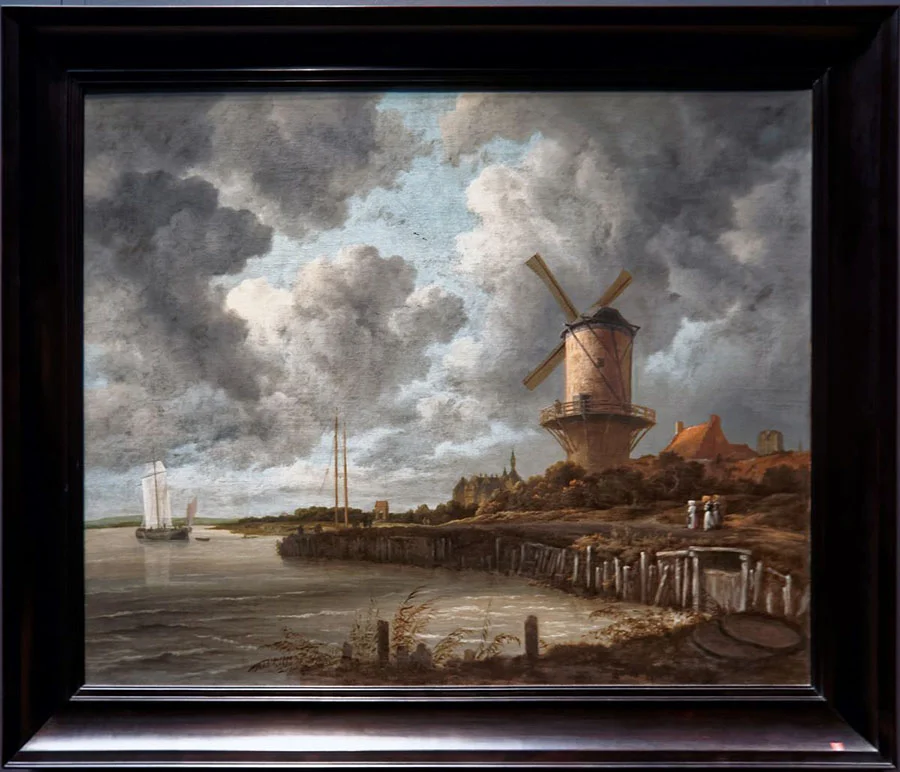
It was the old masters that undid me. The light seemed to come out of the paintings instead of falling on them. And the skies — wide, cloudy, Dutch, moody one minute and bright the next — the same restless sky that had been hanging over us in the street all day.
I was so far gone I forgot I'd even brought a camera, and only remembered on the way out.
Then the road took us north, to where the country goes quiet.
North
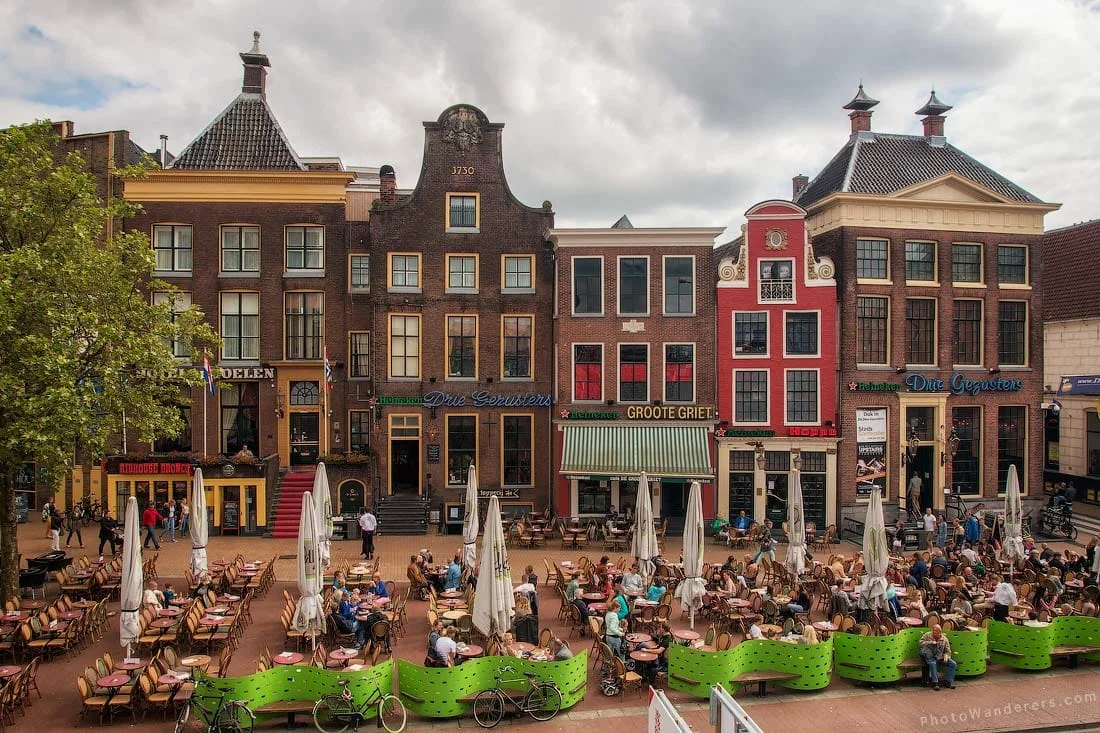
Groningen's Grote Markt tells a story in brick.
To one side, the ornate facades of the old city still stand proud. To the other, a modern wall rises to meet them — intentionally split by a dramatic gap.
Most people pass through without a second thought. I nearly did too.
In April 1945, during the battle to liberate the city, most of the square was destroyed. Only the southern side survived.
When the city rebuilt, it kept the gap on purpose. And once I knew that, the opening changed in front of me — no longer a passage, but a scar the city turned into art, a gateway leading straight into the light of the modern plaza behind it.
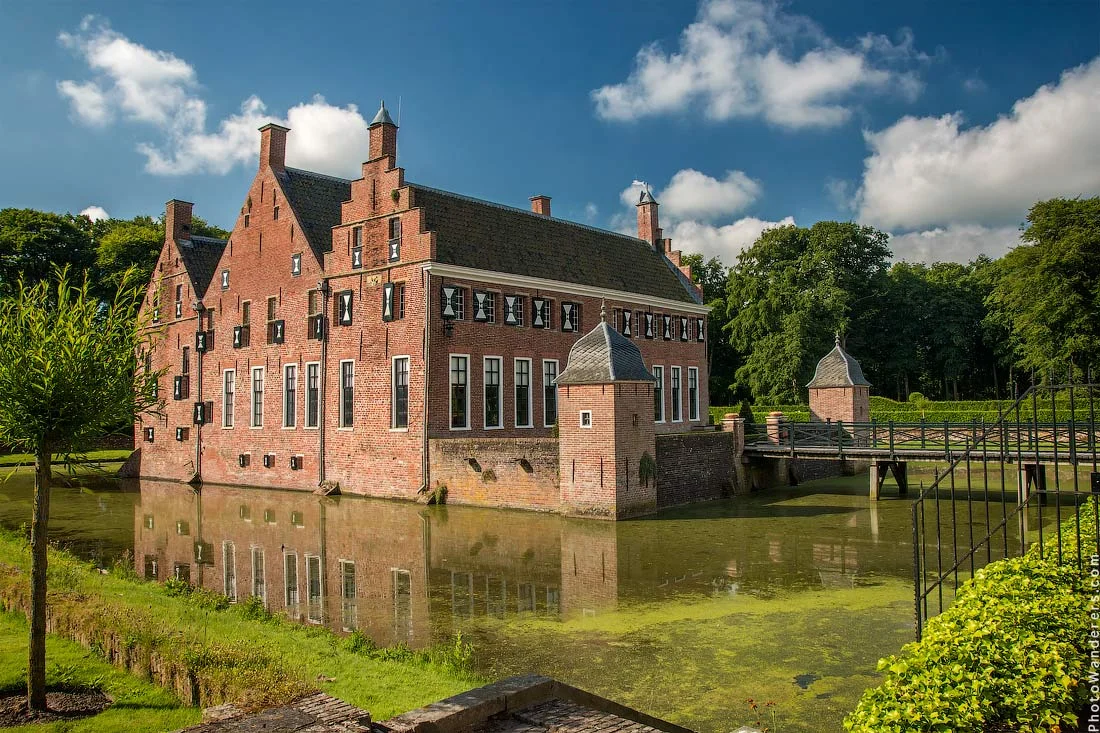
The next day, we left Groningen in search of Menkemaborg — a moated manor hidden so deep in the countryside we almost missed it.
A tunnel of lime trees led the way. Gravel crunched beneath our feet. Then the iron gate appeared.
Beyond it, still water, and a stone bridge flanked by ancient carved lions. And across the moat, the house.
It felt untouched by time — as if centuries had passed, and Menkemaborg had simply watched them go by.
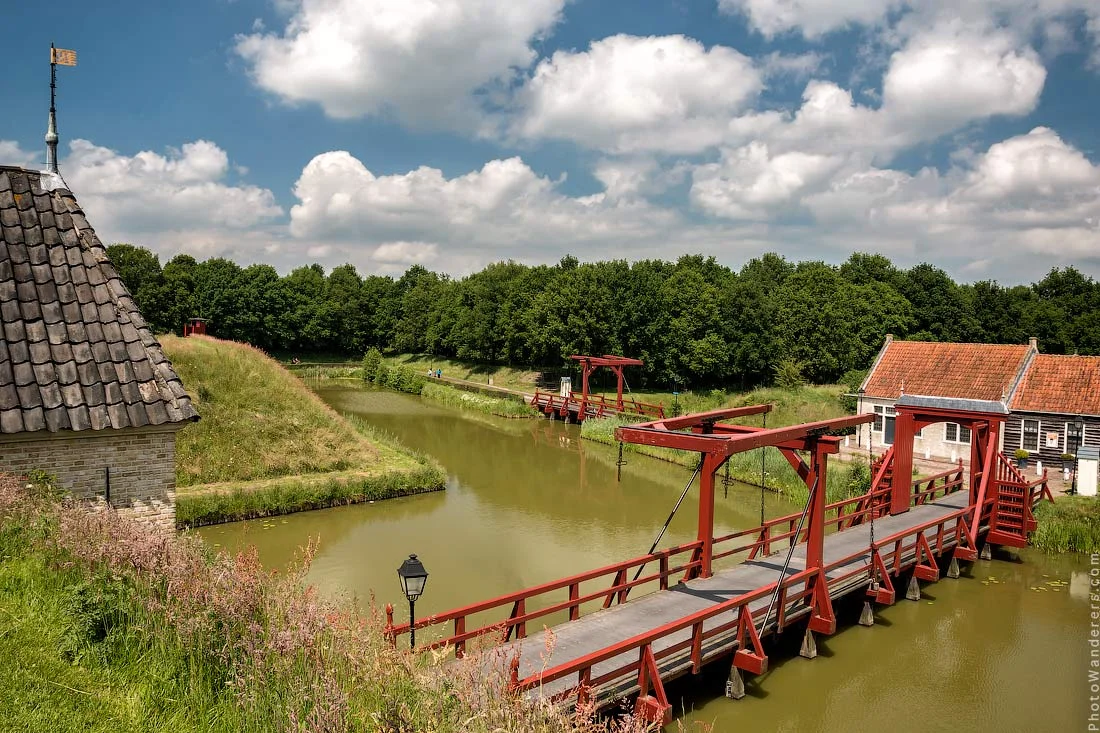
Later that day, we reached Fort Bourtange near the German border — a fortress built as a perfect five-pointed star. Every point protected the next, leaving attackers nowhere to hide.
The funny part? From the ground, we couldn't see the star at all.
We climbed the grassy ramparts and stared across the walls, trying to imagine the shape beneath our feet.
Four hundred years ago, this fortress controlled the only road between Germany and Groningen. Today, it watches over quiet fields, its secret geometry visible only from the sky.
In Flanders Fields
Belgium wasn't in the first plan. Flanders went in late, after I kept circling back to a book — Erich Maria Remarque's All Quiet on the Western Front — and the lost generation it was written for. Ypres, where the first great gas attack of the war was let loose, was only a few hours away. Once that connected in my head, I couldn't leave it out.
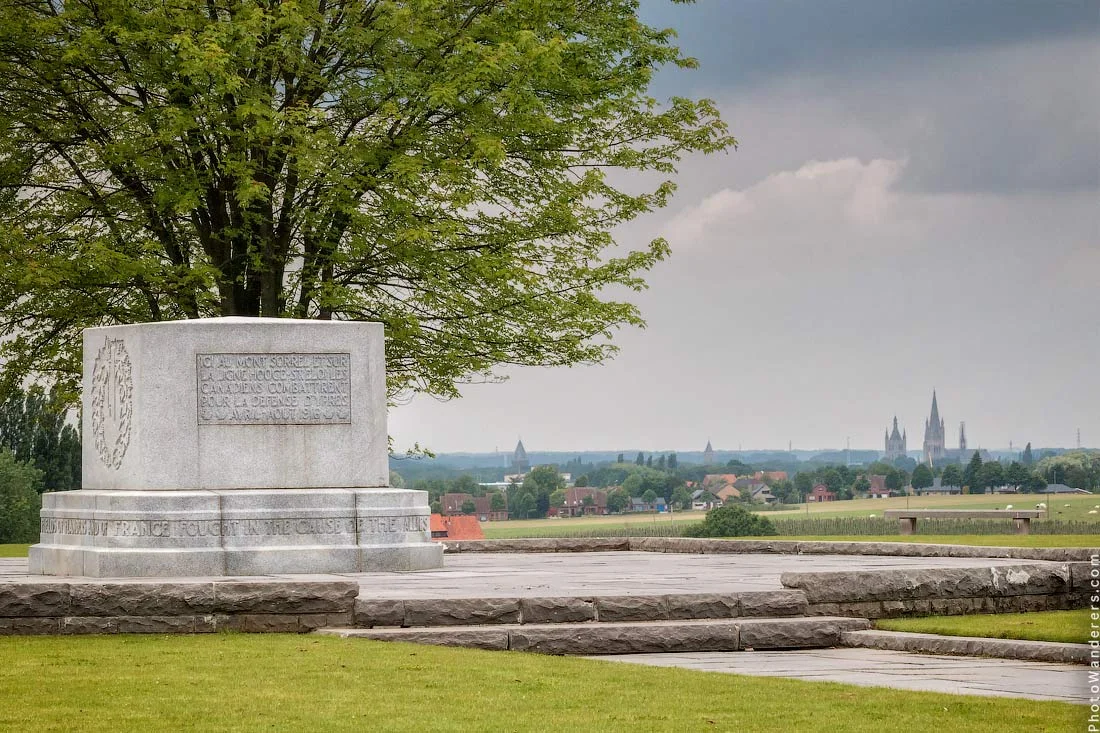
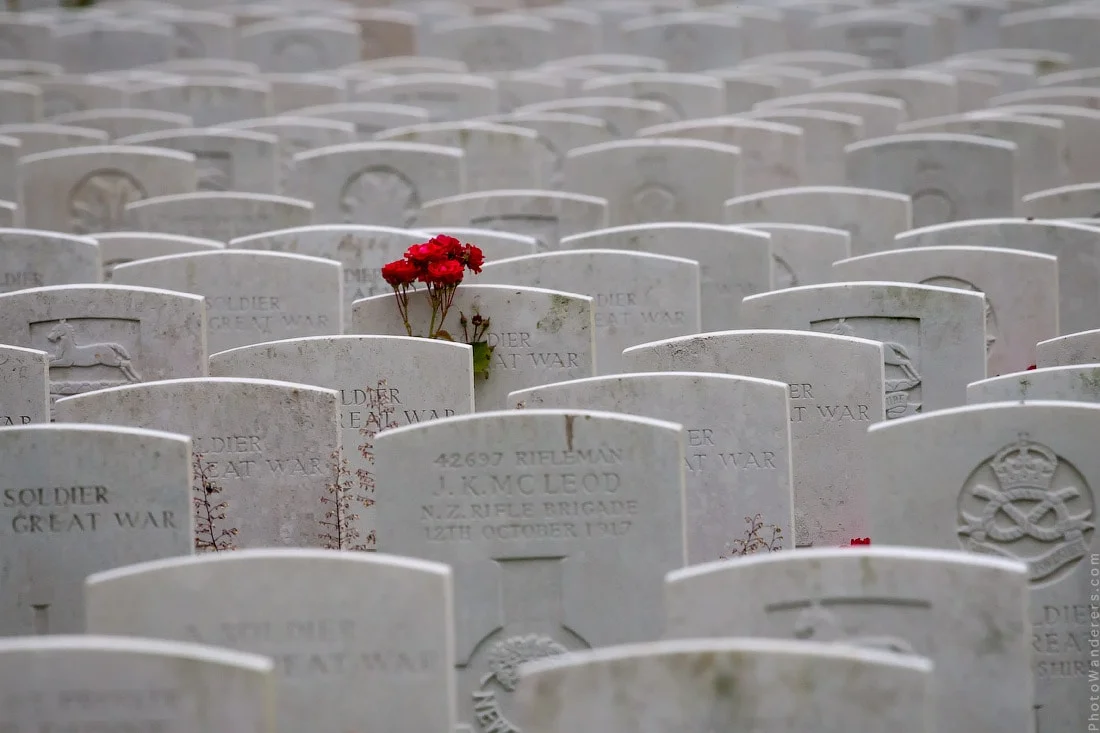
We got lost twice looking for Tyne Cot. Out here the land is flat and green and ordinary — farmland that looks like nothing ever happened on it.
Then the cemetery opened in front of us.
White stone, in rows, running back further than I could take in. Wind over the grass. Nearly twelve thousand men are buried here. We stood there and didn't say much. Neither of us wanted to.
The Rain, and What Came After
It had to rain eventually.
I woke to a low grey sky and a thin, mean drizzle — exactly the Holland I'd spent the whole trip dreading. We took an umbrella and went anyway.
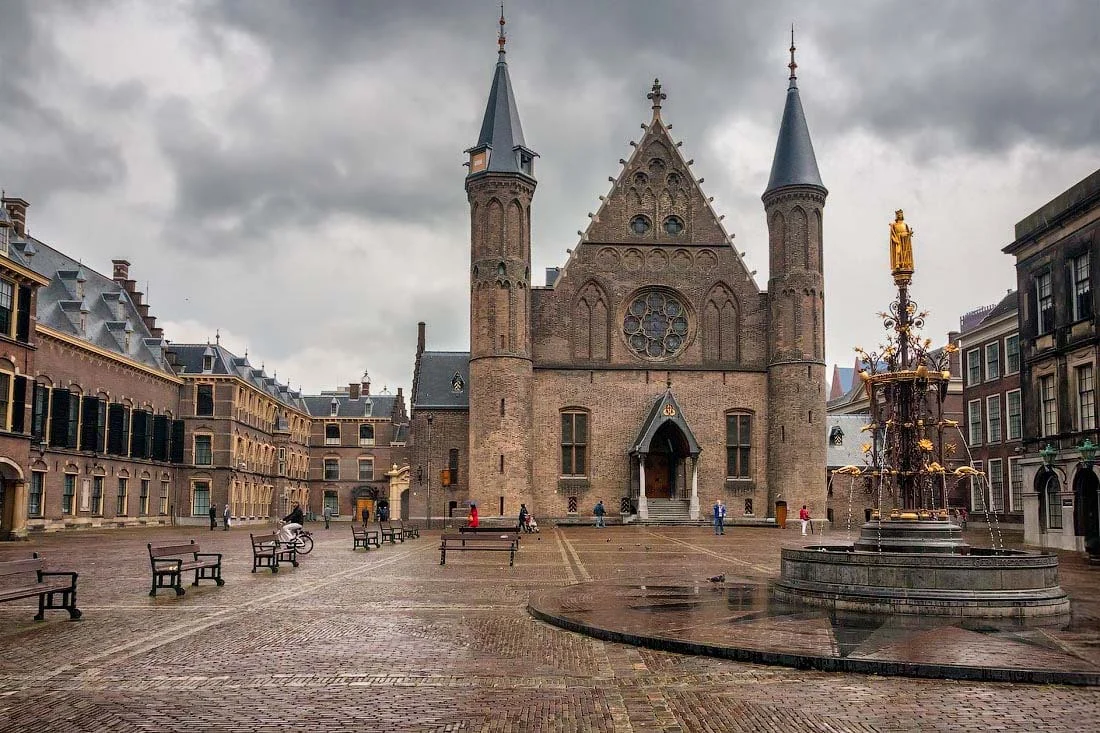
The Hague smelled of wet stone. Rain ticked on the umbrella the whole walk down to the Binnenhof and its dark gothic hall, where the Dutch king still arrives by golden carriage on the grandest day of the year.
The grey, it turned out, suited the place.
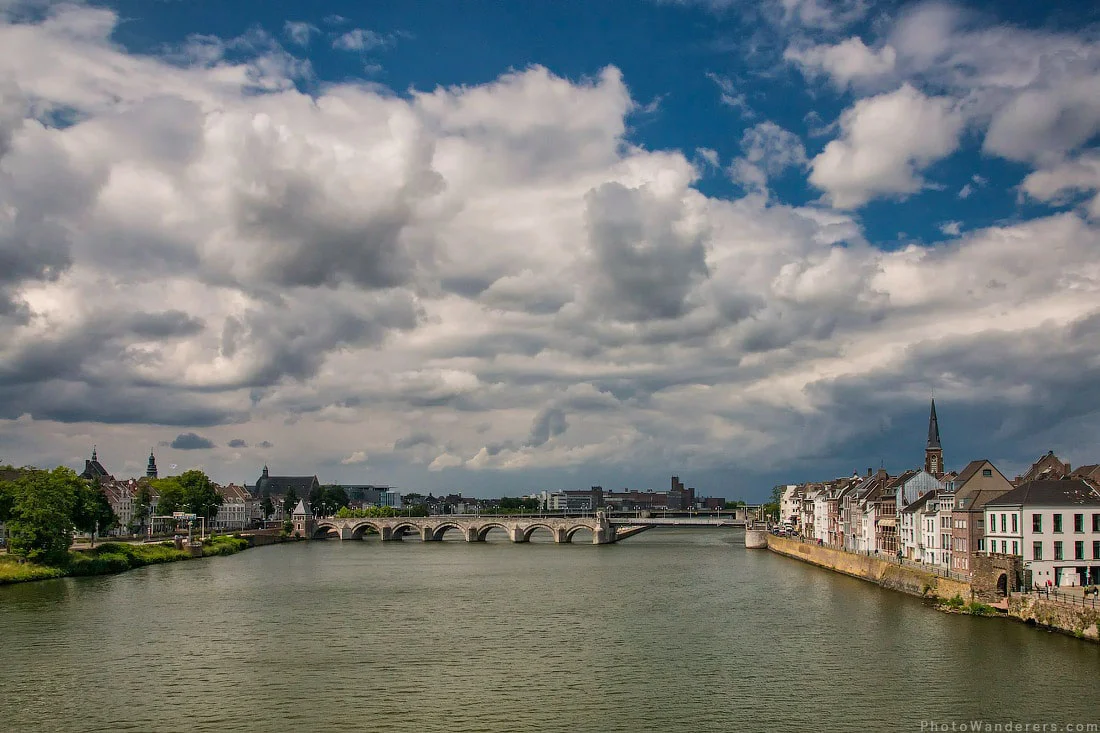
The next day, we headed to Maastricht. Hours south, all the way to the bottom of the country, where it narrows to a point between Belgium and Germany — about the longest line you can drive in the Netherlands.
We arrived as the storm clouds were breaking up, and the light that came after them did something to the bridge over the Maas. Heavy sky, old stone, the water catching the last of the sun. And it stopped me — because I had seen this sky before. A few days earlier, in Amsterdam, on a wall, in a room full of old Dutch paintings. Only now it was real, and moving.
I waited for the cloud to shift and the light to land. For about a minute, the whole city looked four hundred years old.
Ghent and Bruges in One Day
We gave Belgium a second day and split it between two cities.
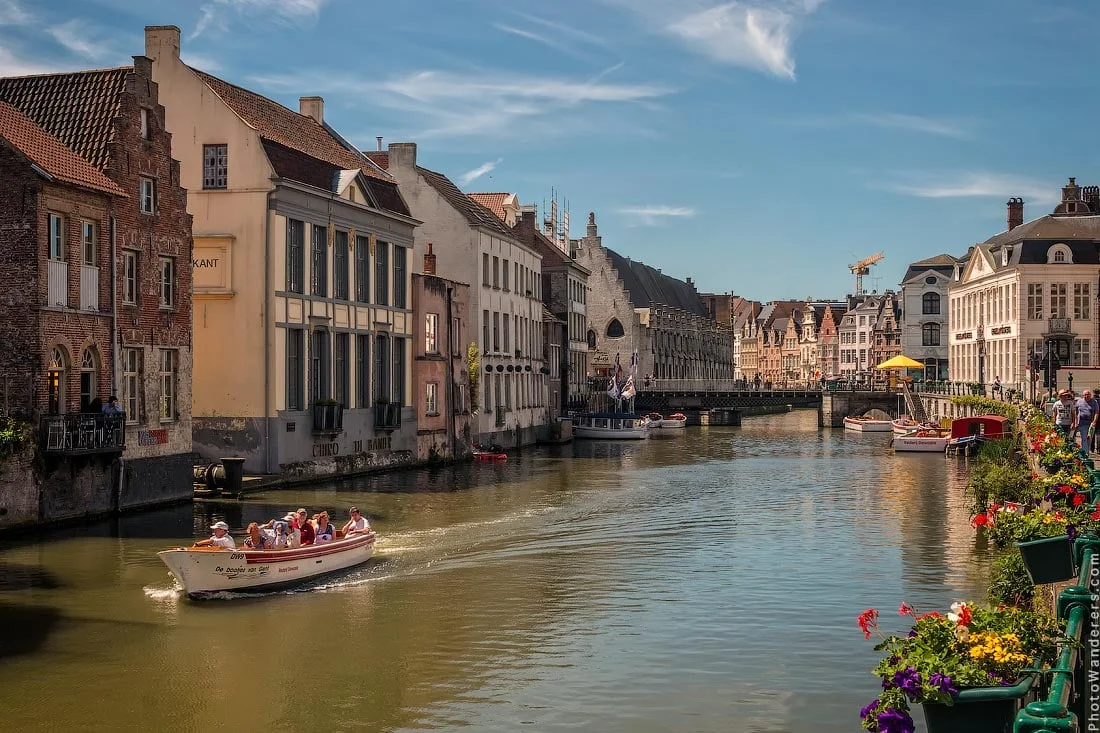
Ghent took the morning — a row of stepped houses leaning over the Leie, and inside St Bavo's, the van Eyck altarpiece we'd driven a long way to stand in front of.
Bruges we saved for the evening.
The city smells like chocolate. That's the first thing, before you see any of it — warm sugar drifting out of doorways, mixed with canal water and cool stone. I could not walk into a chocolate shop here and walk out empty-handed. Out of the question.
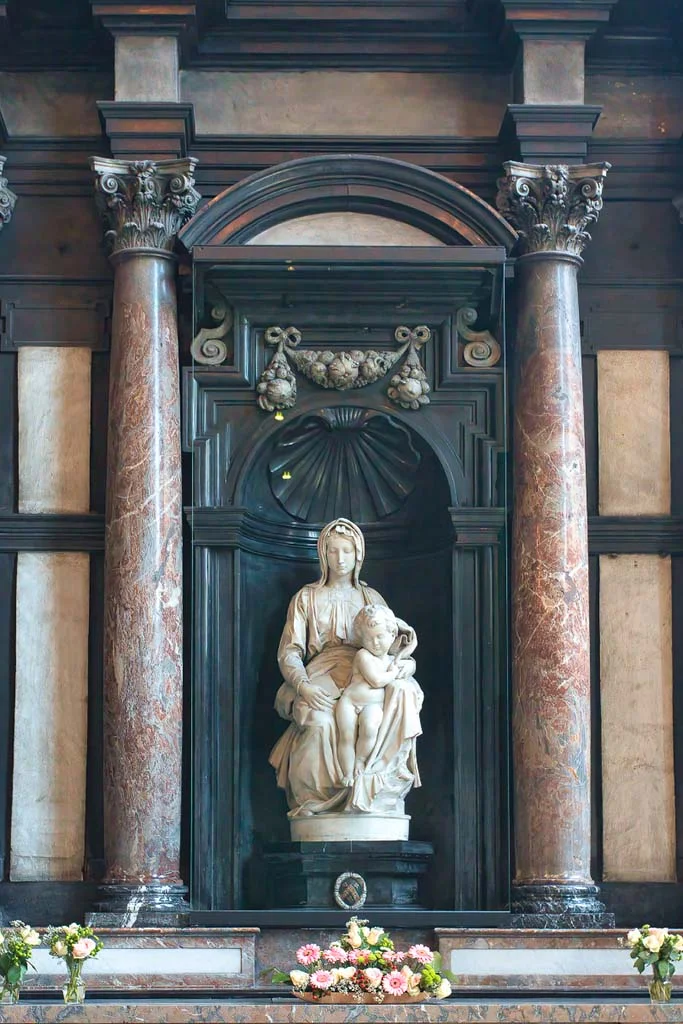
We did make one stop in Bruges that wasn't edible. In the Church of Our Lady stands a small marble Madonna by Michelangelo — the only sculpture of his to leave Italy in his lifetime.
I'd been hunting for her for days.
Days earlier, in the cathedral in Maastricht, I'd stopped an usher and asked — with total confidence — where the Michelangelo Madonna was. He'd worked there more than ten years, he said, and had never heard of her. I didn't believe him. Alex opened the guidebook. She wasn't in that church. Or that city. Or, it turned out, that country.
And now, finally, here she was. White, calm, in a side chapel — a long way from Florence, and from Maastricht too.
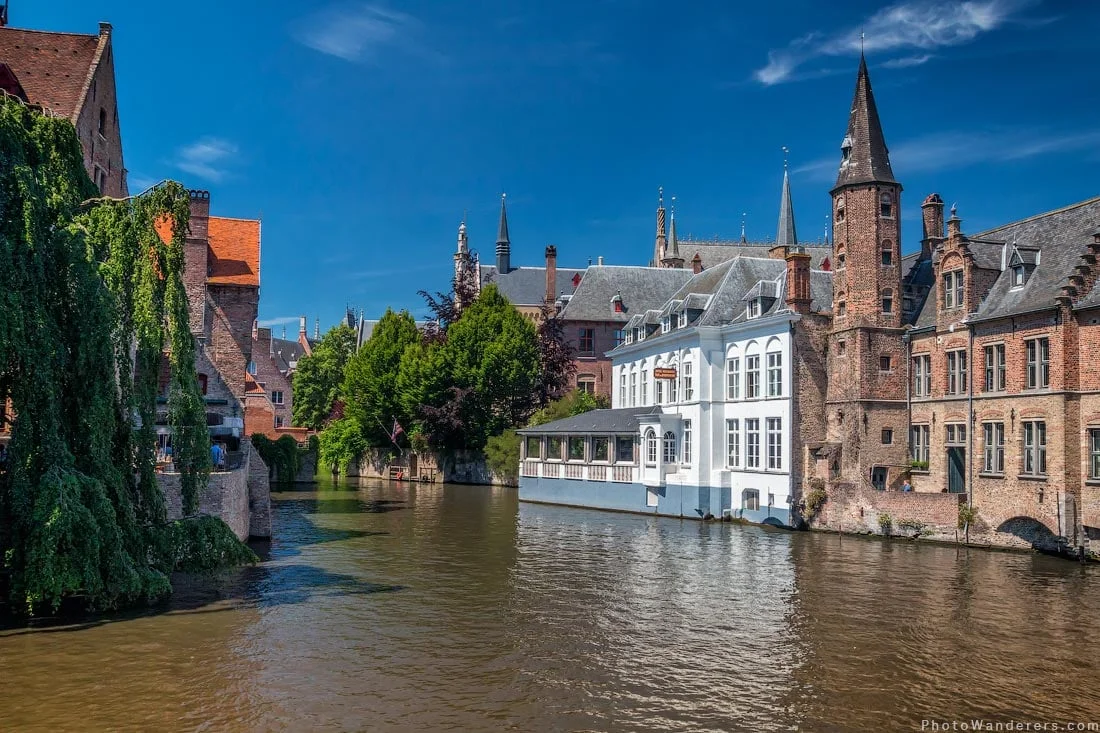
The rest is almost too much. Still canals. Little humpbacked bridges wearing ivy. Lace along the rooftops, towers leaning into the dark.
It felt like walking through the Land of Sweets — the last act of The Nutcracker, somehow rebuilt in brick.
The Slow Day
By the next morning, we admitted we couldn't see everything, and slowed down on purpose.
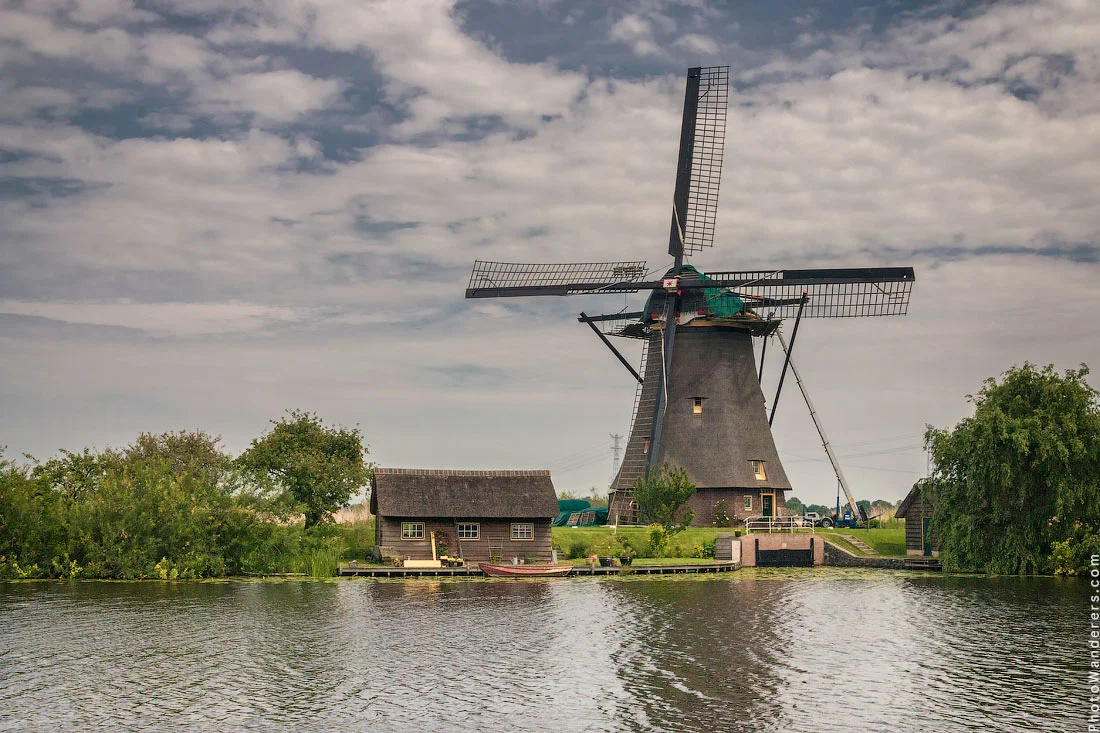
We rented bikes at Kinderdijk and rode out among the windmills. Sails creaking overhead, wind in the reeds. Water on one side, sky on the other. Somewhere in the middle of it, I understood what I was looking at: these were the machines. This was how a country pumps itself up out of the sea and then keeps it there.
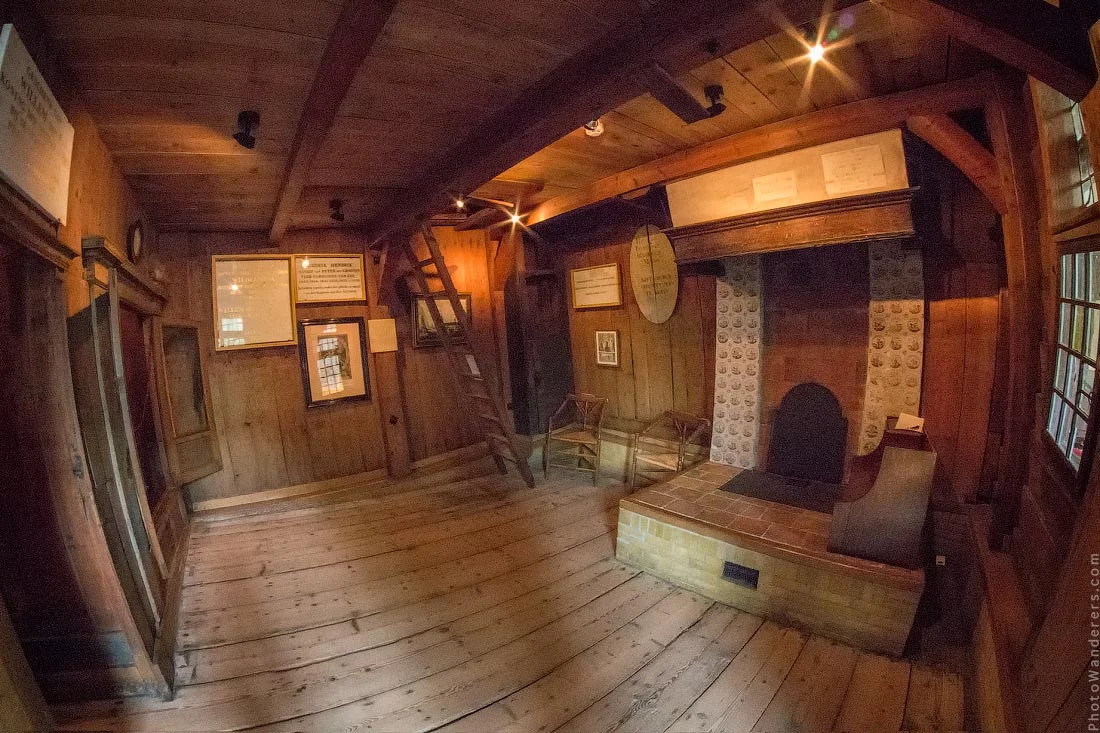
Then a detour for one of my favorite odd stories. In a quiet residential street in Zaandam, there's a tiny wooden house where the tsar of Russia lived for one week in 1697 — traveling half in disguise, learning to build ships with his own hands. Blink and you'd drive straight past it. People do.
We crossed on two ferries, drove straight into a thunderstorm, waited it out, and reached the coast just as the day decided to pay off the entire trip.
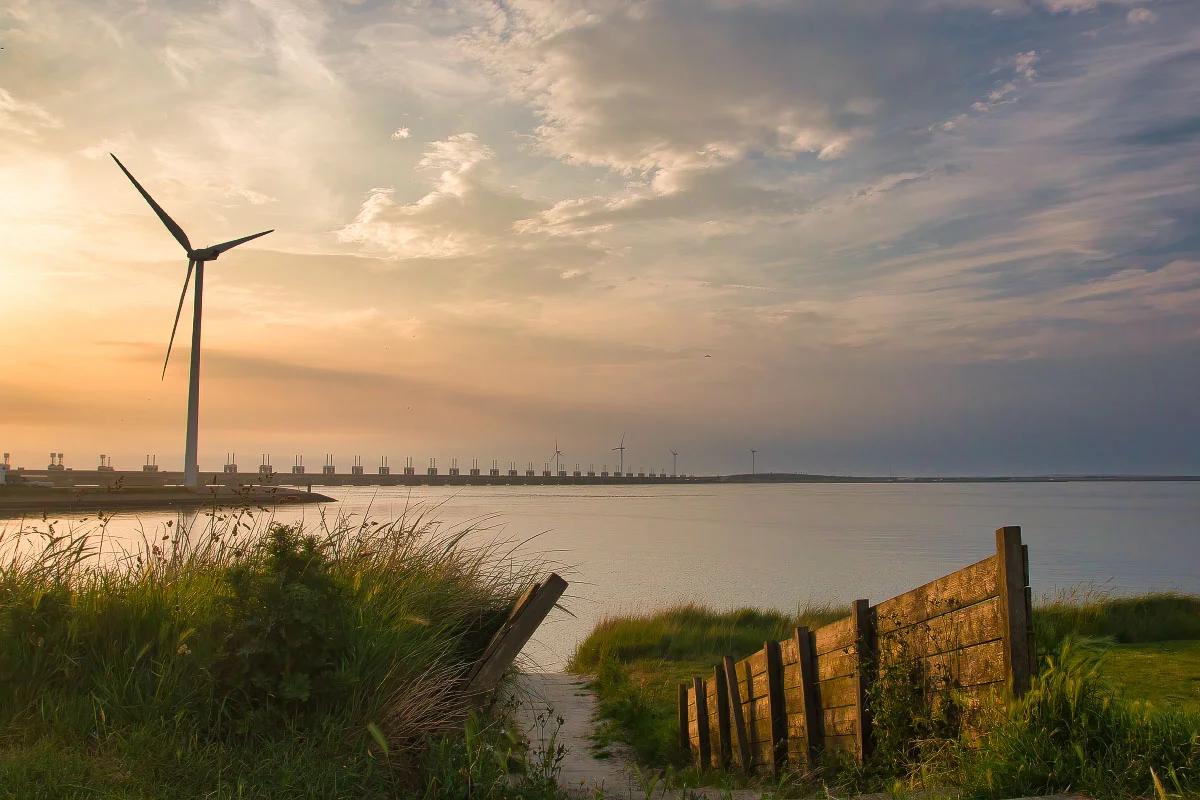
The Oosterscheldekering — the great barrier of the Delta Works, a wall thrown against the North Sea so enormous they had to build an island just to make it. The name is so long I've never once read it to the end; somewhere past the fifth letter, a switch flips and I give up.
The sun went down over it. This single wall, holding back an entire sea so the country behind it can exist at all, went gold along its top edge.
There it was. The wonder below sea level, right in front of us.
Running Out of Days
Utrecht was quiet. No tour groups — just locals going about their day, bikes loaded with shopping, the unhurried business of a city that wasn't performing for anyone.
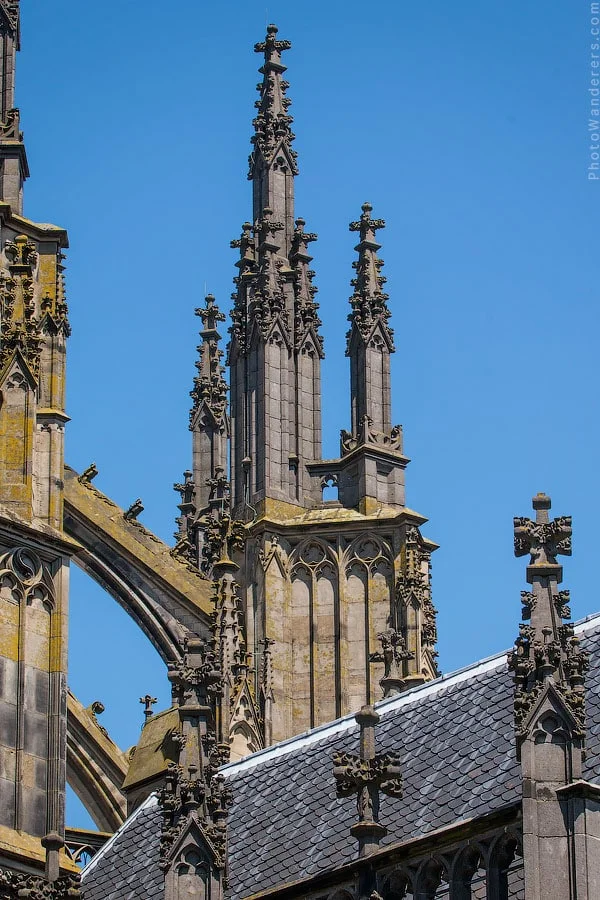
And over all of it, the cathedral tower. Wherever we wandered, it pulled our eyes back, like a compass that only points up. I stood under it a long time, reading the stone — the lace in the windows, the little spire finishing every line, no two carved details quite alike.
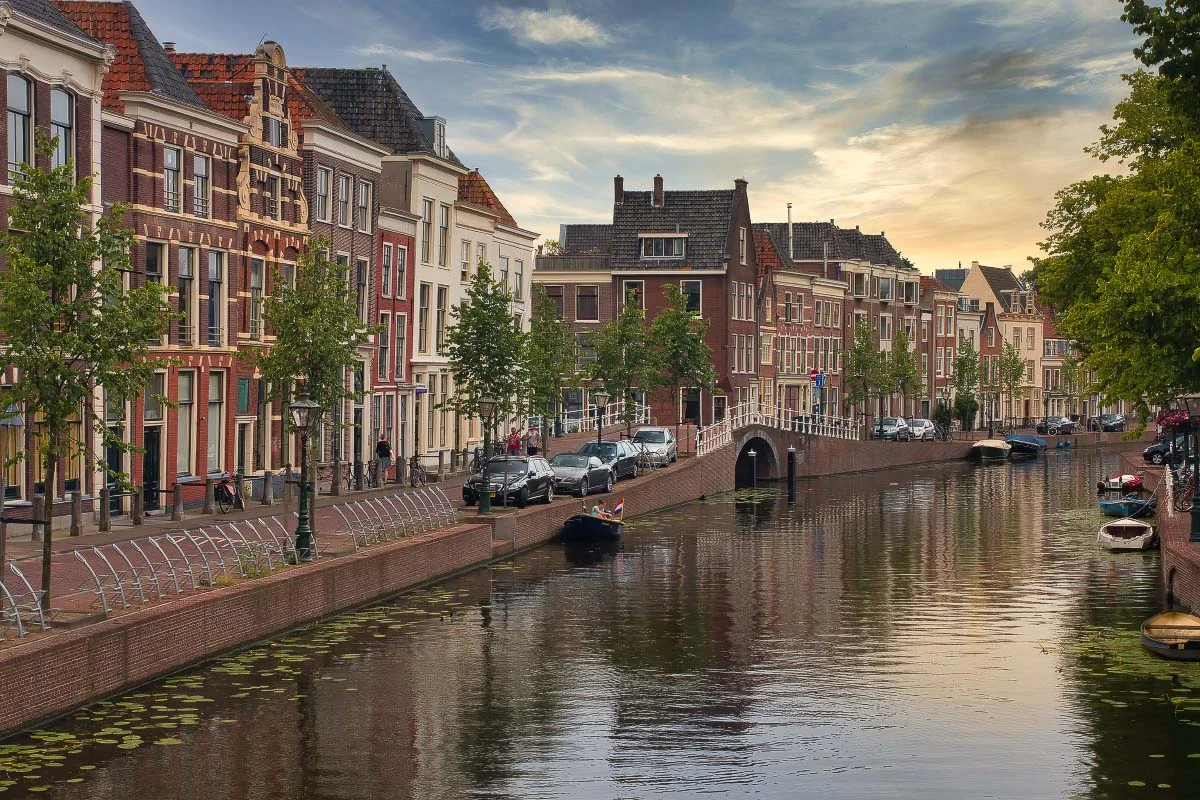
And then Leiden — where we'd slept for eleven nights and somehow never really looked.
On the last evening, we finally walked it properly, along the canals and through the old streets. Leiden keeps poems painted on its walls — more than a hundred of them, all over the old town, in language after language, script after script. We went from one to the next in the fading light, reading what we could and guessing at the rest.
I kept looking for one in Ukrainian. So many languages on those walls, and not my own. I never found it.
Eleven days, gone without my noticing them leave.
By the end, it had all run together — brick and water and chocolate, wind off the sea, white stone in a field, a tower, a green star, a house that should be underwater and somehow isn't.
We flew back to Southern California, already planning the next one — to come back for the tulips.
Postscript. Since this trip, I've read that Leiden has added a Ukrainian wall poem — "Shchedryk," the song whose melody the world knows as "Carol of the Bells." Next time, I'll go and find it.
Comments
Leave a comment