
Too Hot to Do Anything. Perfect Time for a Museum
A day with the Hopi, Zuni, Navajo, and Apache — and a lot of air conditioning — Phoenix, Arizona
It was 7 a.m. and already 95°F (35°C).
Alex was lying by our friends' pool, staring at the sky with the expression of a man who has accepted his fate. The air smelled like warm concrete and sunscreen. The creosote bushes stood perfectly still. No breeze, no movement, none of that wild rainy smell they get when the desert finally cools down. Just heat.
"What do you want to do today?" I asked.
He didn't move. "Preferably nothing that involves walking."
Arizona in June is its own particular kind of extreme. The ground is red and cracked, like it's been baking since before recorded time. The horizon stretches so far you start to feel small. There are no lush lawns, no old oak trees — just saguaro, scrub, and sky. You stand there and think: people lived here for thousands of years. On purpose.
So we did the sensible thing. We went to a museum.
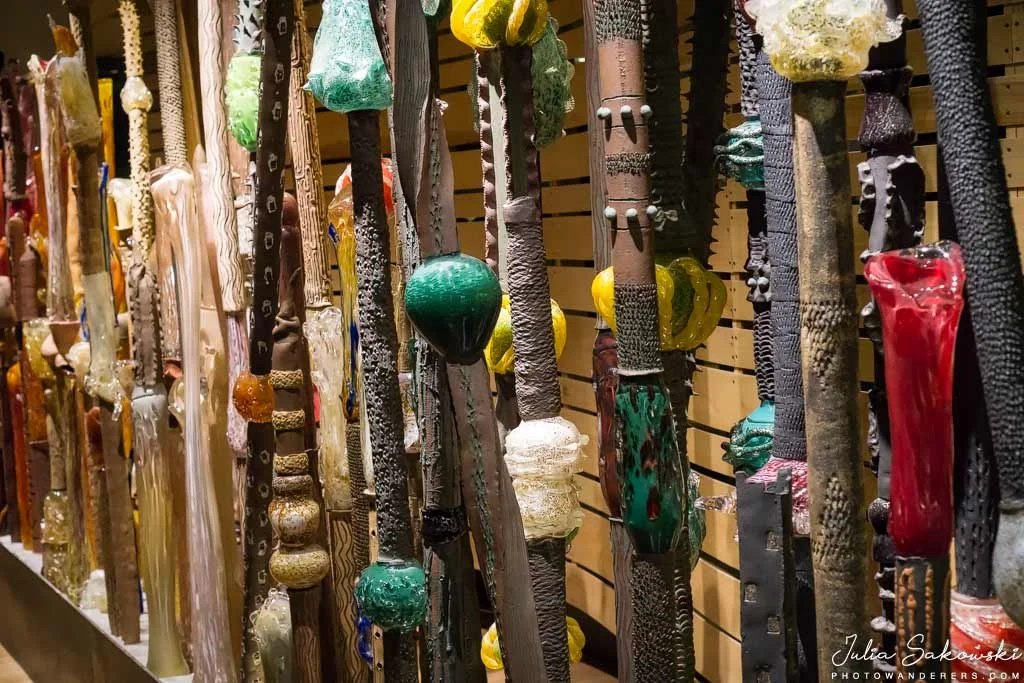
The Heard Museum of Native Cultures and Art doesn't look like much from the outside. But walk through those doors and Phoenix disappears. After the blasting sun, the light inside feels like a different element — soft, low, almost amber. Quiet too. A few other visitors drifted through the galleries like they were moving through water. Nobody spoke above a whisper. I felt like I was floating in a bubble, sealed off from the heat and the noise and the city outside.
And then the history hit me.
Who Was Here First
Before Phoenix was Phoenix — before it was anything at all — the desert was already full of people.
Archaeologists argue about exact dates, but most agree that the first humans arrived in the Americas around 11,500 years ago. Settled life came later, around 300 BC, when pottery appeared. You can always tell when nomads stopped moving: they start making things that break easily.
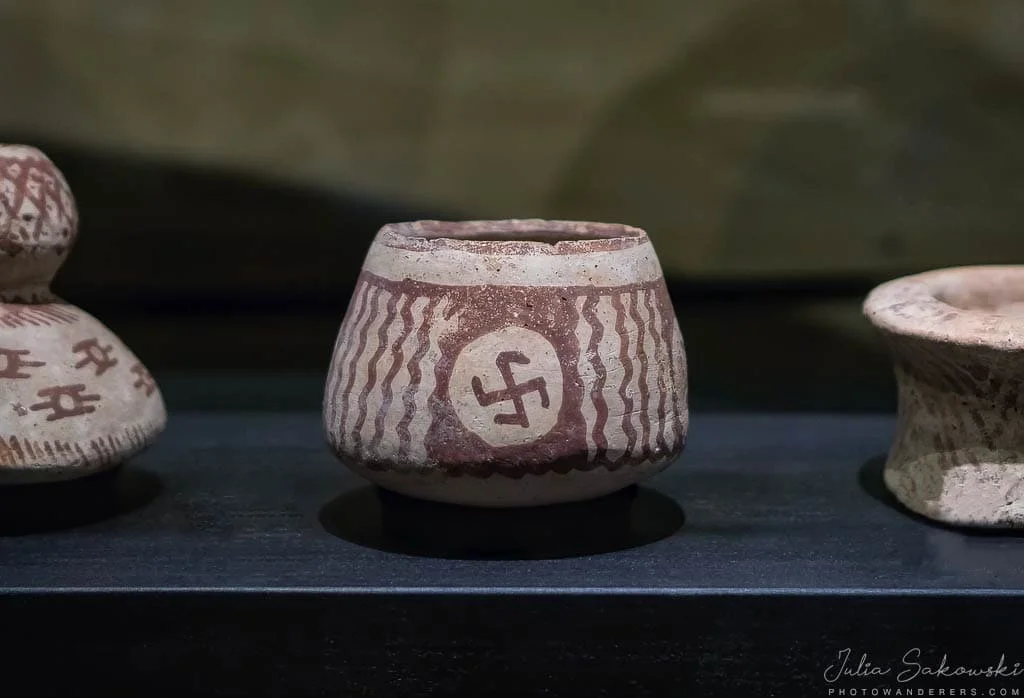
By the time of early Christianity, the people known as the Hohokam — which translates roughly as "those who are gone" — had already built a civilization here. They engineered complex irrigation canals through land that gets about eight inches of rain a year. They grew corn and cotton. They played a ball game similar to the Maya. Some of their canals are still in use today.
Then they vanished. Somewhere between the 13th century and the arrival of the Spanish, the Hohokam disappeared — and nobody knows exactly why.
The Hopi: People Who Behave Peacefully
Most anthropologists believe the Hopi are descended from the Anasazi, the ancient cliff dwellers who vanished before them. They are, by all accounts, a quiet people. Gentle. Patient. And their spiritual world is extraordinarily complex.
The Hopi worshipped spirits called Katsinas — beings that lived on the peaks of the San Francisco Mountains in northern Arizona. Every spring the Katsinas came down from the mountains to help with the planting and to look after children. In late July, when the growing season ended, they returned to the peaks. The whole village came out to say goodbye.
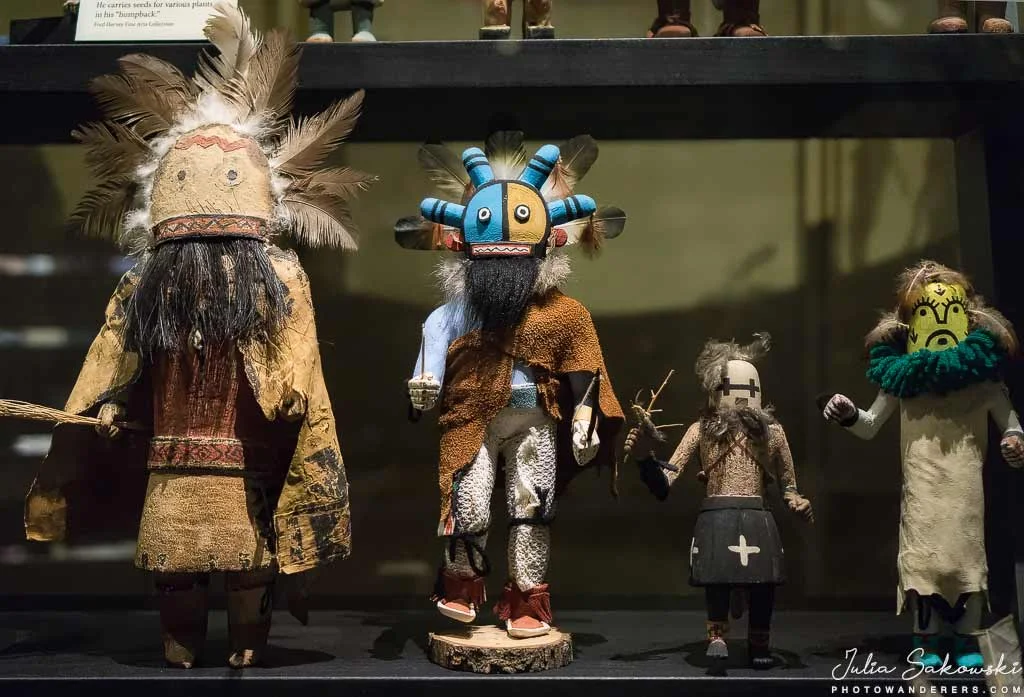
The dolls were given to children not as toys, but as teachers. Each mask identified a specific spirit. There were hundreds of them. The two display cases at the Heard are bright and overwhelming and a little bit eerie. You feel like they're watching you back.
And then there's the wedding.
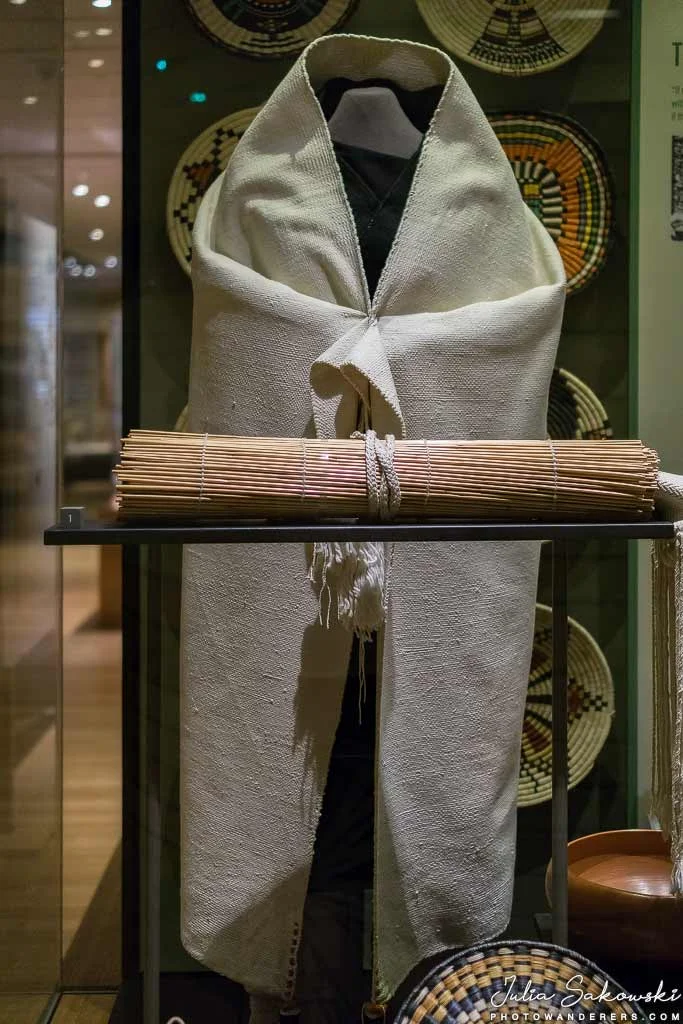
A Hopi wedding is not a quick ceremony. Couples often wait a year or two before completing the traditional rituals — the Hopi way takes time. Before the wedding, the bride spends three days at her future mother-in-law's home, grinding corn and preparing food. On the fourth morning, both families wash their hair together — an act that symbolizes they are now inseparable.
The bride wears white on her wedding day. She also receives a second white robe, rolled into a reed scroll. She keeps it for the rest of her life. When she dies, it becomes her burial shroud — the spirit traveling onward wrapped in the same cloth she wore on the happiest day of her life.
I stood in front of the display case for a long time.
The Zuni: Tears Turned to Turquoise

The Zuni are one of the most private of the Pueblo peoples. Their villages are largely closed to outsiders — open only a few times a year, for specific ceremonies. Mysterious, even by Southwest standards.
What they're known for, above everything else, is turquoise.
The legend goes like this: when rain finally came to the desert, the Zuni were so overcome with joy that they danced and wept. Their tears mixed with the rain and sank into the earth. And became turquoise.
Look at a Zuni necklace and you almost believe it. That particular blue-green — not cold, not tropical, but something in between — feels like it could only come from emotion.
The Navajo: A Universe in Five Worlds
If the Hopi world is built around spirits and ceremony, the Navajo world is built around stories.
Their creation story is one of the most elaborate I've ever encountered. The current world, they say, is the Fifth. In the First World — watery, covered by a dome of sky — there lived Insect People. They moved on. Through the Second World, the Third, the Fourth. In each world, something went wrong, and the people traveled upward to the next.
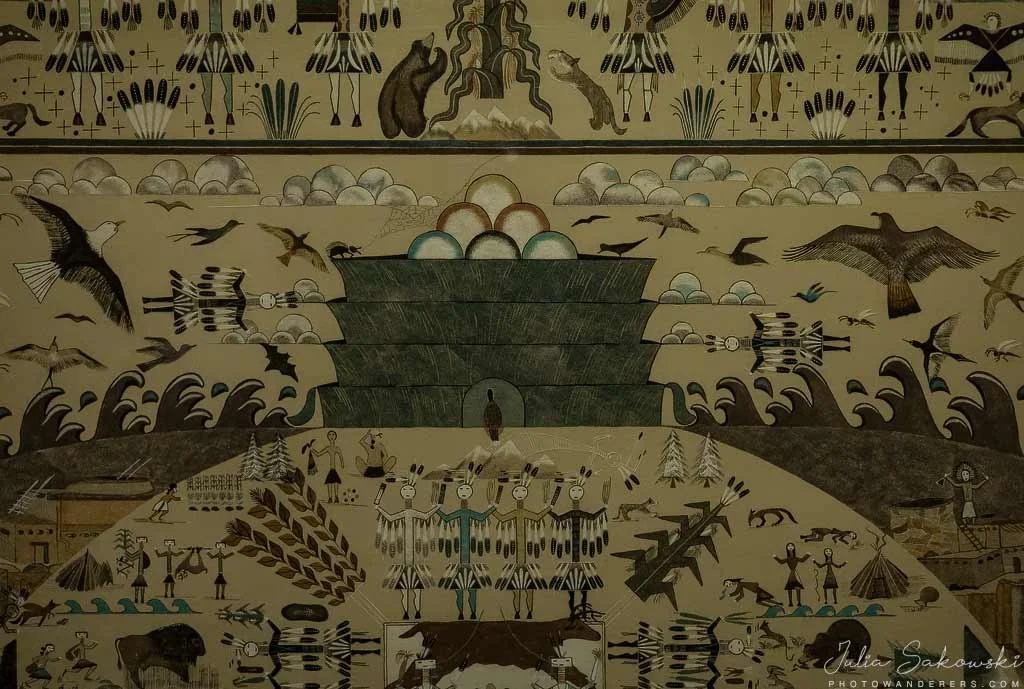
In the Fourth World, a trickster Coyote stole a baby from the Water Serpent. The Serpent, furious, flooded everything. The people stacked four mountains on top of each other, planted a giant reed, and climbed through it into the Fifth World. This one. Where we live now.
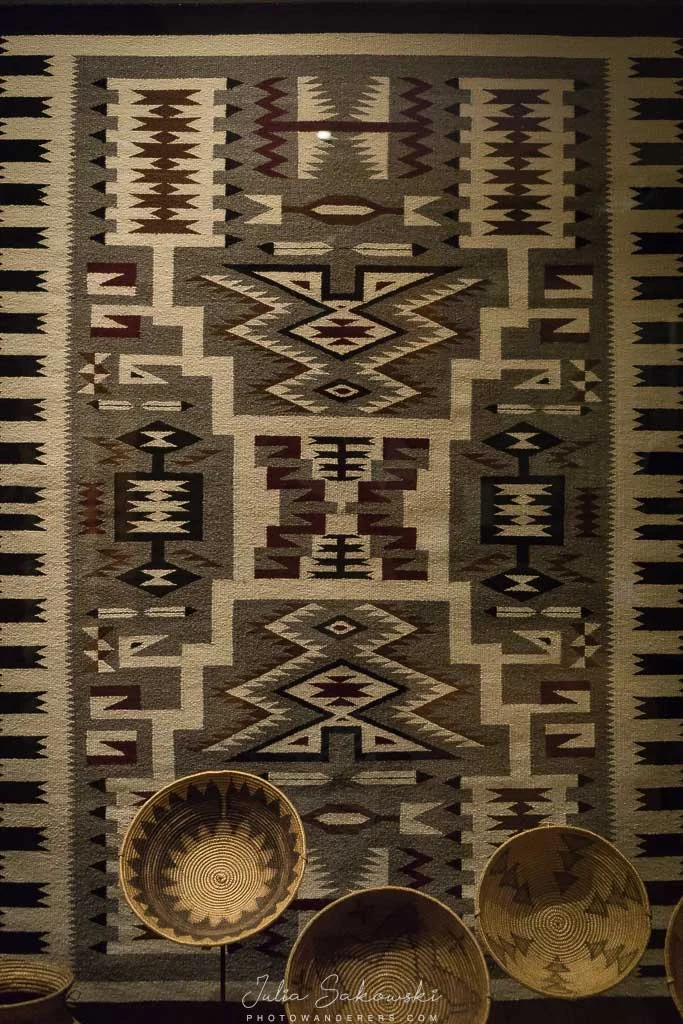
Standing in front of a full-size Navajo rug, you start doing math. A 6×10 foot piece takes months to weave and sells for around $13,000. Every knot placed by hand. Every color, every geometric figure, carries meaning.
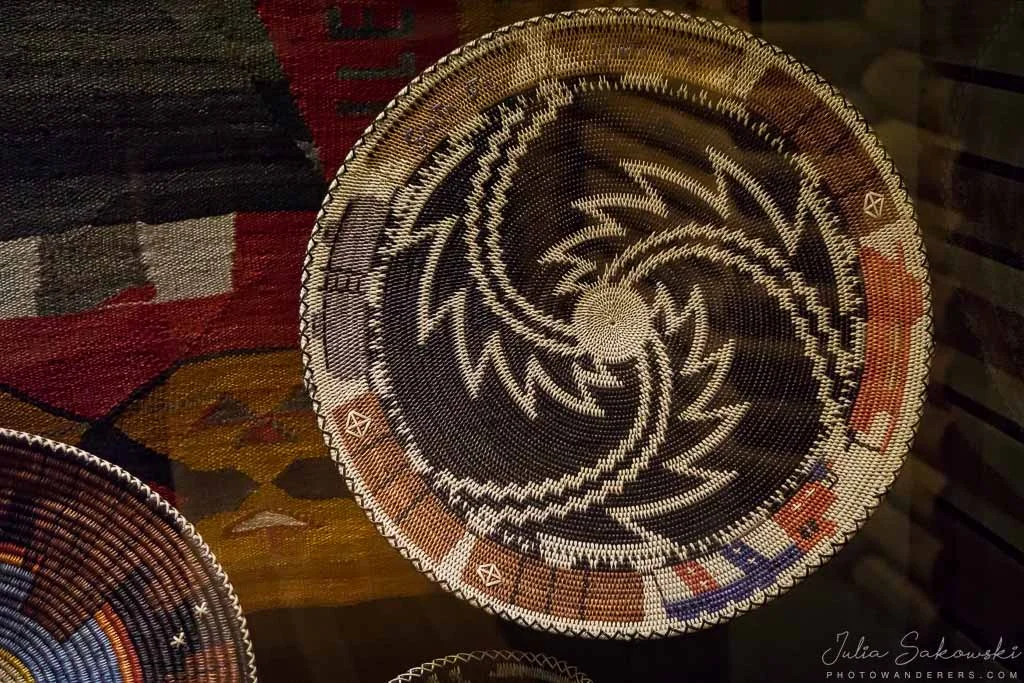
Baskets were bags, cabinets, birdcages, sandals, plates, and cups. They could even boil water in them. The oldest examples in the museum are rarely more than 120 years old — time is not kind to woven grass.
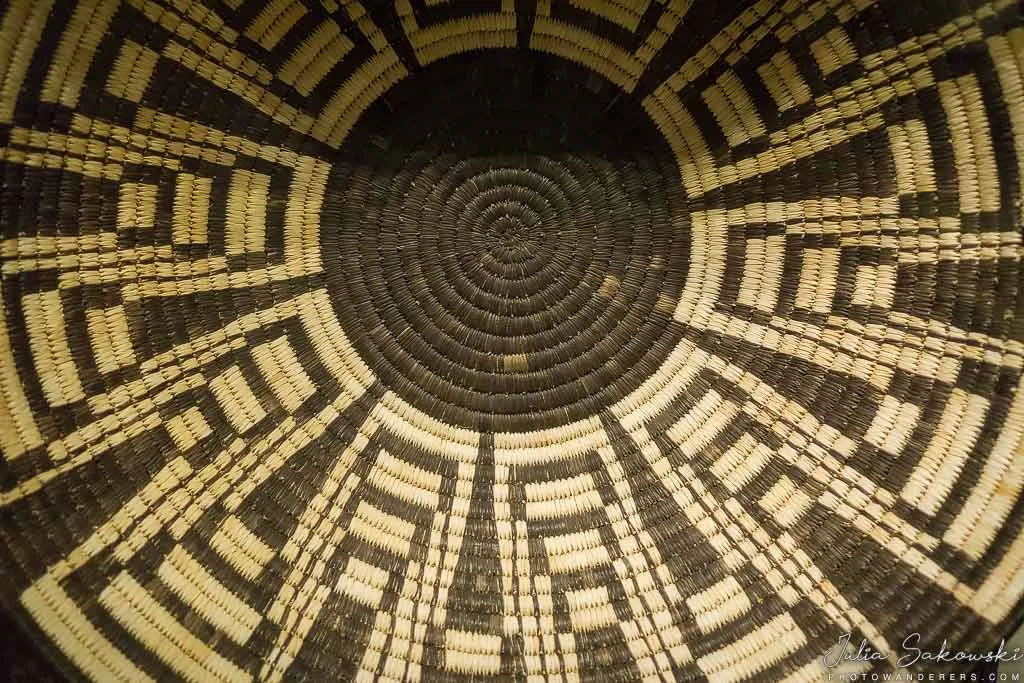
To get those dark geometric contrasts, Navajo weavers cultivated a plant called Devil's Claw — Martynia — specifically for its hooked black seed pods. A plant grown for its darkness. There's a kind of poetry in that.
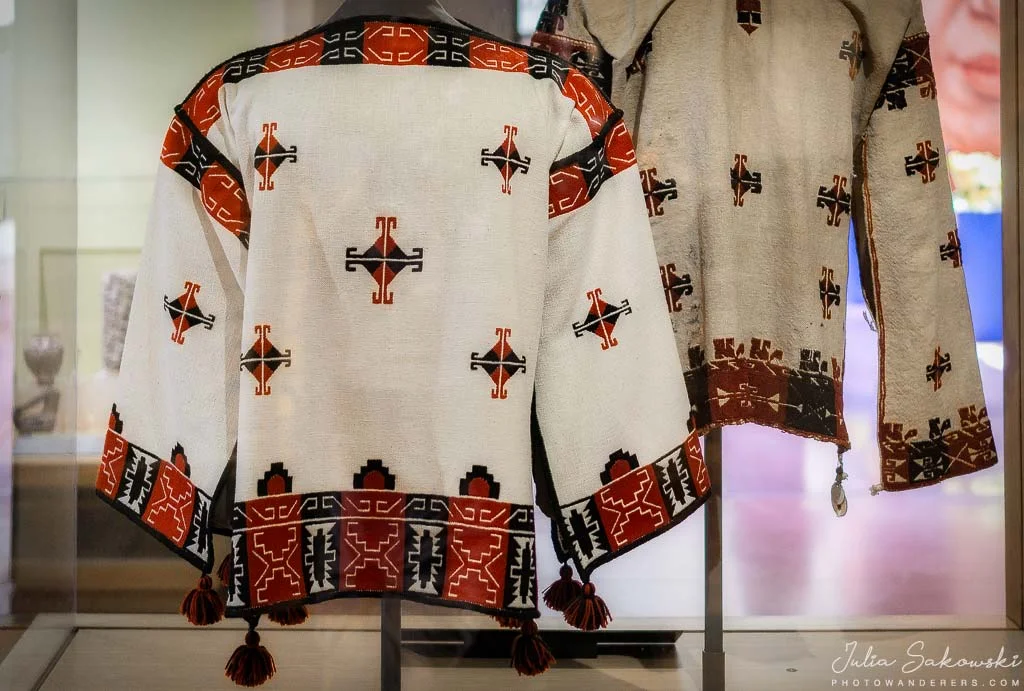
Two completely separate civilizations, on opposite sides of the world, arriving at the same visual language. In Ukraine, we call this vyshyvanka. The human instinct for pattern-making is apparently universal.
The Apache: Fierce, Smart, and Very Misunderstood
Every tribe in the room has a stereotype attached to it. But nobody collected more mythology — and more blame — than the Apache.
The word "Apache" in the languages of neighboring tribes means roughly "dangerous and aggressive enemy." Hollywood ran with this for about a century. Growing up far from here, even we had our version of the story: the noble warrior in feathers, riding bareback, piercing gaze, proud cheekbones.
Then you walk into the museum and see round faces, broad features, everyday objects. The gap between the movie and the reality is jarring, then humbling.
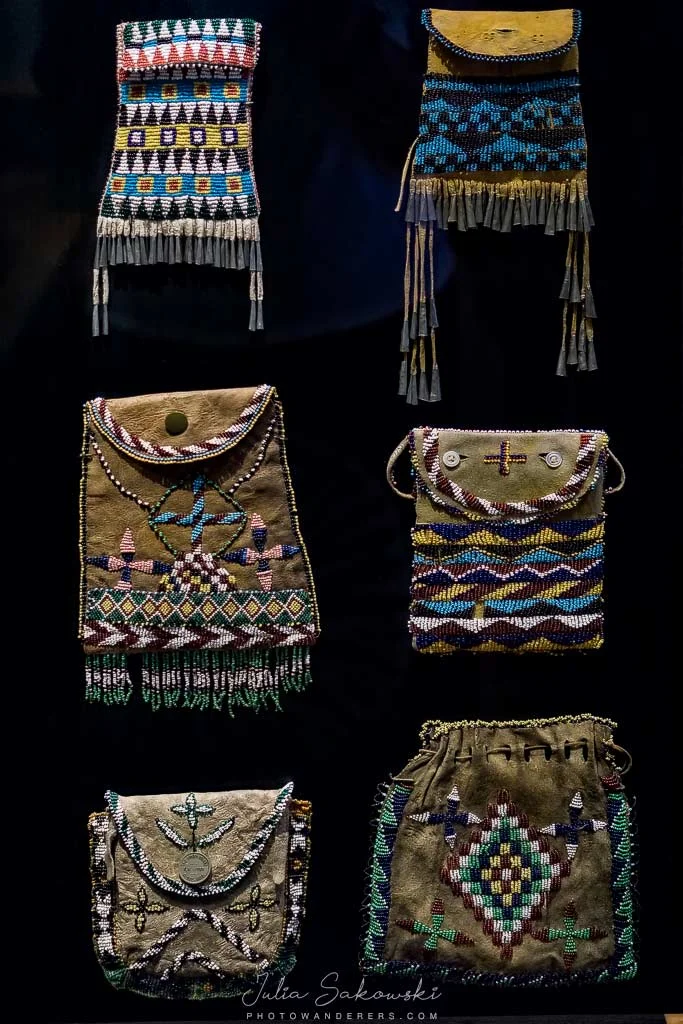
Years before this visit, we met a Navajo man who offered a different perspective on the whole Apache reputation. When settlers arrived asking who raided their farms and villages, the Navajo — who were also raiding, occasionally — learned quickly to point and say: "Apache. We're peaceful."
History is written by whoever speaks first.
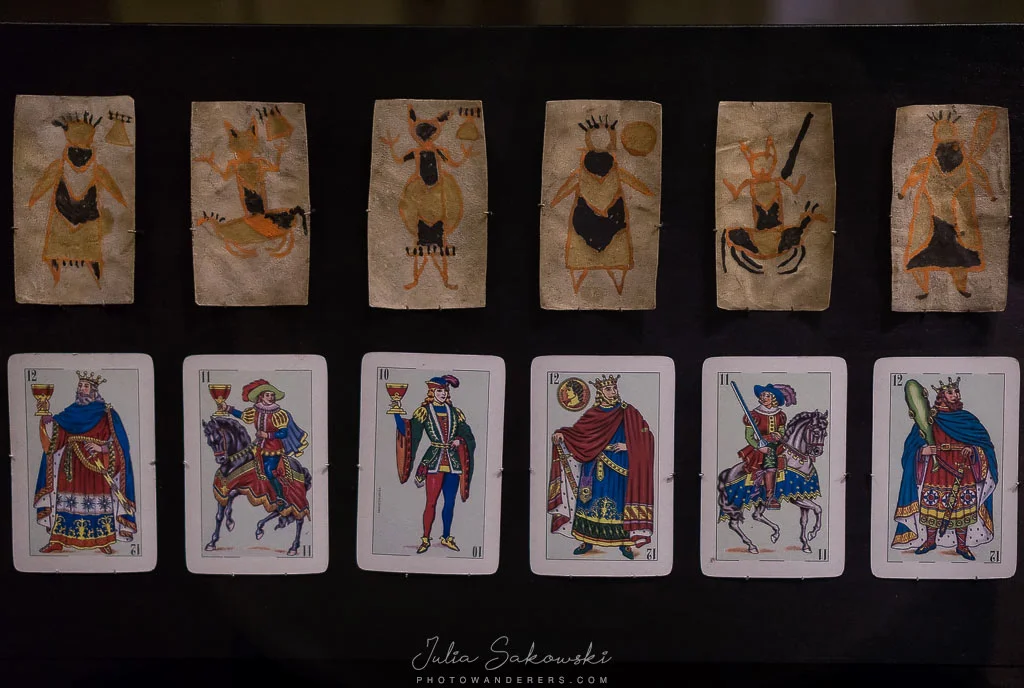
My favorite thing in the entire Apache section: those playing cards from 1885. Soldiers from Hernán Cortés's expedition taught Native Americans to play cards. The Apache promptly started making their own decks.
I love that. The world changes, you adapt, you make it yours.
Before We Leave
There's a rule among some Southwestern tribes: don't tell stories in summer. The elders say snakes don't like listening to them. And when a story irritates a snake — well. Best to wait until winter, when they're sleeping.
So consider this a winter story, told out of season. The snakes will forgive me.
By the time we stepped back outside, the thermometer had climbed another few degrees. The air tasted like hot metal. The creosote bushes still hadn't moved.
But something had shifted. Arizona looks different when you know who was here first. The red ground, the cracked earth, the impossible heat — it's not just backdrop anymore. It's someone's home. It has been for twelve thousand years.
We drove back through Phoenix with the AC blasting and didn't say much.
Some places do that to you.
📍 Heard Museum of Native Cultures and Art — 2301 N Central Ave, Phoenix, Arizona
Comments
Leave a comment