
Somewhere Neither of Us Has Been — St. Augustine, Florida
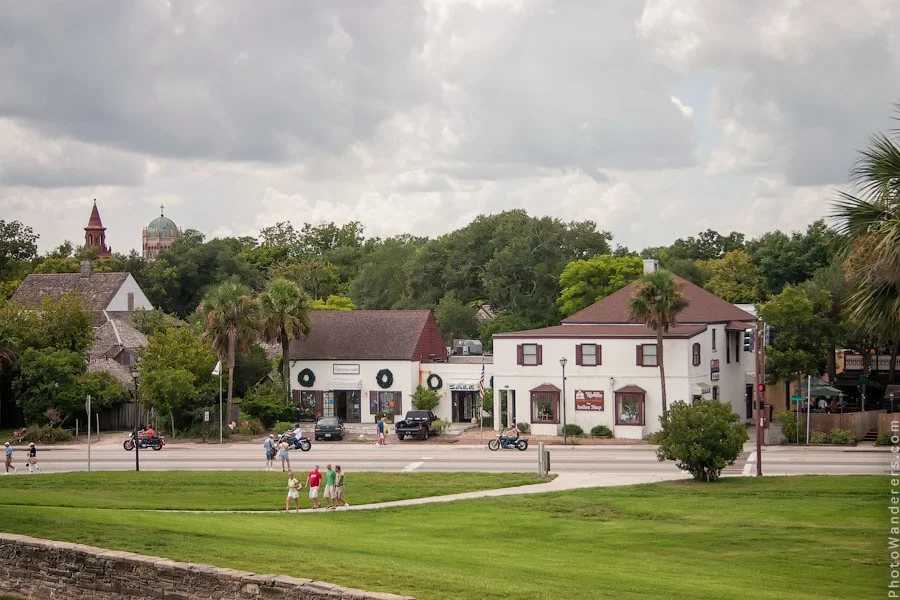
We almost went to a restaurant.
That's how most birthdays go, right? Reservation, wine, cake with a candle. But somewhere along the way we made a different rule: a birthday means going somewhere neither of us has been. Doesn't have to be far. Doesn't have to be grand. Just — somewhere new, somewhere interesting, somewhere you'll still remember when the candles are long forgotten.
I found St. Augustine the way you find the best places. I wasn't looking for it. I was scrolling through Florida attractions and saw a name I didn't recognize. Started reading. Couldn't stop. By the time I looked up, we had a plan for the weekend.
We drove down not knowing what to expect. Florida, in my mind, meant beaches, theme parks, strip malls, retirement communities. It did not mean what we found when we turned onto the old streets of St. Augustine.
It felt like stepping out of our own time.
September 6, 1565
We walked toward the massive gray shape of Castillo de San Marcos, guarding the harbor.
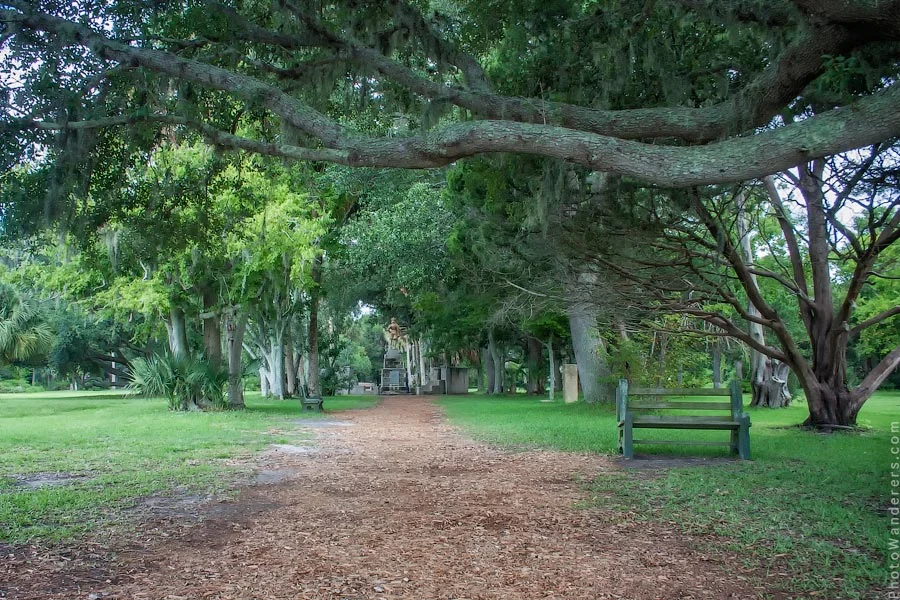
The fort dominated the waterfront, impossible to miss. We watched the water. Listened to the wind moving through the Spanish moss. But what fascinated me was what had been here before it.
I tried to picture the shoreline as it looked nearly 460 years ago. No stone walls. No streets. No church towers. Just forest, sand, and water.
Then, on September 6, 1565, ships appeared at the inlet.
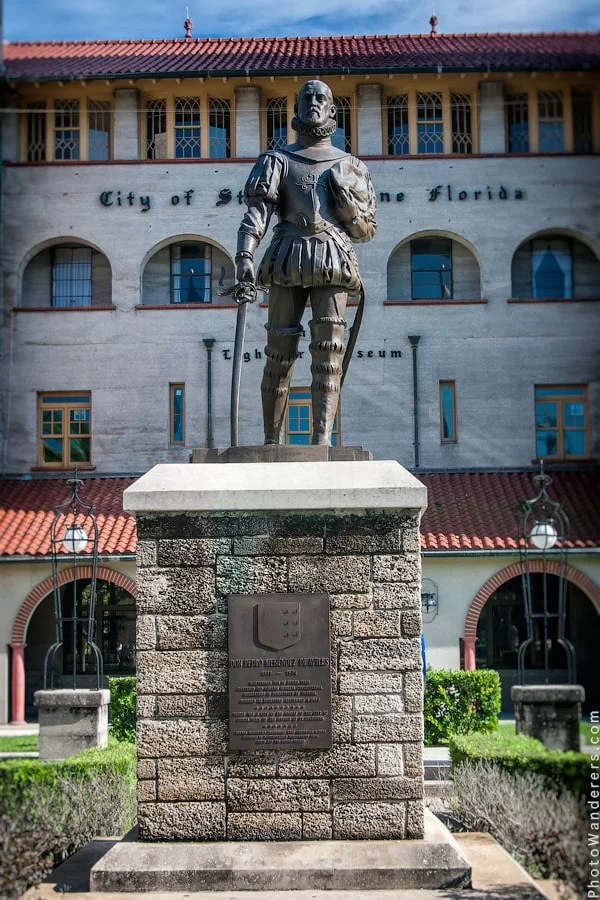
After nearly two months at sea, Pedro Menéndez de Avilés and his expedition finally reached the Florida coast. Soldiers in steel helmets and chain mail. Arquebuses, pikes, swords. They came ashore armed and moving fast. They knew the French were nearby, and they knew they didn't have much time.
Menéndez stepped ashore and kissed a wooden cross. The first Catholic Mass in North America was held on that sand — while lookouts scanned the tree line for movement.
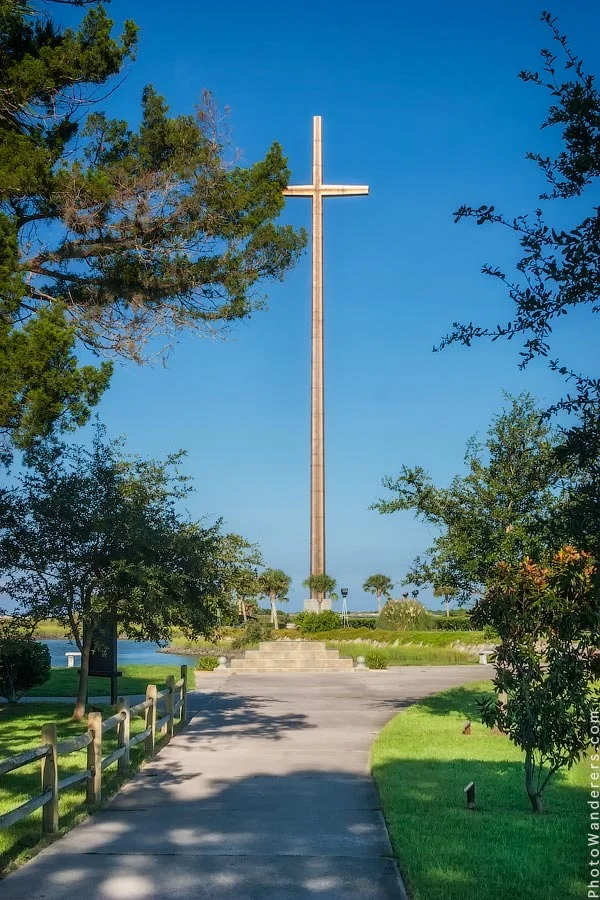
What began as a hurried landing became something much larger: the founding of St. Augustine, the oldest continuously occupied European settlement in the United States.
Standing by the water, it didn't feel like distant history. The Pilgrims wouldn't reach Plymouth for another 55 years.
The Fort That Never Fell
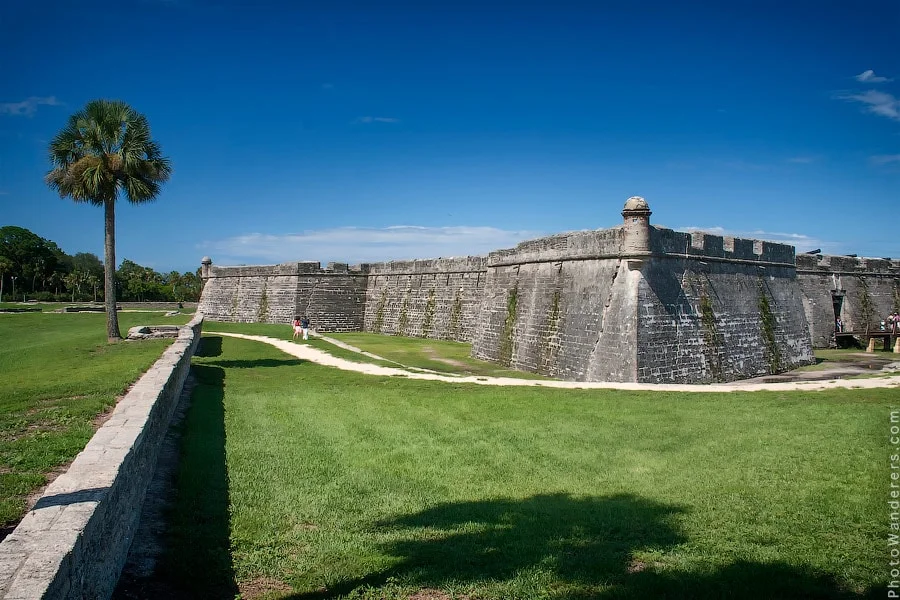
Castillo de San Marcos wouldn't rise above the harbor for another century. Today it's impossible to imagine the waterfront without it. The massive gray walls seem as much a part of the landscape as the bay itself.
What stands here today took more than two decades to build. When it was finally completed, it became the strongest fortification in Spanish Florida. And remarkably, it was never conquered.
What I remember most wasn't reading the history panels. It was watching the fort come alive.
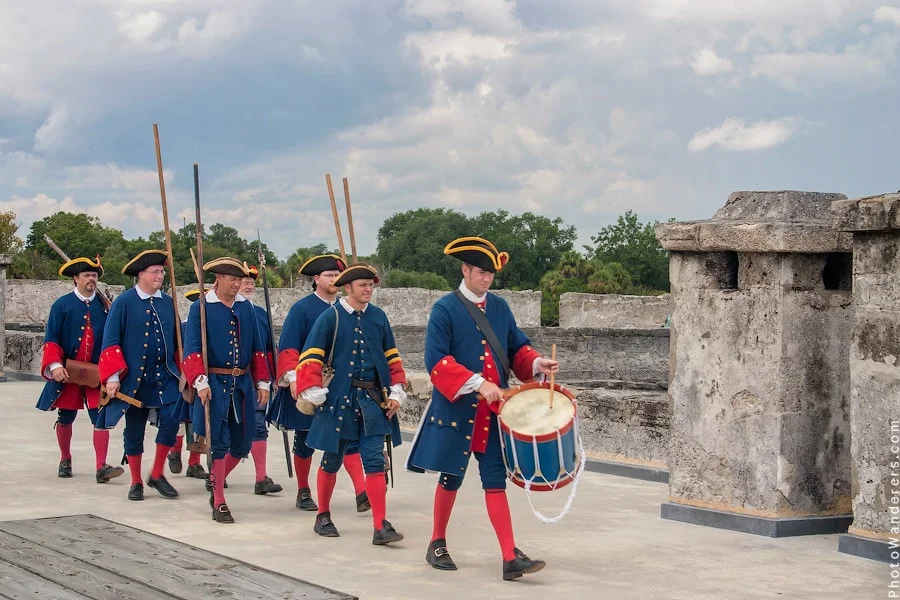
Reenactors in period uniforms marched across the wide stone ramparts overlooking the water. Muskets cracked. A cannon crew went through the same drill soldiers would have performed centuries ago. When the cannon fired, the blast echoed across the bay and hit me in the chest a split second before the sound fully registered.
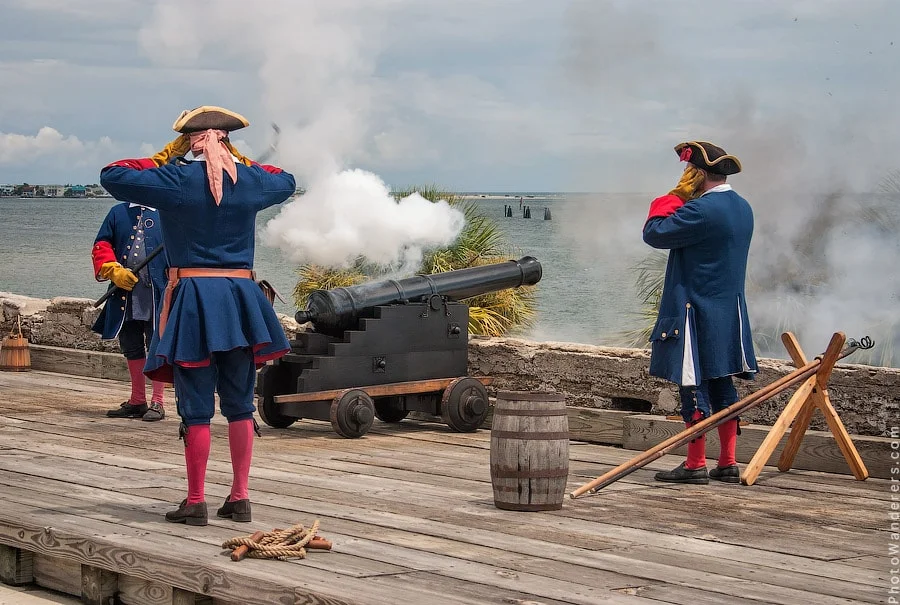
For a moment, it wasn't difficult to imagine the harbor filled with warships.
Inside, the atmosphere changed completely. The casemates — dark, cool rooms hidden behind walls several feet thick. Some served as barracks, others as storage rooms, and later as prison cells. Standing inside them, I couldn't help wondering what it must have felt like to be locked there with no realistic chance of escape.
One detail I almost missed was the stone itself.
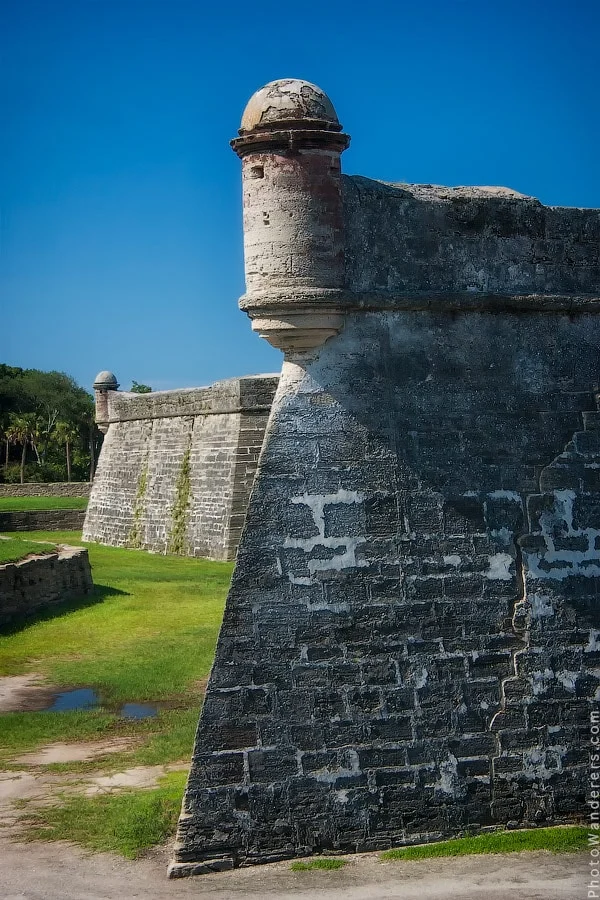
The walls are made from coquina, a rock formed from millions of tiny shells. Up close, you can still see them embedded in the surface. It looks surprisingly fragile for a military fortress.
But that's exactly what made it so effective.
Instead of shattering when struck by cannon fire, coquina absorbed the impact. Cannonballs buried themselves in the walls rather than blowing them apart.
More than three centuries later, those shell-filled walls are still standing.
The Fountain of Youth
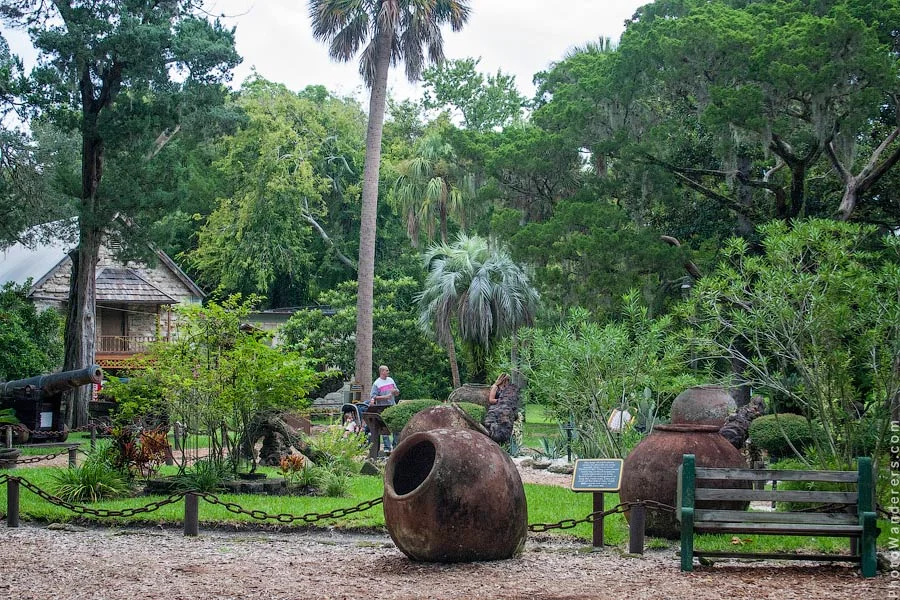
Of course we drank from the Fountain of Youth.
How could we not?
The spring sits inside the Fountain of Youth Archaeological Park, where peacocks wander the grounds and signs cheerfully suggest that a sip of the water might add a few years to your life.
I wouldn't count on it.
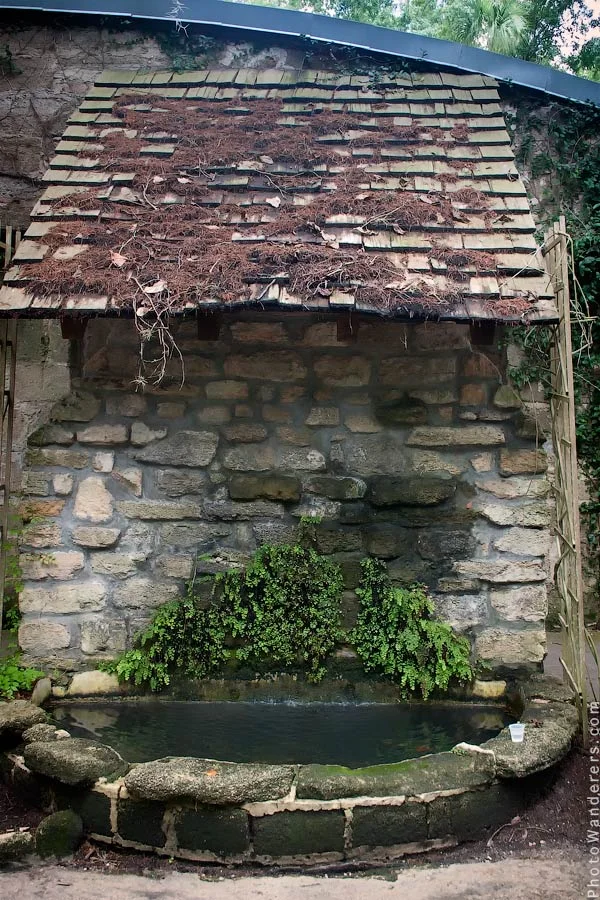
The water is rich in minerals and has a taste that's difficult to describe. Let's just say it reminded me more of an ancient swamp than eternal youth.
We drank it anyway.
The legend goes back to Ponce de León, who may or may not have been looking for it — the history is murkier than the myth.
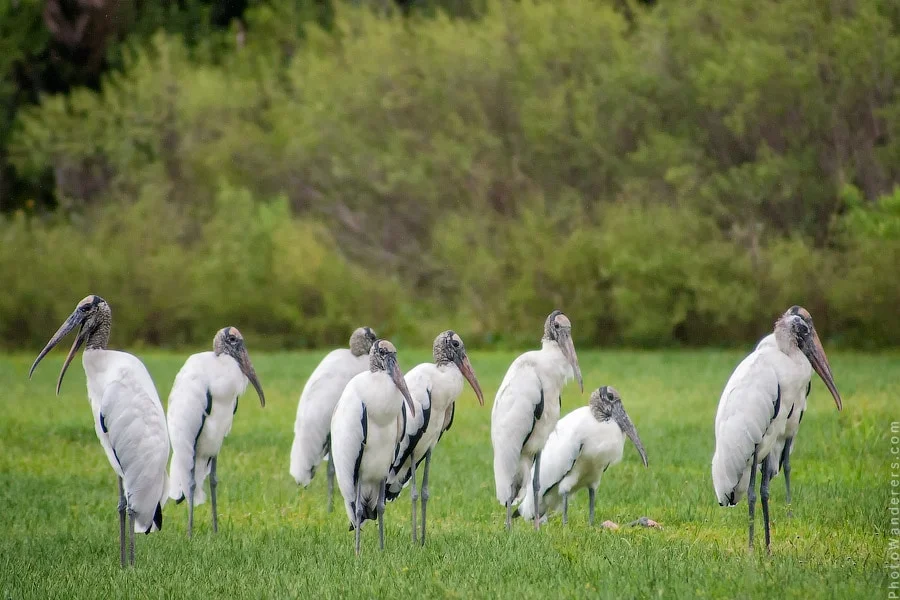
Five hundred years later, people are still coming here hoping to find something.
Maybe not eternal youth, but a little sunshine, warm winters, and a slower pace of life.
Ponce de León never found what he was looking for. He found Florida instead. That seems, honestly, like a fair trade.
A City of Firsts
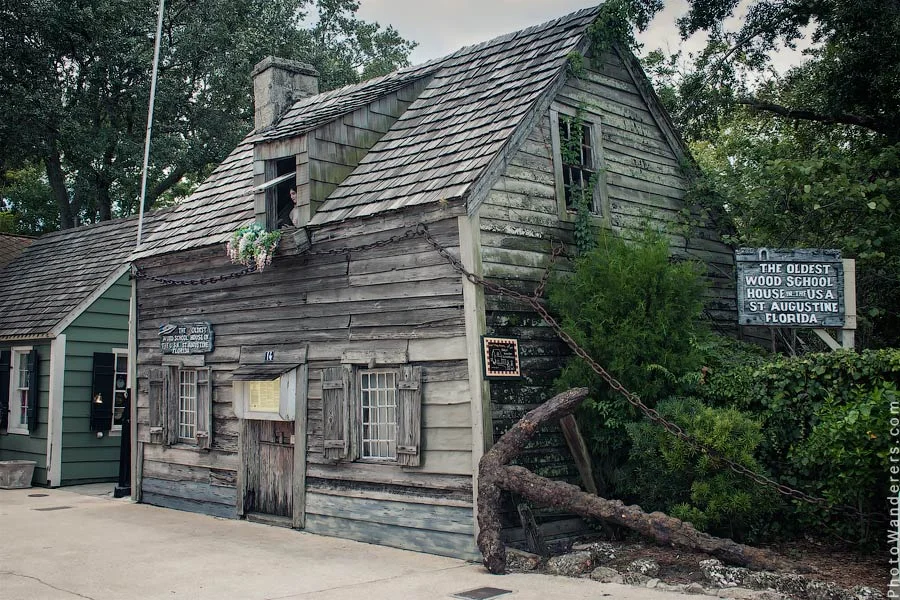
One thing I quickly learned about St. Augustine: it loves the word*oldest*.
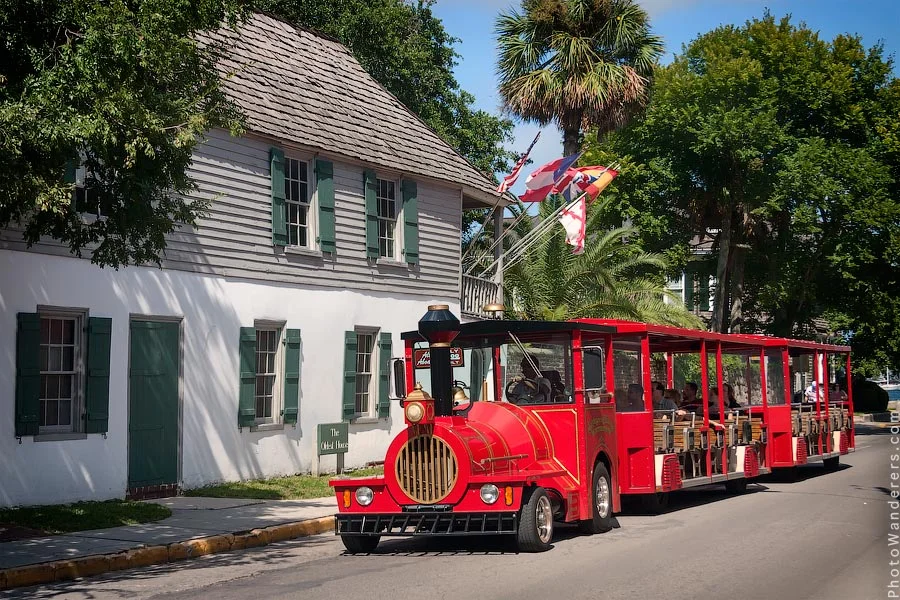
Oldest wooden schoolhouse. Oldest house. Oldest Catholic parish. Oldest masonry fort. Everywhere we went seemed to come with another claim to being the first, oldest, or longest-standing something in America.
Normally, that kind of thing can feel a little gimmicky.
Here, it somehow doesn't.
Walking down St. George Street in the morning, before the crowds arrived, I could understand why. Iron grilles covered the windows. Small courtyards hid behind archways. Balconies leaned out over narrow streets. The air smelled faintly of jasmine and salt drifting in from the bay.
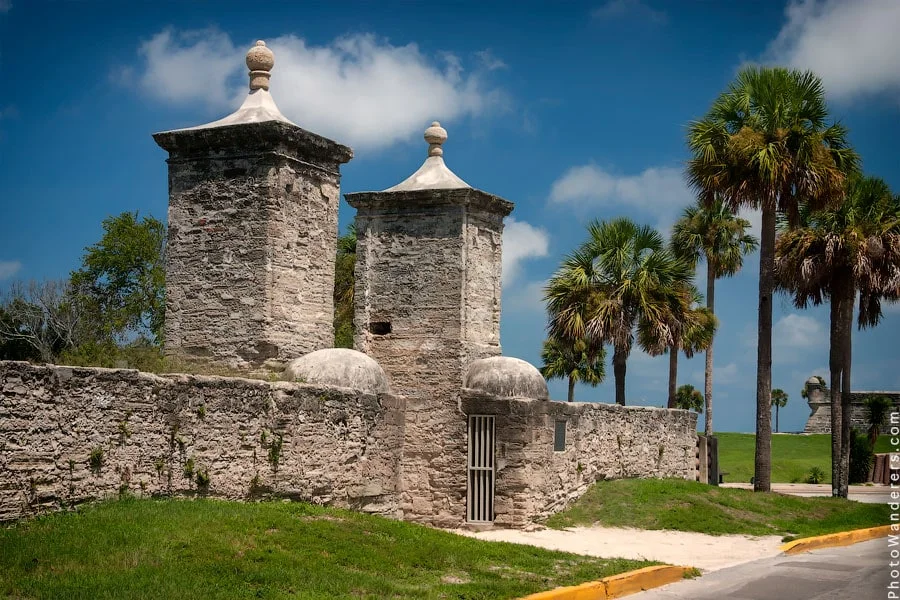
It felt like a Spanish colonial town that had somehow survived into the twenty-first century.
The Lighthouse That Gave Away the City
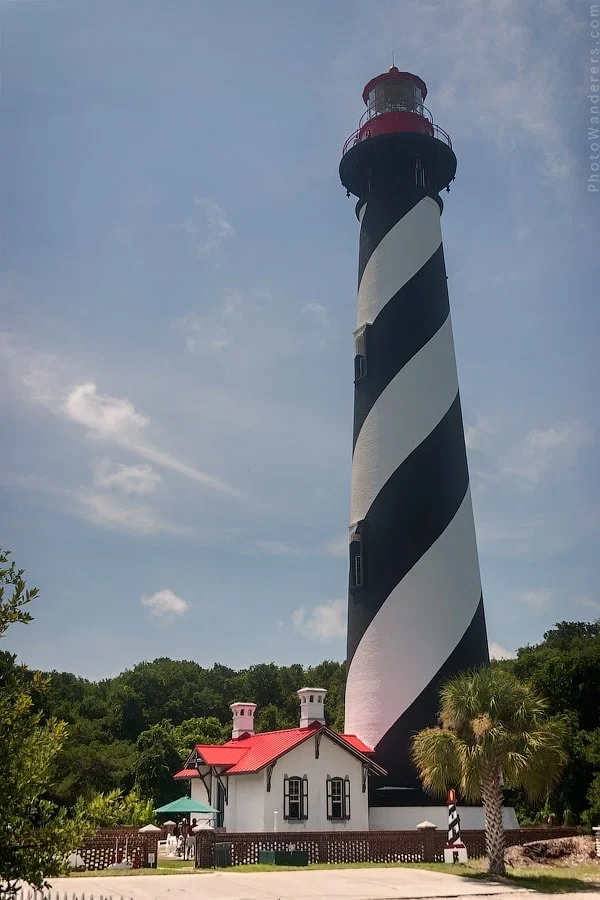
By the time we reached the lighthouse on Anastasia Island, I was already questioning whether 219 steps was really necessary.
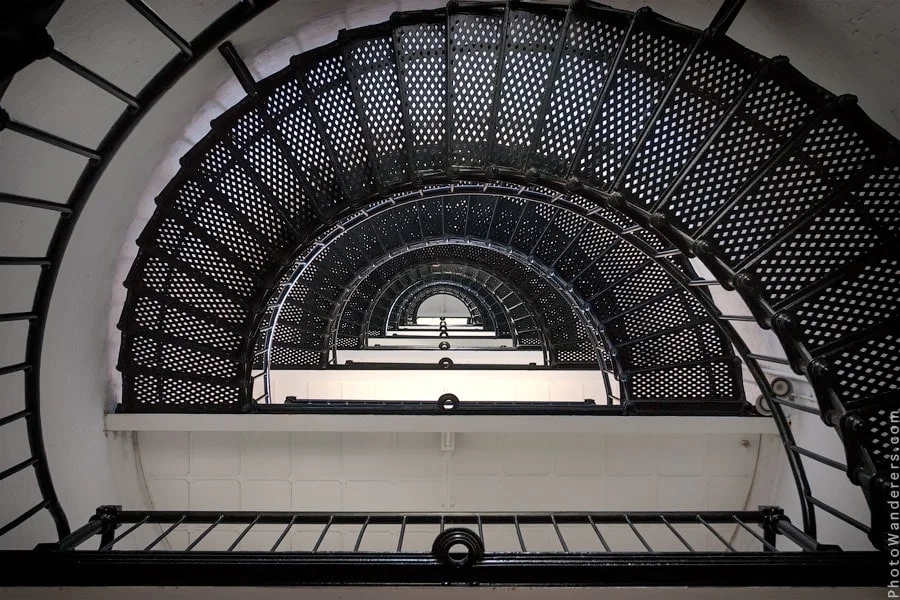
By the time we reached the top, I had completely changed my mind.
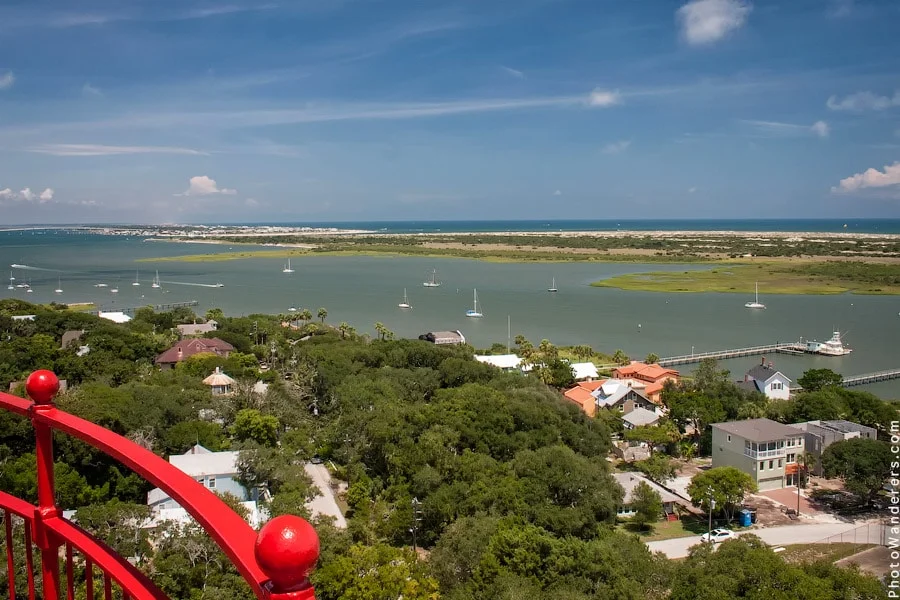
The view stretched in every direction — the Atlantic to the east, the Matanzas River winding south, marshes and waterways spreading across the landscape below. From up there, it felt like half of northeast Florida was visible at once.
What surprised me most was learning that a lighthouse has stood here almost since the city's beginning.
The first one wasn't the striped tower we see today, but a simple wooden watchtower built shortly after St. Augustine was founded. In 1586, that watchtower ended up helping Sir Francis Drake find the city before he attacked and burned it.
It's one of those small historical details that sticks with you. The structure meant to watch for danger may have helped lead danger straight to the harbor.
The current lighthouse came much later, completed in 1874. Standing at the top, with the wind coming off the Atlantic and the city spread out below, it was hard to imagine a better place to end an afternoon.
Flagler's Gilded Age Dream
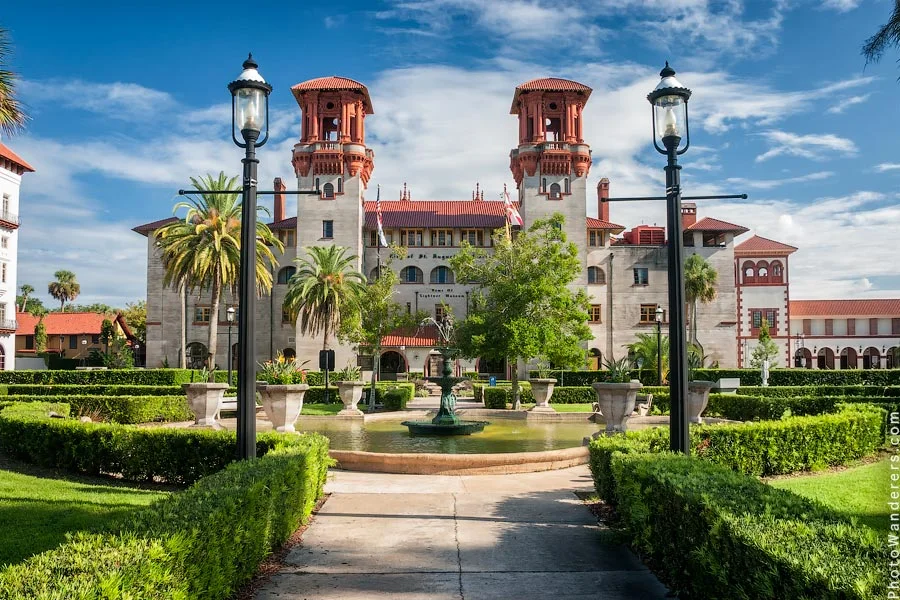
We ended up having coffee in the Alcazar Hotel — Henry Flagler's extravagant Gilded Age resort, built for wealthy winter visitors. The vast indoor courtyard is a café now. We sat beneath towering arches and balconies rising several stories above us.
My husband looked around and laughed.
"This doesn't feel like a café."
He was right.
I can still see visible watermarks from days gone by.
Evening
By evening, the light over Matanzas Bay turns gold, then copper, then something close to red. The fort changes color with it. Pelicans glide in low over the water. From somewhere nearby — a restaurant, an open window — there's guitar.
We sat on a bench by the harbor as the sky darkened. Neither of us said much. That's what a good trip does. It fills you up enough that you don't need to talk about it right away. You just sit with it.
We drove back late and had drinks on the terrace while the cicadas sang in the dark.
I still think that every birthday. Somewhere neither of us has been. That's the rule.
Comments
Leave a comment