
Yellowstone: Where the Earth Keeps Breathing
We rolled into West Yellowstone late at night. The camper settled into Grizzly RV Park, the engine went quiet, and that was it — we were here. No grand arrival. Just darkness, pine trees, and somewhere in the distance, that first faint smell of sulfur.
We woke before dawn. The campground was still asleep. No voices. No engines. Just the distant rustle of pine trees in the dark.
A few minutes later our camper rolled onto an empty Yellowstone road. Headlights swept across the forest. Wisps of fog drifted between the trunks.
For the first hour, we barely saw another vehicle.
Then the steam appeared.
At first, it looked like morning mist rising from the hillsides. But as we got closer, white clouds billowed up from the ground itself. Not mist. Not fog. Something hotter. Something alive.
Yellowstone was waking up.
The earth was breathing.
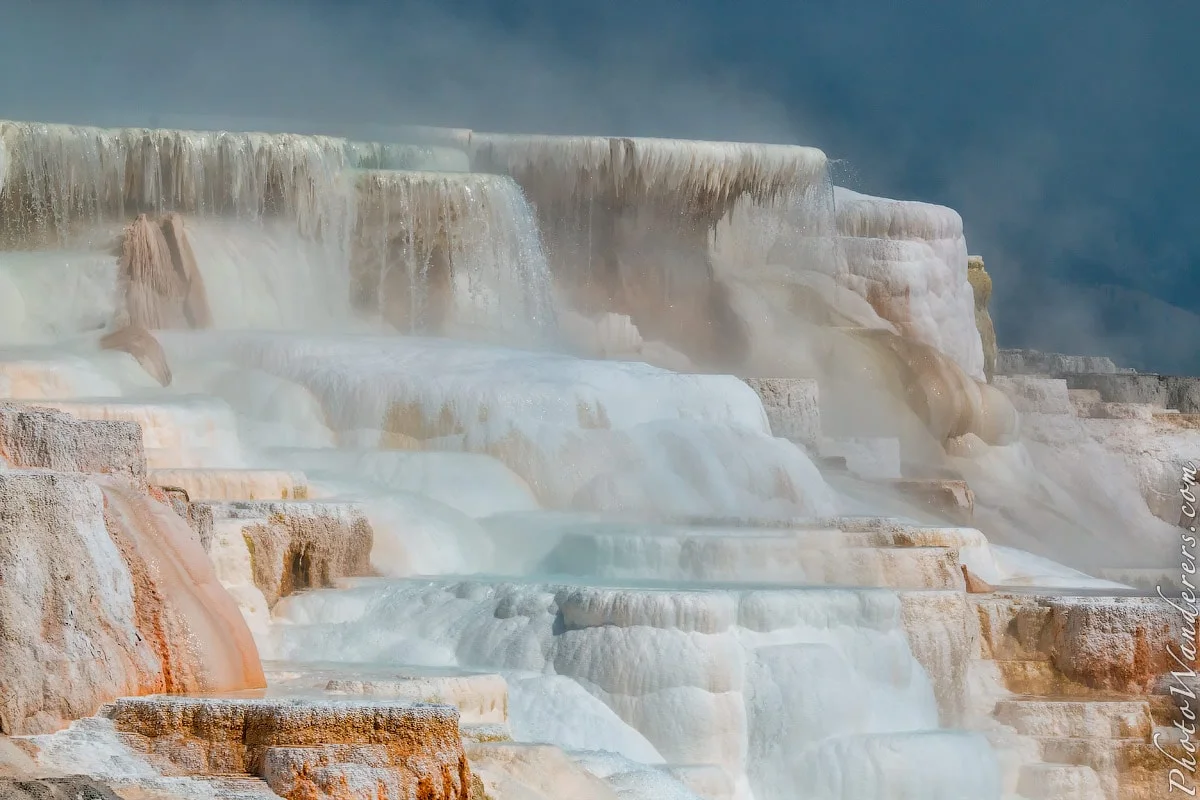
Mammoth Hot Springs
Mammoth is unlike anything else in the park. Mineral-rich water flows slowly down a hillside, leaving terraces of white and cream and pale orange as it goes. It looks like something frozen mid-pour. Like a wedding cake made of stone. Steam rises off the surface and disappears into the cold morning air.
We found parking on the upper terraces. On the lower terraces, every spot was taken. Alex circled while I rushed through the walkways, camera in hand, trying not to feel guilty about it.
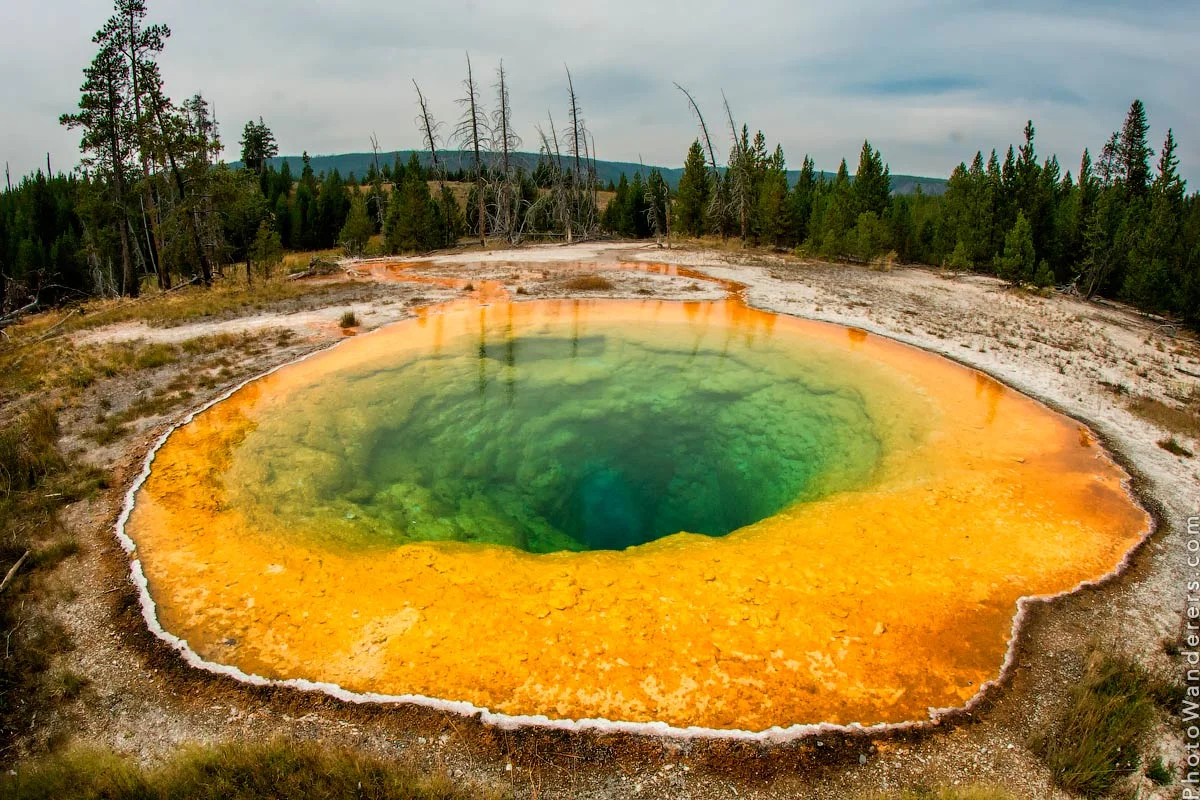
Morning Glory Pool
From the boardwalk, it looks like someone dropped a giant sapphire into the earth.
The center glows with an almost impossible shade of blue. Around the edges, rings of yellow, orange, and green spread outward like brushstrokes on a painting.
Apparently, microscopic organisms are responsible for this — I kept forgetting that, because it looked like paint spilled from space.
Sadly, the pool once looked even more spectacular.
For decades, visitors tossed coins, rocks, and other objects into the spring. The debris disrupted the flow of hot water and changed the delicate balance that created its famous deep-blue color.
Standing there today, it's still beautiful. But it's also a reminder that even the most extraordinary places are surprisingly fragile.
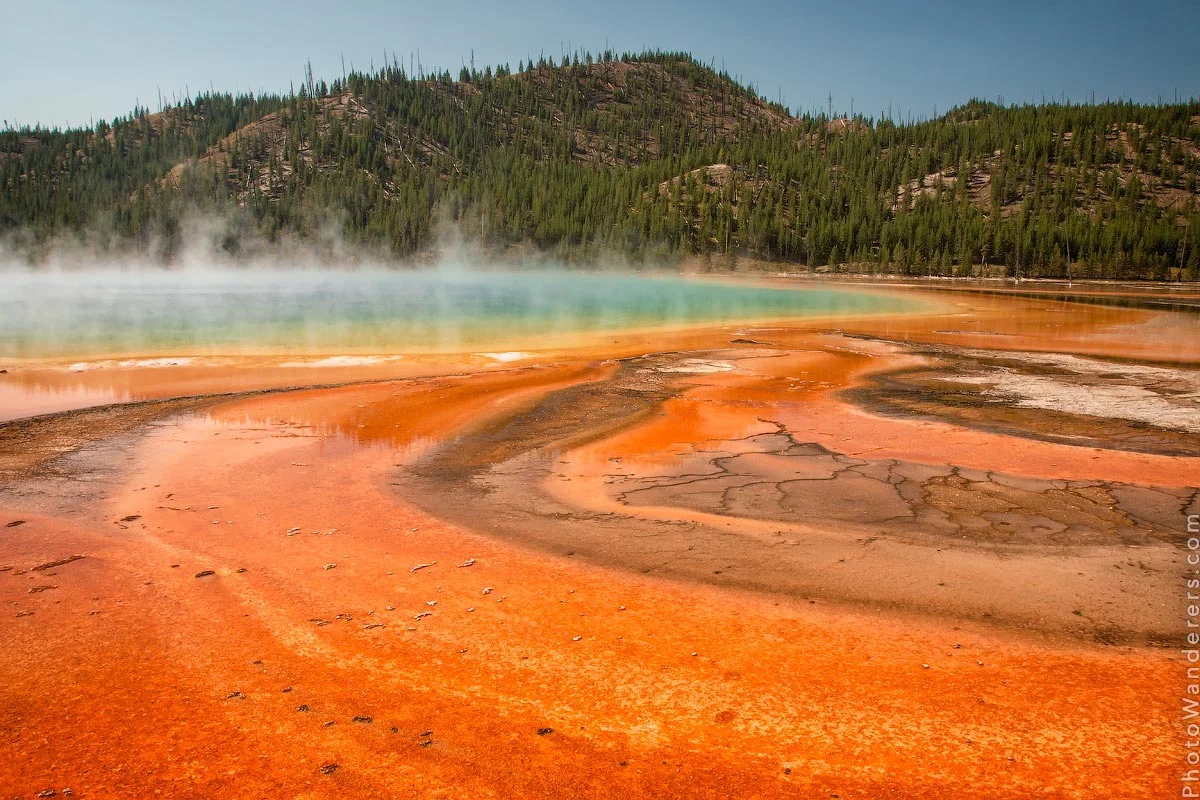
Grand Prismatic Spring
If a rainbow ever decided to settle on Earth, it would probably look like Grand Prismatic Spring.
Nothing prepares you for the first glimpse.
Bands of electric blue, fiery orange, golden yellow, and deep red spread across the landscape like something that shouldn't exist.
Steam drifts across the surface. The colors appear and disappear as the wind shifts. Every few seconds, the view changes.
Photographs capture the colors. What they don't capture is the smell. Or the constant sound of bubbling water. Or the feeling that the ground beneath your feet is alive.
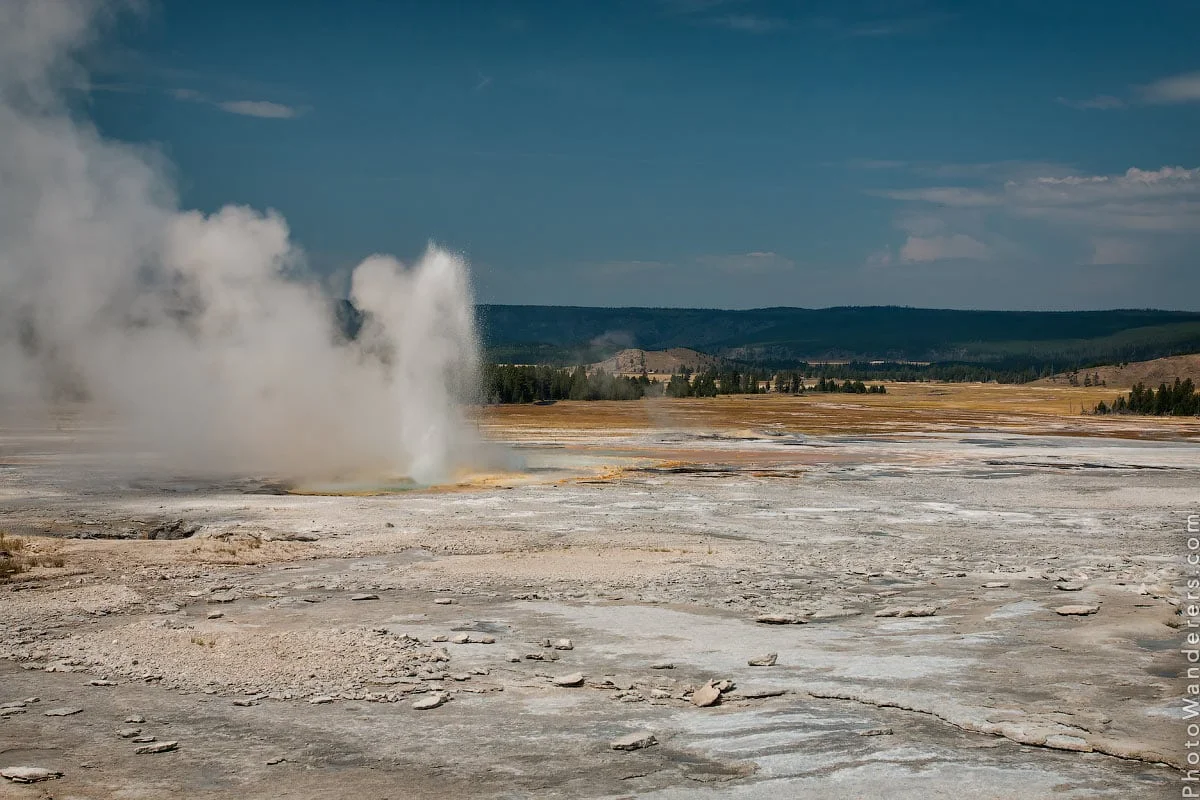
Clepsydra Geyser
One of my favorite places in Yellowstone wasn't the biggest or the most famous.
It was Clepsydra Geyser.
Unlike Old Faithful, which makes visitors wait for its performance, Clepsydra erupts almost constantly. Within minutes of leaving the parking area, we were standing beside clouds of steam and jets of boiling water shooting into the air.
This is where Yellowstone becomes a full sensory experience.
Steam hisses. Mud bubbles. Water roars underground.
And every now and then the wind shifts.
A strong gust delivered a wave of sulfur-rich air that smelled unmistakably like rotten eggs. It coated our camera lenses with tiny droplets of mineral water. We covered our faces and laughed.
Black Pool, West Thumb
There is something strangely dreamlike about walking Yellowstone's thermal basins.
Hot steam and cold air collide. Visibility changes from minute to minute. Colors appear where they shouldn't exist. I joined the slow procession of visitors along the boardwalks, all of us moving quietly, speaking in dozens of different languages, all of us looking at the same impossible things.
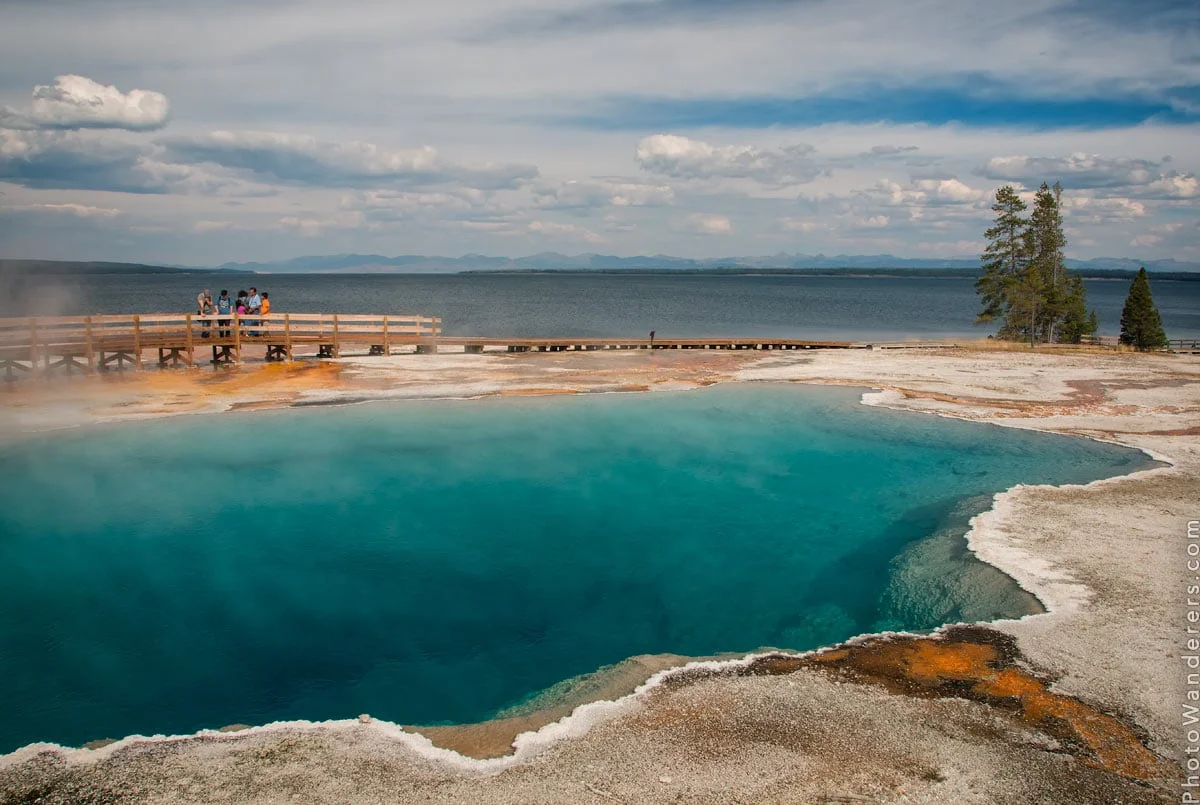
Black Pool at West Thumb stopped me. I leaned over the railing and looked in. Like staring into liquid glass.
Despite its name, it isn't black at all. It glows a brilliant, impossible blue. Years ago, the water was cooler, allowing dark bacteria to survive near the surface. As temperatures rose, they disappeared — and the pool transformed into the vivid spring I was standing in front of now.
Occasionally, bubbles rose slowly from below.
Lower Yellowstone Falls
After days spent looking at what was happening beneath the earth, we turned our attention to what water had carved above it.
We reached Artist Point in the morning and found a parking spot for the camper. The timing could not have been better.
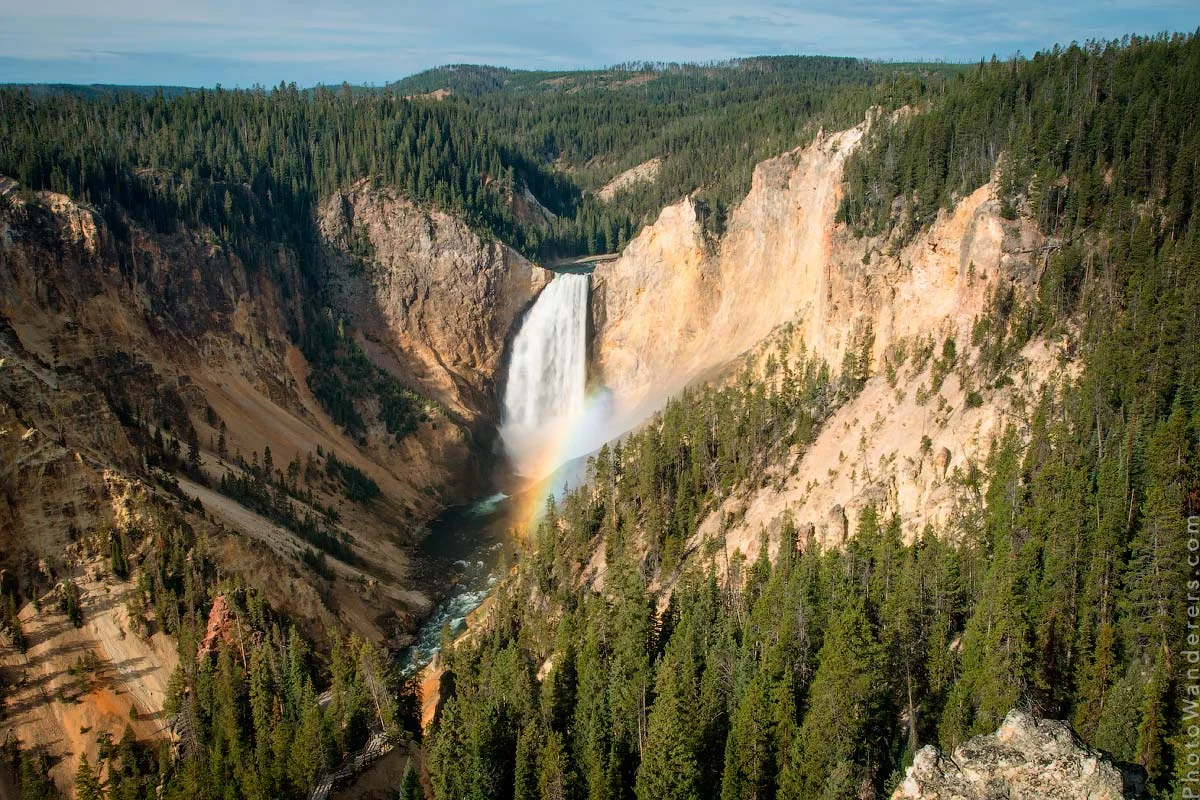
The water drops 94 meters. More than twice the height of Niagara Falls. The sound arrives before the details. A distant roar. Then thunder. Then a constant vibration you feel in your chest.
Sunlight struck the mist rising from the falls. A rainbow appeared. For a few minutes the entire canyon seemed to glow.
There's a story that a painter named Thomas Moran stood on this exact spot in 1871 and made a canvas that was later shown to the US Congress — visual evidence that this place deserved protection. That it should become a national park.
Standing there, watching the rainbow burn in the mist, it was easy to believe the painting worked.
Tower Fall
Tower Fall was a hike.
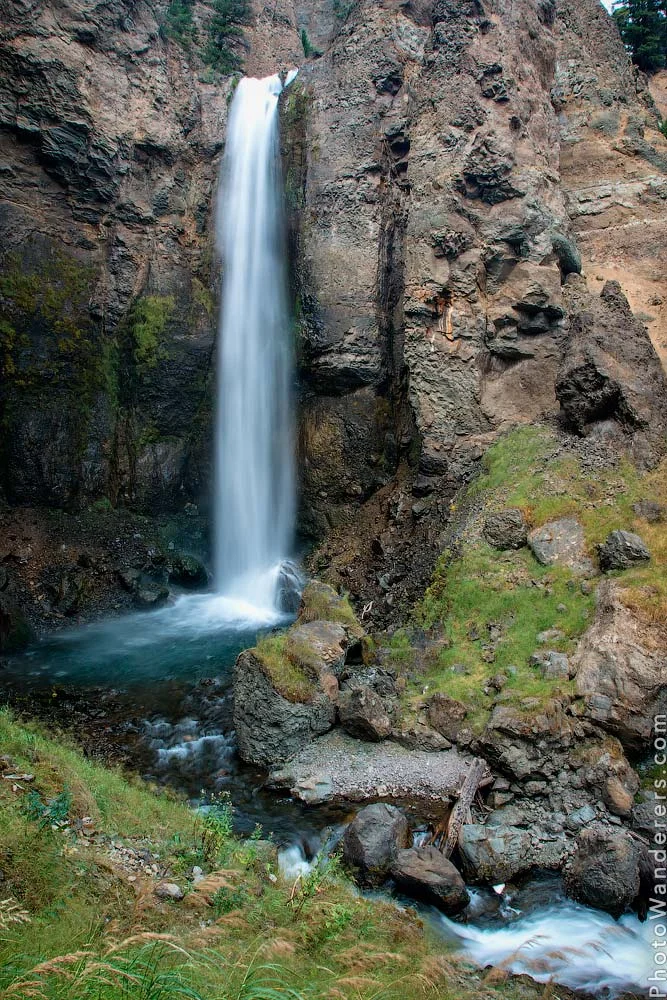
Just past the paved overlook, the path turns to dirt, then switchbacks steeply down into the canyon. The air gets cooler. The sound of the falls grows louder with every turn.
The final stretch to the base was closed due to erosion. No trail, no signs, no other visitors. Just fallen trees to duck under and loose ground to navigate carefully.
We went anyway.
Water tumbles nearly 40 meters into a rocky basin, surrounded by volcanic columns that rise like the towers of an ancient castle. From the base, it looks completely different from the overlook above — wilder, closer, louder.
In 1870, an expedition led by General Henry Washburn came through this area to see if the stories were true. Hunters and trappers had been telling strange tales for years. Rivers that smelled of sulfur. Water that boiled up from the ground. Fish you could catch in one pool and cook in the hot spring beside it.
Nobody believed them, of course.
Full Moon Over Yellowstone
One evening, a full moon was scheduled to rise over Pelican Creek. We had been looking forward to it for days.
We never made it to Pelican Creek.
The road was blocked. Rangers stood in both lanes, calmly turning cars around. Somewhere ahead, a hiker had found an unexploded avalanche-control charge. Old, unstable. The area was closed.
Not exactly the evening we had imagined.
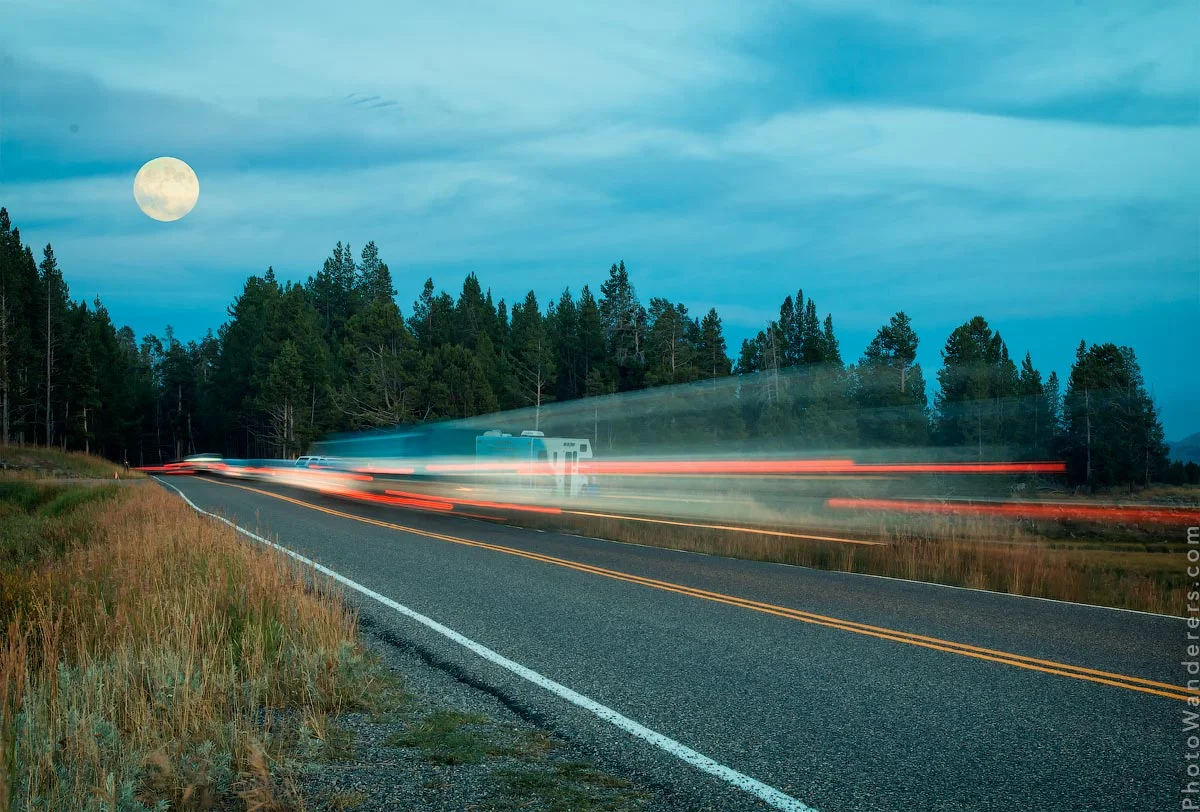
We pulled over on the shoulder and waited. Around us, cars were making U-turns, headlights swinging across the road, engines grumbling. Then one by one they disappeared back the way they came.
The road went quiet.
The forest stood dark and still. Then the moon appeared. A pale disk rising above the tree line. Silent. Huge. Unhurried.
Inside the camper, the kettle whistled softly on the stove. We made tea and watched the moon climb.
Hayden Valley: Land of Bison
After several days of geysers, hot springs, and clouds of sulfur-scented steam, something unexpected happened.
We stopped saying "wow."
Not because Yellowstone had become less impressive. We had simply reached our daily limit of geological miracles.
It was time for wildlife.
One morning we climbed aboard a beautifully restored yellow touring car from the 1930s and headed into Hayden Valley. Our guide had his specialty. Bison. That was all we needed to hear.
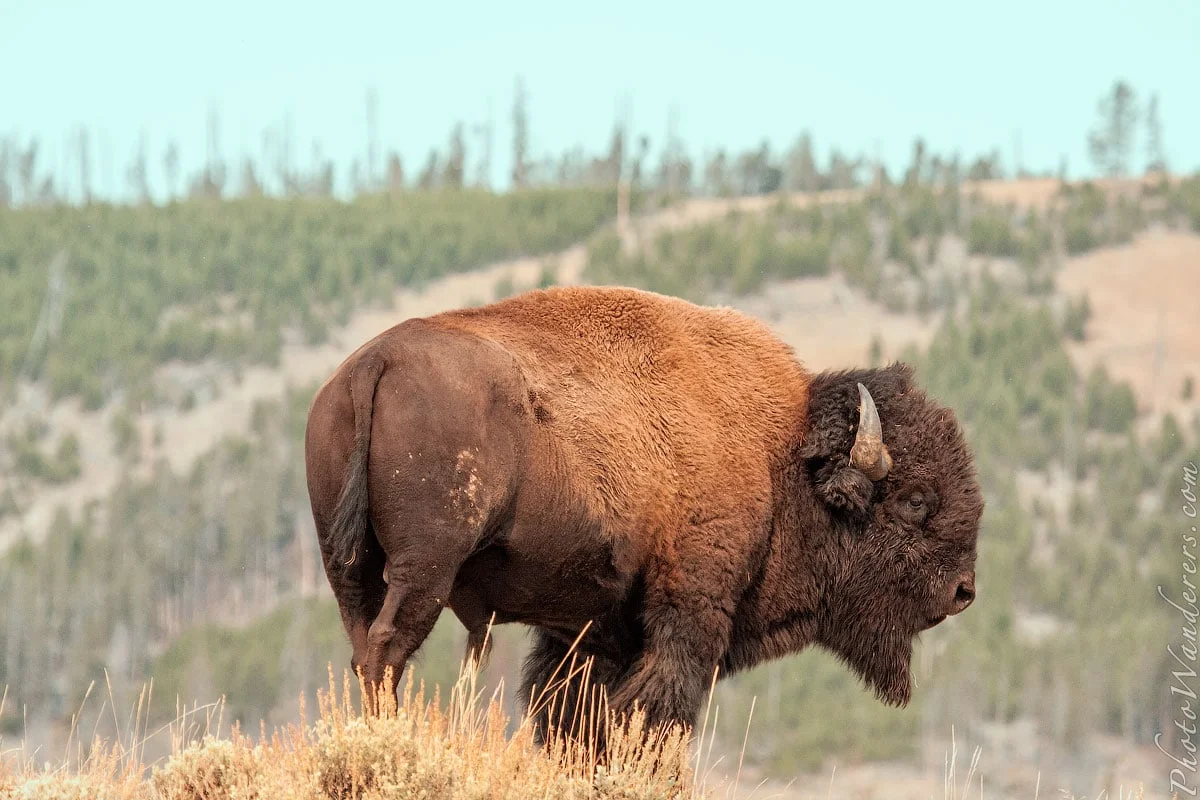
Hayden Valley stretches across the heart of Yellowstone like a vast green ocean. Rivers wind through the grasslands. The sky feels impossibly large.
At first, the bison look like scattered rocks across the landscape. Then one moves. Then another. Then you realize there are hundreds of them.
Photographing bison requires patience. We found a spot — close enough to watch, close enough to retreat quickly — and waited. Nothing happened. They grazed. The light shifted. Someone in our group checked their phone. More grazing.
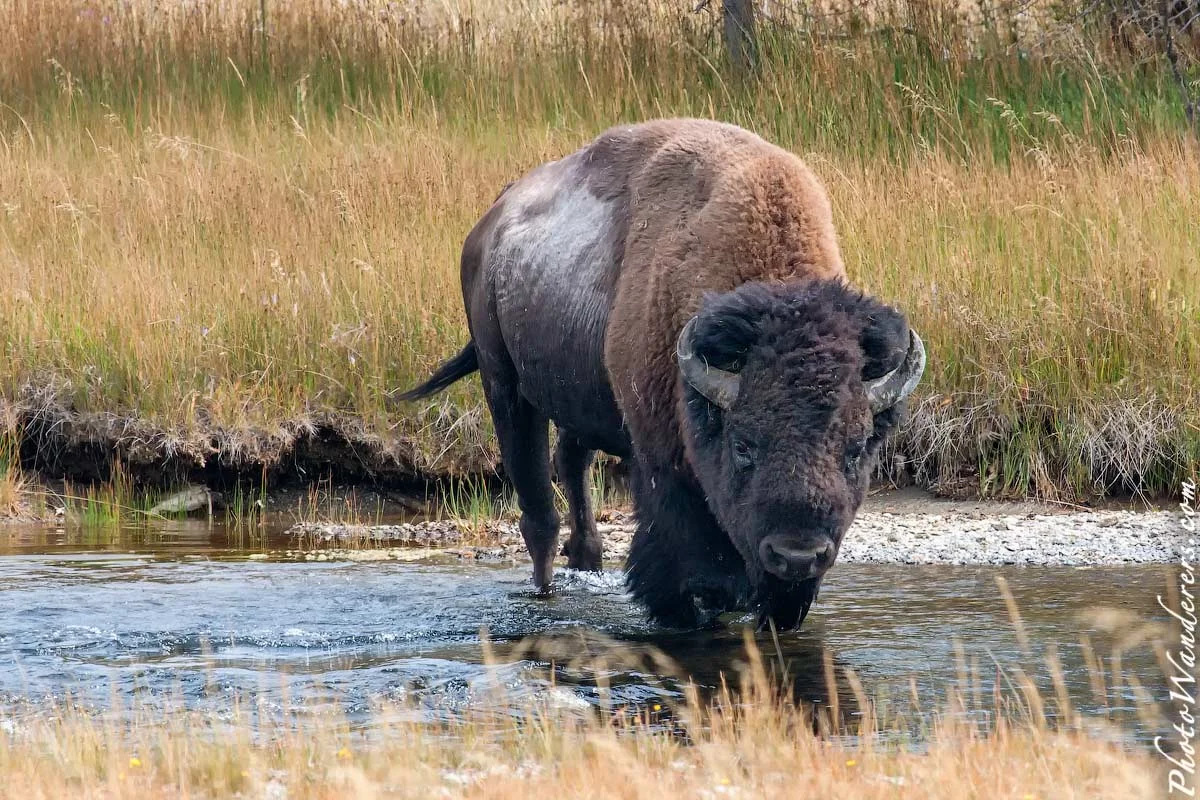
Then a young bull turned sharply. A calf bolted for no apparent reason. A massive animal walked calmly into the river and stood there, water swirling around its legs, completely indifferent to all of us.
The best moments always arrive the second you've stopped expecting them.
Lamar Valley: Yellowstone's Wild Side
If Hayden Valley belongs to the bison, Lamar Valley belongs to everything else.
The road follows a broad valley framed by mountains. Golden grass ripples in the wind. Every distant shape becomes a reason to stop and reach for binoculars.
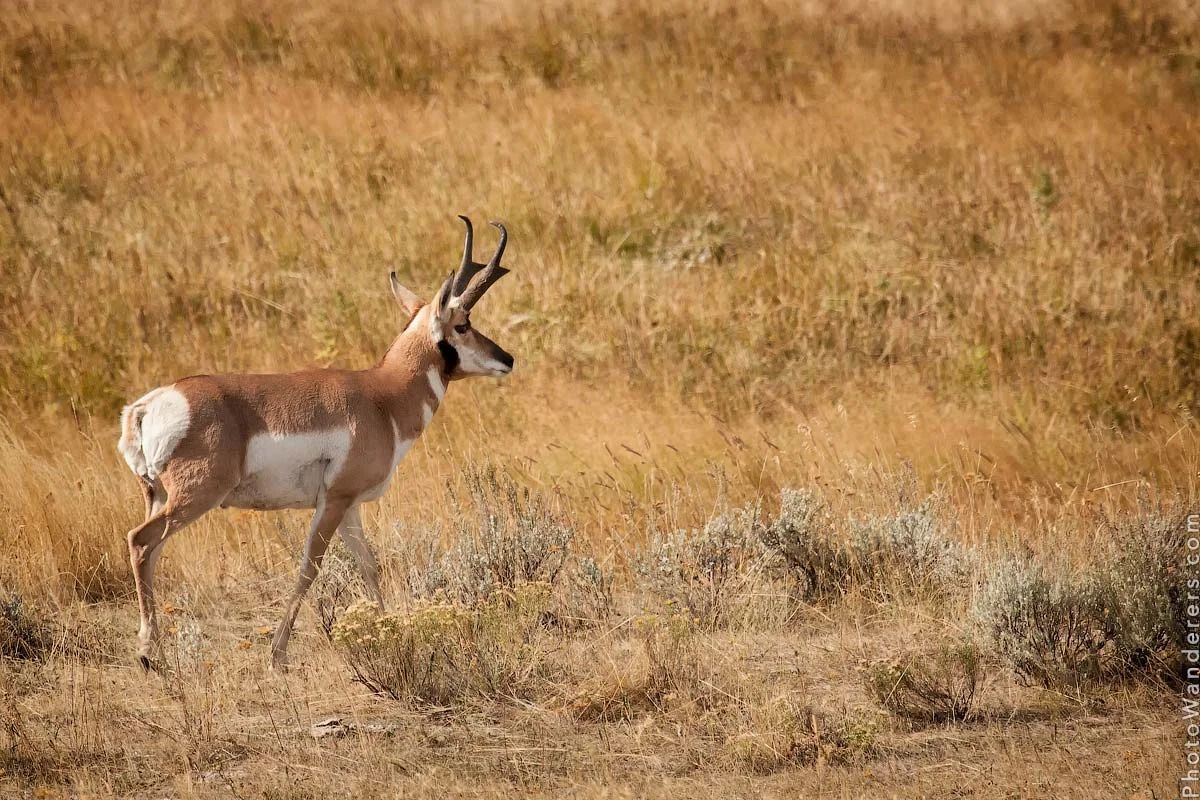
Every visitor arrives hoping for wolves. Most leave without them. Lamar teaches you to pay attention to everything else in the meantime — the hawk banking low over the grass, the shape that might be a coyote, the pronghorn that appears and vanishes before you've raised your binoculars.
The pronghorns were among my favorites. Elegant and alert, they seemed to float across the valley. Every few minutes one would stop, raise its head, scan the horizon, then disappear into the grass.
The only bear we saw during the entire trip wasn't in Lamar Valley at all.
We were walking along the Madison River with our dog when it appeared on the opposite bank. It saw the dog. It didn't hesitate. It jumped into the river and started swimming across.
We didn't wait to see how the introduction would go.
Pebble Creek
Driving back through Lamar Valley that evening, we passed a small campground sitting quietly beside a creek, the Absaroka Mountains rising behind it.
No crowds. No noise. Just pines and running water and fading light.
We looked at each other.
We changed our plans.
We arrived the next morning at eight. By mid-morning, every site was taken.
Twenty-seven sites. No hookups. No electricity. Bears are common here, so food goes into locked containers the moment you step away from the table.
I forgot that, just once.
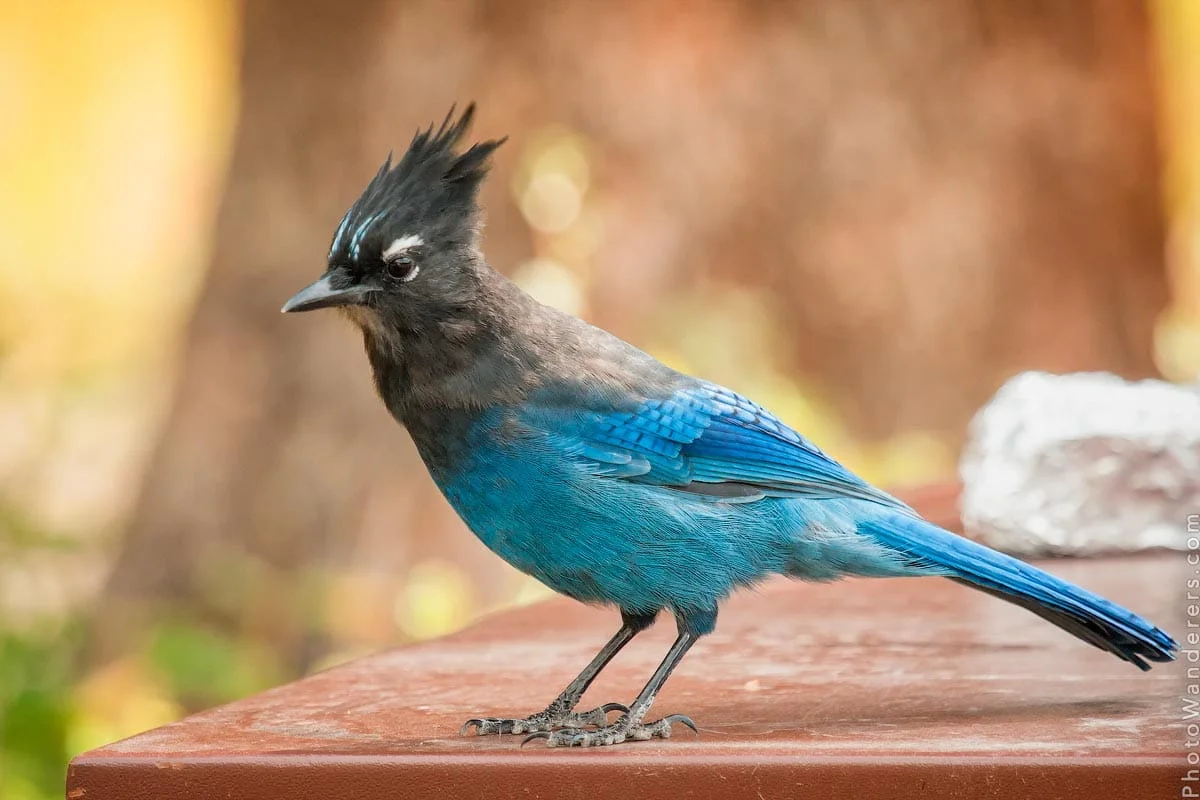
A Steller's jay — bright blue, sharp-eyed, completely unimpressed by humans — landed near the silver food pouch I'd left on the picnic table. Head tilted. One hop closer. Another hop. The investigation was clearly progressing.
I rescued the food just in time. The bird seemed genuinely disappointed.
Wildlife visited without invitation.
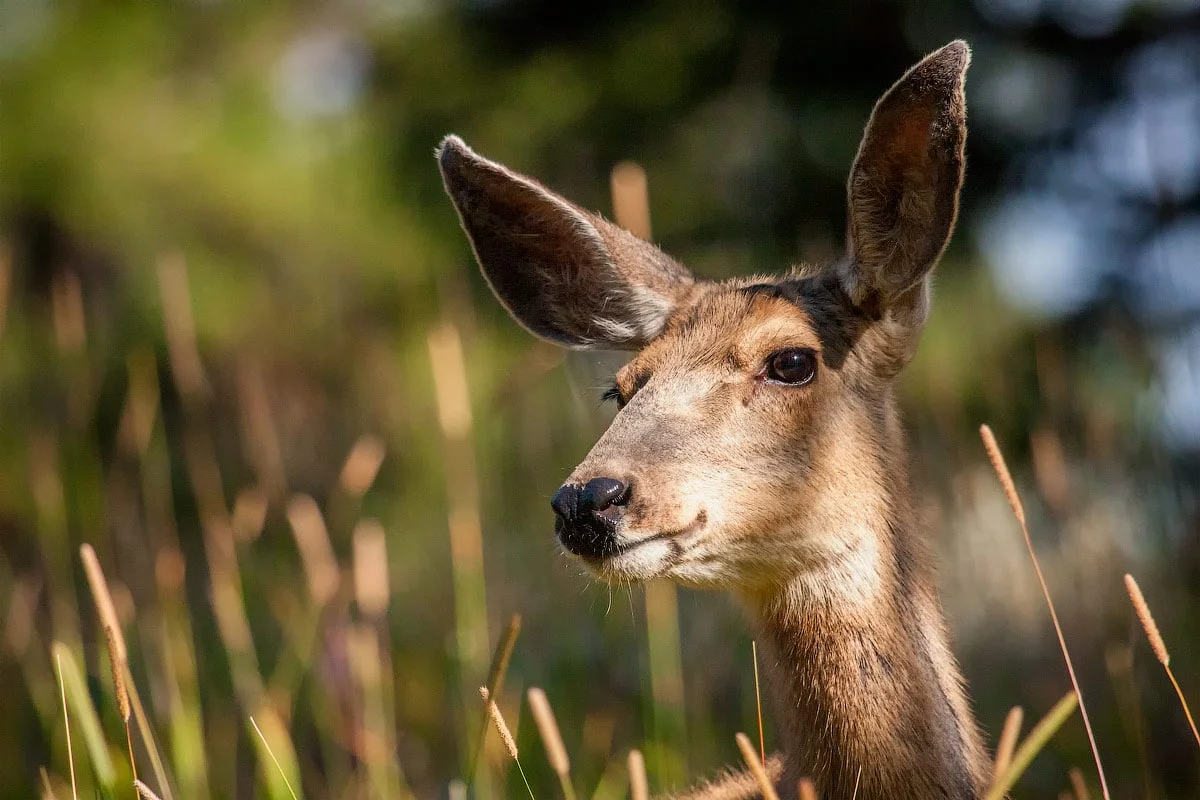
One morning a mule deer wandered quietly into camp. She stood only a few meters from our breakfast table, calmly evaluating our menu. She looked at the scrambled eggs. She looked at us. She turned and walked back toward the trees.
Apparently, scrambled eggs and bacon failed to meet her standards.
Two days. We could have stayed two weeks.
One last sunrise. One last cup of coffee outside the camper. One last look at the mountains.
Then it was time to leave.
As we drove toward the exit, I thought about the smell of sulfur drifting through cold morning air. The hiss of steam escaping from the earth. The sound of distant waterfalls. The patience of waiting for wildlife that may or may not appear.
It's a place where the planet feels unfinished. Raw. Restless. Alive.
And long after the colors of the hot springs fade from memory, that feeling stays.
Comments
Leave a comment