
Knock and It Shall Be Opened: Jerusalem's Old City and the West Bank
Part 1 of 2 — Israel Travel Series
We knocked on every door. That was our rule.
Not metaphorically — literally. Every iron gate, every arched wooden door half-hidden in the stone, every entrance that looked closed to the world. And the strangest thing happened, again and again: they opened. Someone would appear, look us over, and wave us in.
I kept thinking of Matthew 7:7 — "knock, and it shall be opened unto you." It became the spirit of the whole trip.
We had wanted to come to Israel for years. Something always stopped us. The news. The headlines. The endless cycle of tension that rises and falls like a tide. But at some point, I realized: it will never fully calm down. You either go or you don't. So we went.
What we found bore almost no resemblance to what we'd seen on television. The streets were full of life, full of noise and coffee and argument and laughter. Yes, there were Israeli soldiers everywhere. Young ones, barely out of school, rifles slung over one shoulder. You notice them. Then you stop noticing them. Then the city takes over.
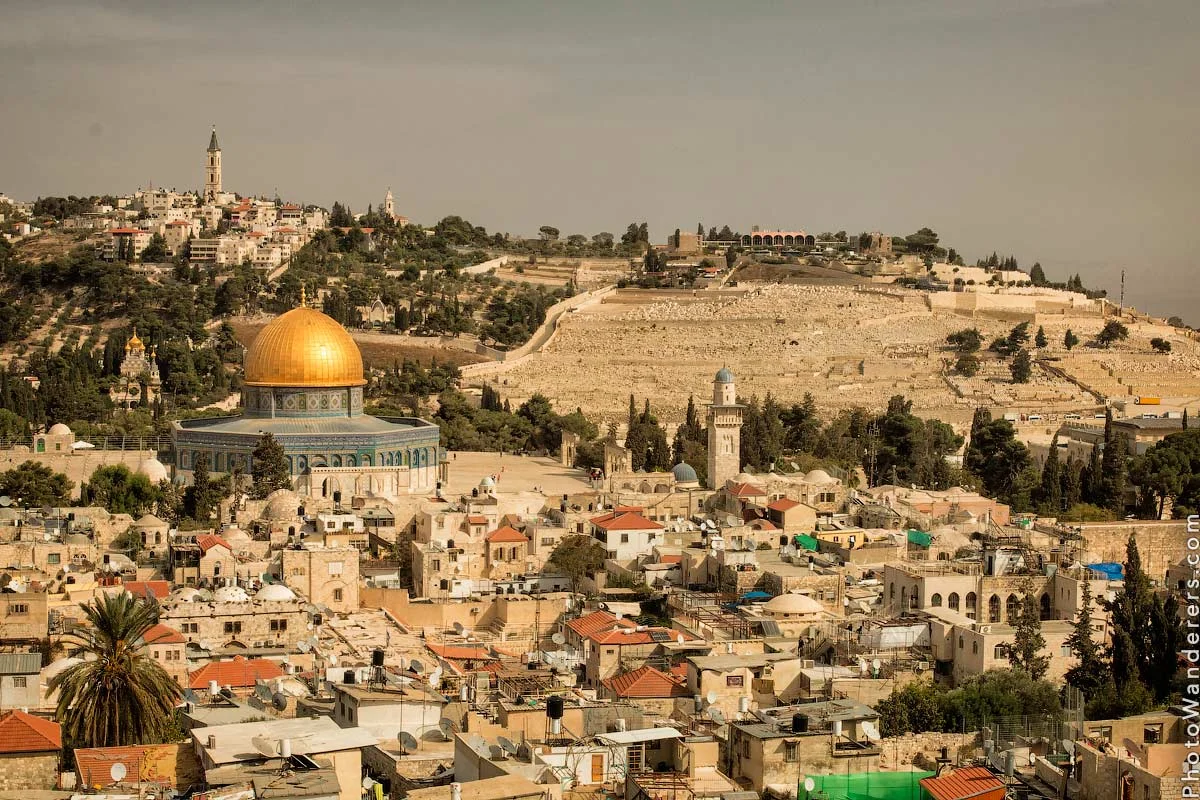
The Stone That Glows
We rented an apartment on Jaffa Street, five minutes' walk from the Jaffa Gate. Once this road was a pilgrimage route — thousands of people walking toward Jerusalem across the hills. Now it's one of the city's main streets: small shops, cafés, a tram that threads through the crowds like a needle through cloth. On Shabbat the whole street goes silent. The shops close, the tram stops, and the city holds its breath.
The first thing that catches you in the Old City is the stone. Walls, pavements, stairways — all carved from the same pale limestone. At sunset or sunrise, it turns gold. Not metaphor-gold. Actual gold, warm and deep, like something lit from inside. This is why people call it the Golden City. By law, every building in Jerusalem must be faced with this stone. The color is protected.
The Western Wall Tunnel — Underground Jerusalem
On the first day, we went underground.
The Western Wall Tunnel runs beneath the Old City, alongside the full length of the Western Wall — most of which is buried. You walk through two thousand years of accumulated city, layer by layer. The stones are enormous. Some blocks weigh hundreds of tons. You put your hand on one and feel the cold of it, the absolute stillness of something that has not moved in two millennia.
Book tickets in advance. This is not a visit you can improvise.
Getting Lost (Beautifully) on the Via Dolorosa
The Via Dolorosa — the Way of Sorrows — is the road Jesus walked from his sentencing to the place of crucifixion. It winds through the Muslim Quarter, past spice stalls and souvenir shops and schoolchildren running home for lunch. The smells shift block by block: cardamom, grilling meat, old stone, incense drifting from a chapel door.
We spent nearly two days on this street alone. Not walking it start to finish — exploring it. Stopping at every numbered station. Knocking on closed doors. Behind one: a tiny Ethiopian chapel, dim and smoky, with a monk who gestured for us to sit. Behind another: a small museum, three rooms, a single monk who spoke no English but smiled the whole time.
Nine of the fourteen stations of the Cross are along the Via Dolorosa. The last five are inside the Church of the Holy Sepulchre.
Finding the church, by the way, is harder than it should be. The entrance is tucked into a small courtyard off a narrow lane. We circled it twice before our guide showed us the way — a simple route from Jaffa Gate through Muristan Square. Once you know it, you'll never forget it.
Inside the Church of the Holy Sepulchre
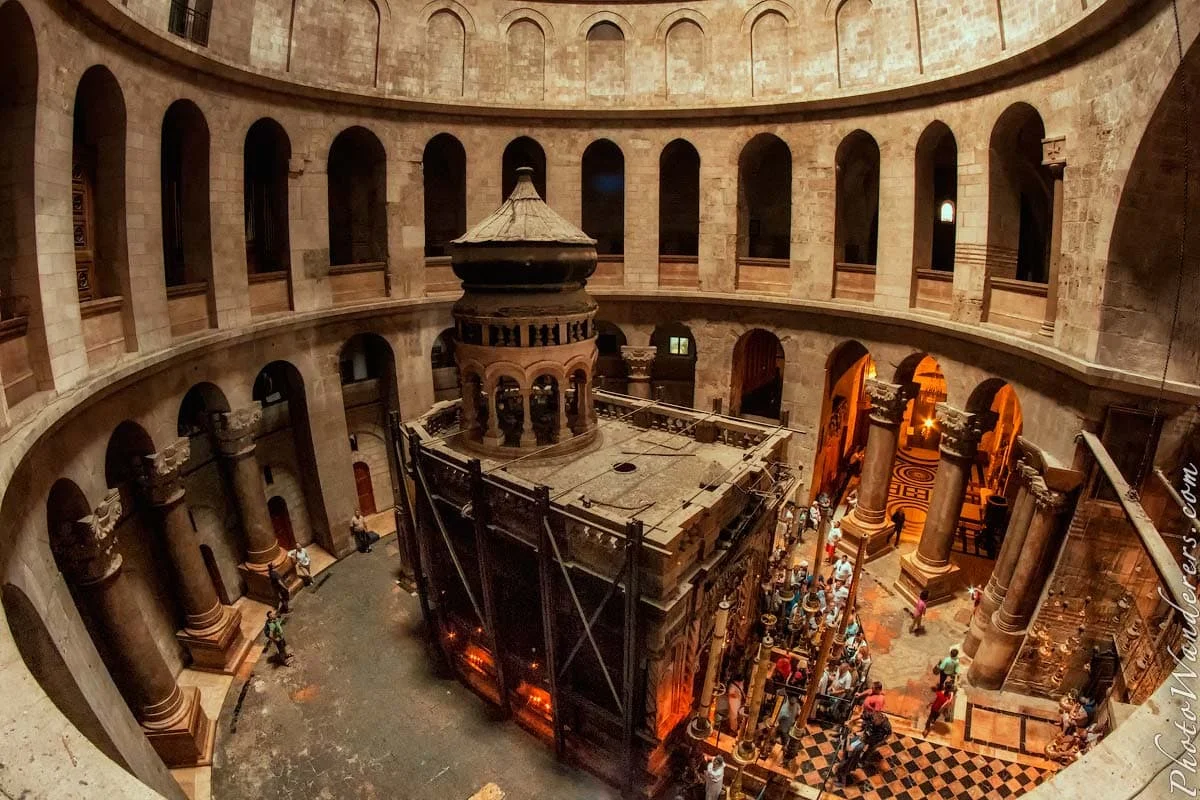
We went back several times. Morning. Evening. Midday.
This is the church built on the place where, according to Christian tradition, Jesus was crucified, buried, and rose from the dead. It sounds like the kind of sentence that should be followed by something measured and analytical. But standing inside it, I found I had no measured thoughts at all.
The church is overwhelming in the most literal sense — it overwhelms you. It's dark and heavy with incense smoke and the heat of a thousand candles. It's crowded with pilgrims from every corner of the world. Greek Orthodox priests in black robes move through the light. Ethiopian monks sit in silence on the roof. A group from Latin America prays in the dim corner by the Stone of Anointing — the slab where Jesus's body was prepared for burial. People are weeping. People are photographing. People are both at once.
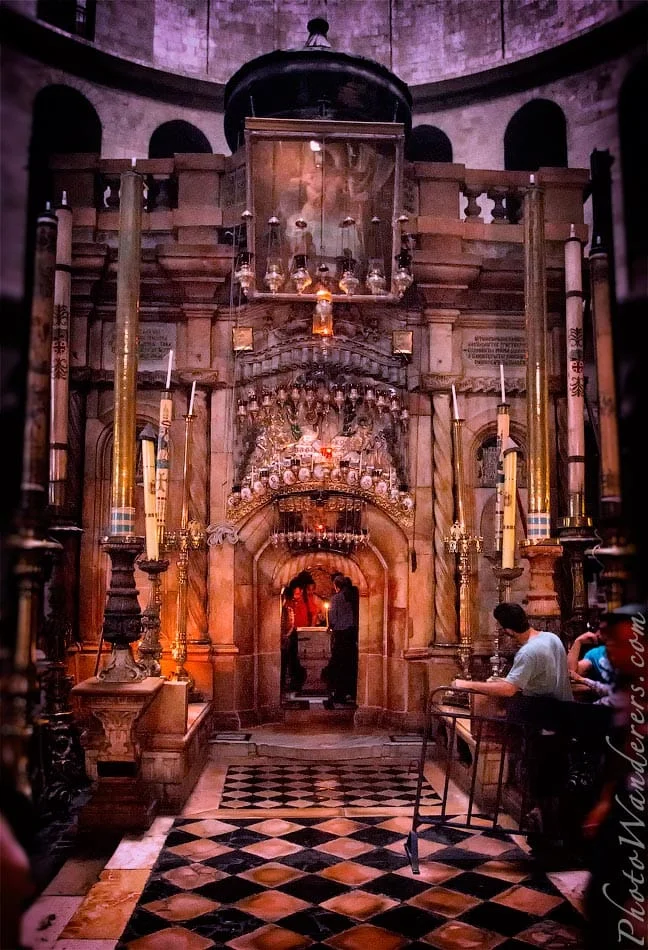
Many tour groups rush through: touch this, photograph that, move on. I understand the pressure of a packed itinerary. But if there is one place in Jerusalem that asks you to stop — to actually stop, let the noise drop away, and feel the weight of the centuries pressing down — it is here.
The Temple Mount
We arrived early and joined the queue at the ramp — the non-Muslim entrance to the Temple Mount. There are checkpoints. Three of them. Israeli military first. Then a second Israeli checkpoint. Then a Palestinian one.
Dress modestly. No bare shoulders. No shorts. This applies to everyone.
Alex nearly didn't get through — a ten-minute standoff over whether Ukrainians can be non-Jewish. Eventually, the soldier let him pass, reluctantly. The Palestinian guard on the other side looked us over and waved us through without a word.
Up on the Mount, the Dome of the Rock stops you cold.
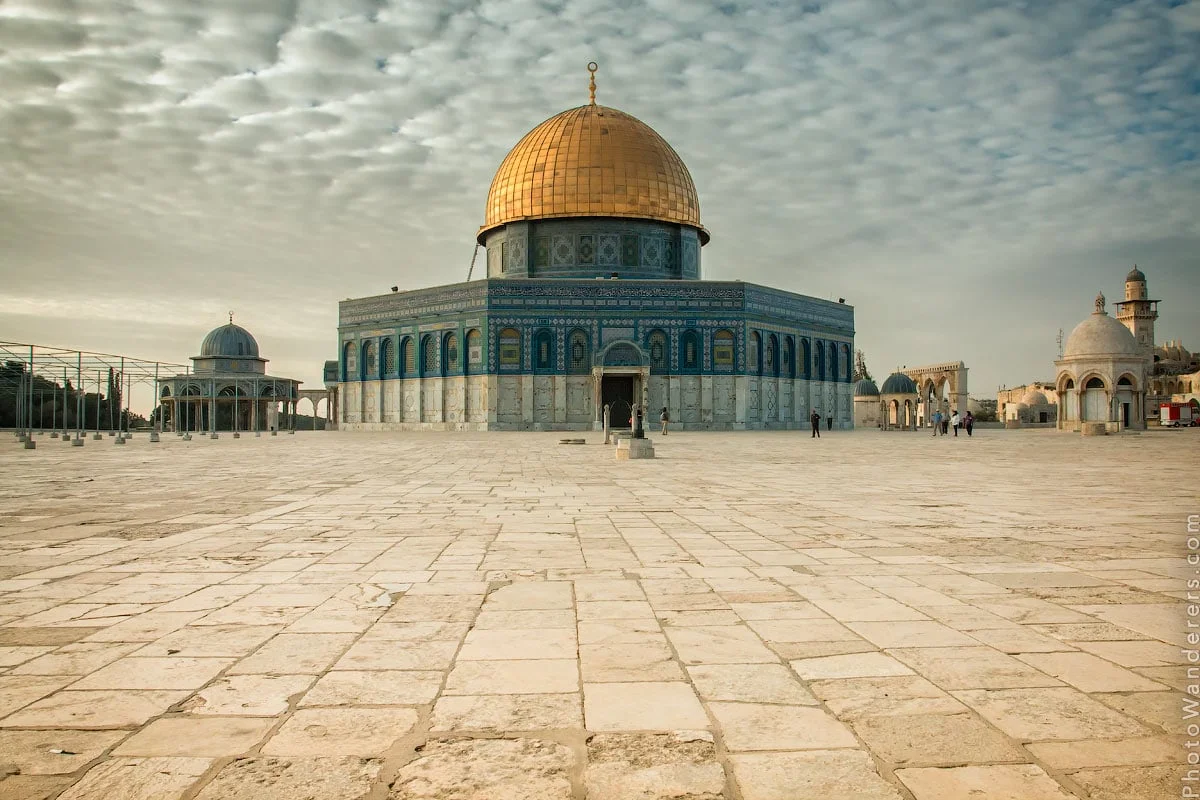
The gold dome. The blue and white tiles catching the morning light. The vast open plaza, almost silent after the noise of the streets below. You stand there and feel the extraordinary strangeness of Jerusalem — this city that three of the world's great religions have each decided is the center of everything.
The Mount of Olives
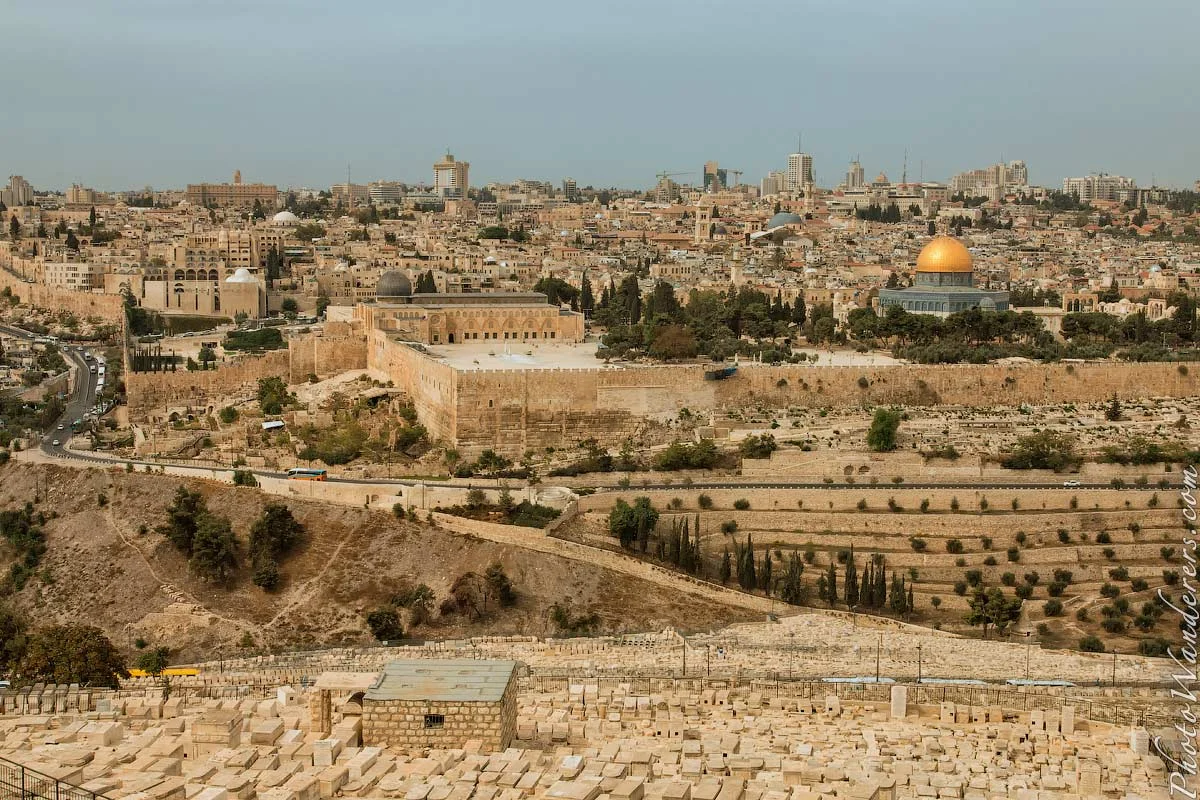
We took a taxi to the Seven Arches Hotel for the famous panorama — the whole Old City laid out below, the golden dome gleaming, the old cemetery on the hillside where generations of Jews have chosen to be buried, wanting to be close when the Messiah comes.
Then we walked.
Most things were locked. Most things opened anyway.
The Russian Orthodox Convent of the Ascension. A small chapel with a nun who appeared from nowhere and beckoned us inside. The Franciscan Church of the Pater Noster — where the Lord's Prayer is inscribed on tiles in over 140 languages, covering every wall of the cloister. You walk slowly, looking for your language, finding languages you've never heard of.
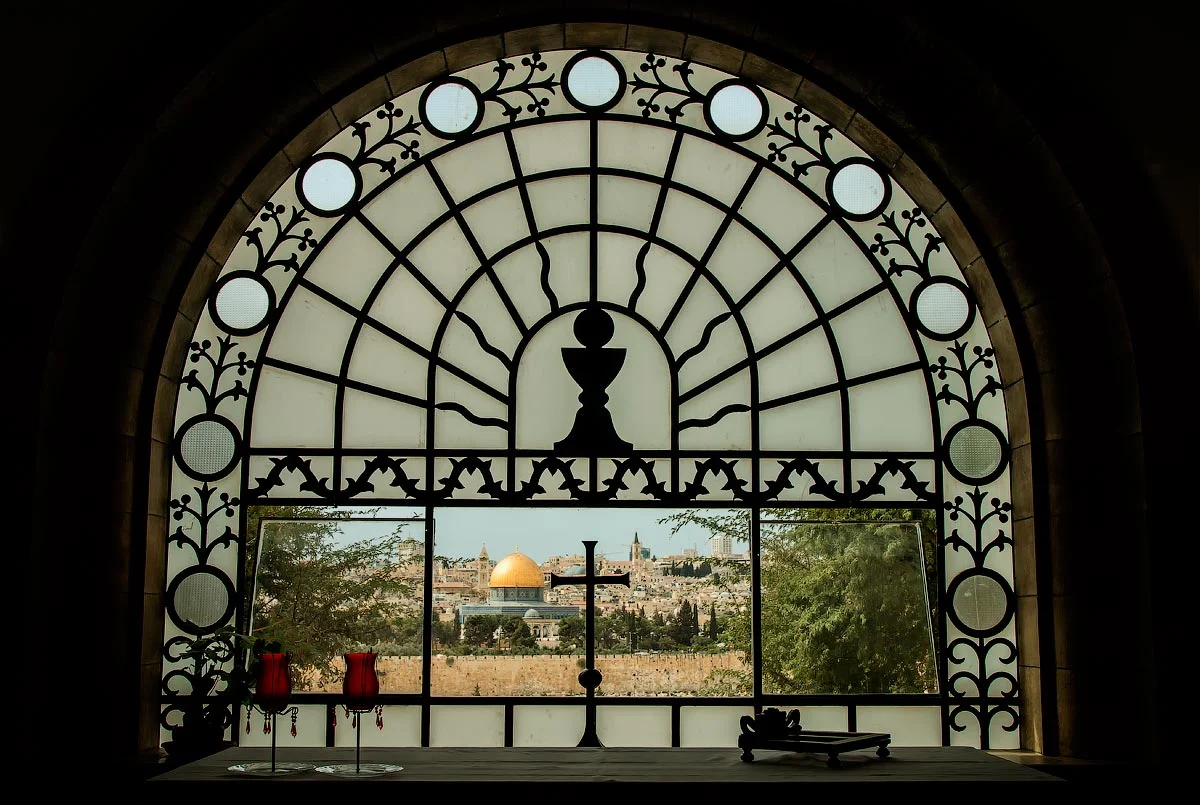
The Church of Dominus Flevit — "The Lord Wept" — marks the place where Jesus looked down at Jerusalem and cried. It's a small, sad, beautiful church. Instead of an iconostasis behind the altar, there is a single window, framed in wrought iron shaped like a crown of thorns. Through it: Jerusalem. The whole city. Every dome and minaret and tower.
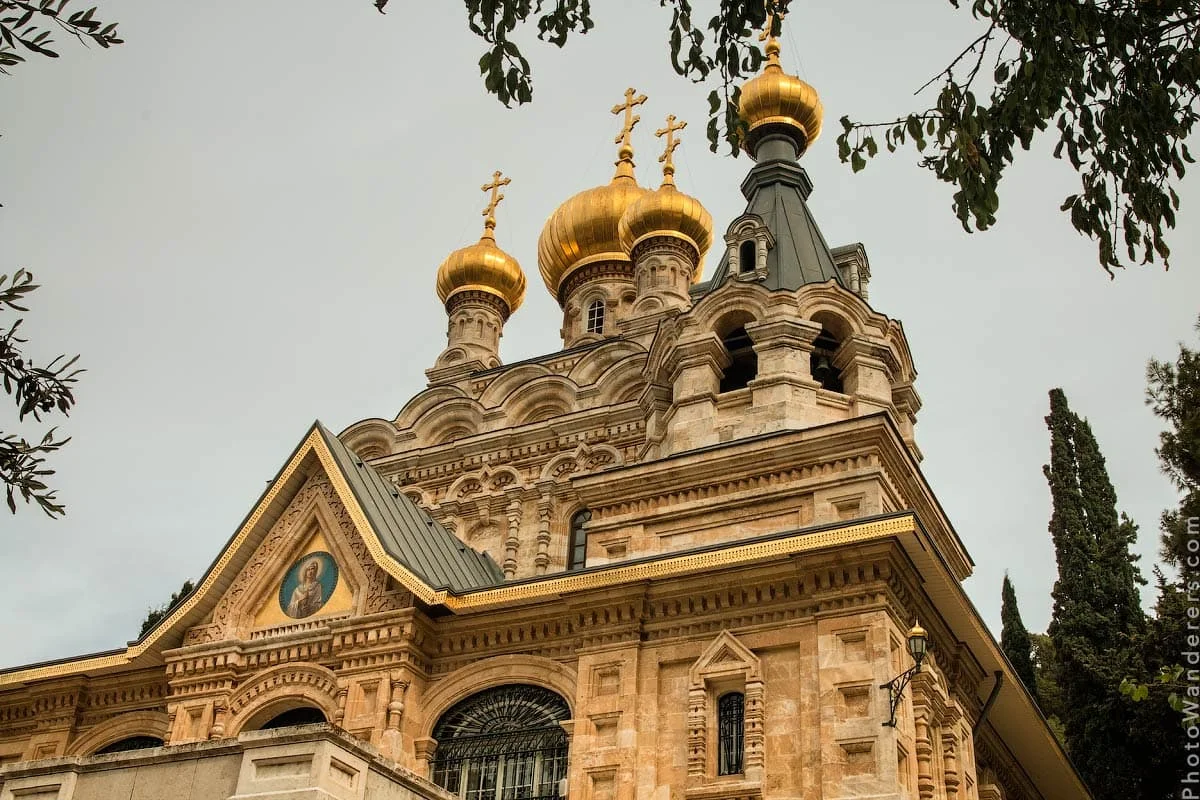
Just below, the Church of Mary Magdalene. Russian Orthodox, with its white onion domes rising unexpectedly from the olive trees. Inside rest the remains of Grand Duchess Elizabeth Romanova, murdered by the Bolsheviks in 1918. Her body traveled across Russia, then through China, arriving in Jerusalem in 1921. She'd asked to be buried here. She was.
The Sound and Light Show at the Tower of David
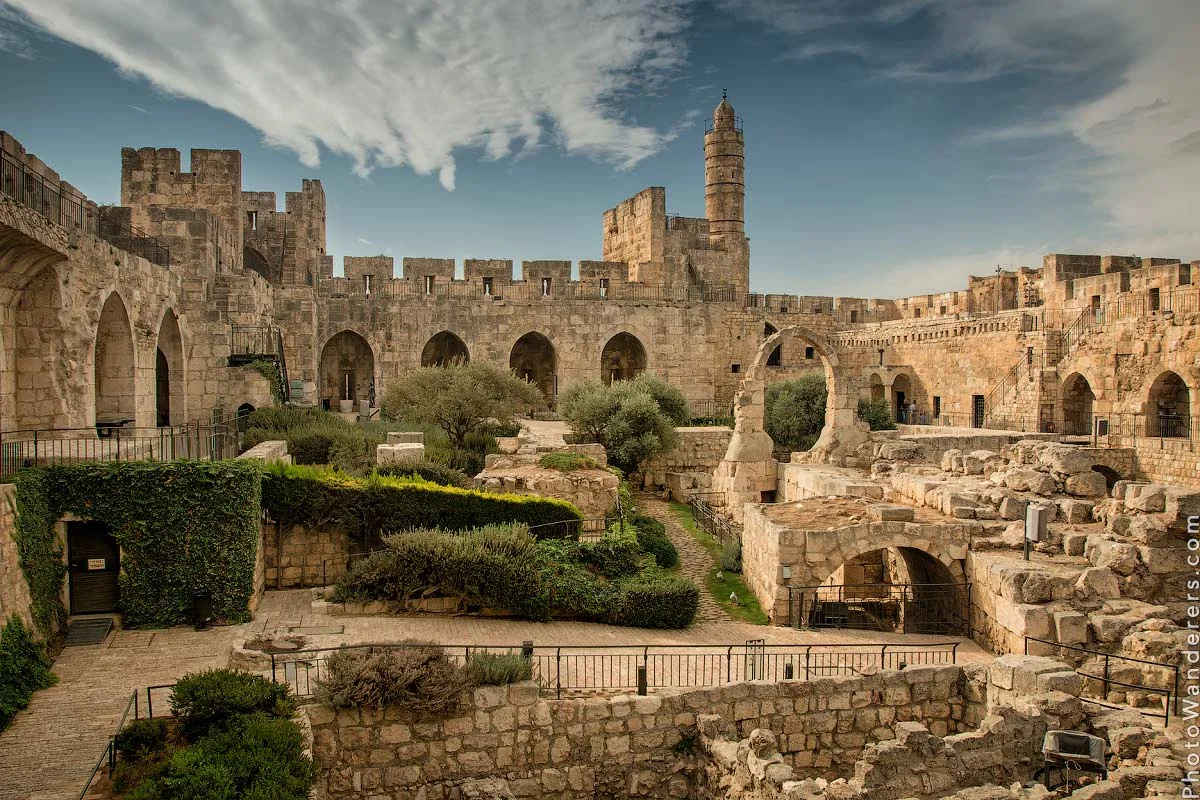
One evening, we watched history projected onto the walls of a fortress.
The Tower of David citadel sits just inside the Jaffa Gate. After dark, the stones become a screen. Biblical King David. The building of the Temple. Roman legions marching. The Crusaders arriving and leaving. The Ottomans. The British. Almost four thousand years of Jerusalem compressed into an hour of light and music on ancient walls.
It's spectacular. Don't miss it.
Jerusalem held us. But there was more to see beyond its walls.
A Day in the West Bank
We argued about this for a while.
Going into Palestinian-controlled territory as independent travelers is genuinely complicated. Google Maps won't route you there from Israel. A rental car in Israel has restricted zones — going outside them requires a steep extra insurance fee. And once you're there, most streets have no name signs.
In the end, we found a taxi driver near the Garden of Gethsemane. His name was Ched. He looked trustworthy. He was. We agreed on a day trip: Bethlehem, the desert monasteries, and Jericho.
At the checkpoint, the Palestinian guard barely looked up.
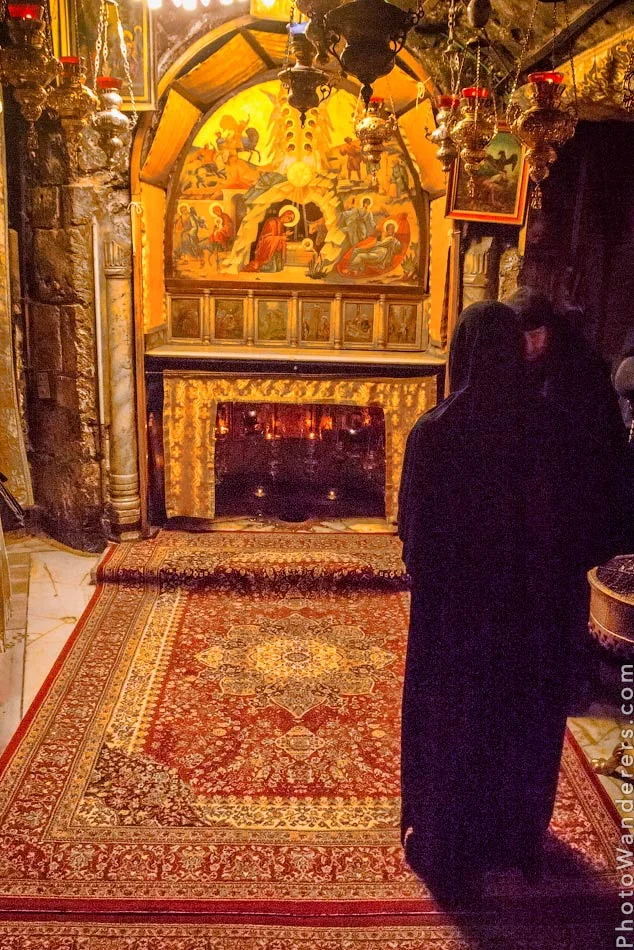
Bethlehem. The Church of the Nativity is one of the oldest functioning churches on earth. The entrance is a deliberately low doorway — you bow to enter. Inside, in the grotto beneath the altar, a silver fourteen-pointed star marks the spot. Around it, the smell of beeswax candles and old stone. Pilgrims kneel and touch the star. Some are crying. The air is thick with it.
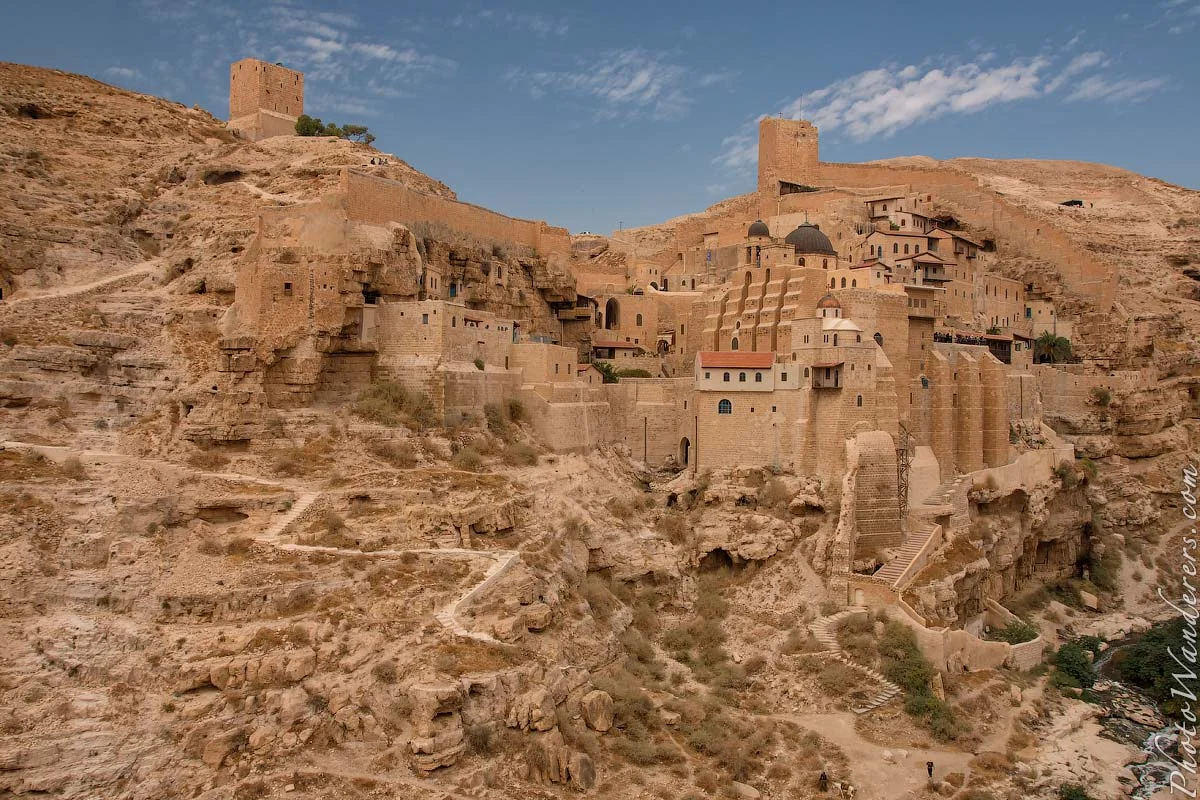
Mar Saba has been here since 484 AD. The monks still follow the same rule established fifteen centuries ago. Daily services. Fasting. Silence. The gorge below — the Kidron Valley — was believed to be one of the rivers that once bordered the Garden of Eden.
A 12th-century Russian pilgrim described it: "the cells cling to the rocks like stars fixed in heaven." That is exactly right.
Women are not permitted inside the monastery. I waited at the gate in the heat while Alex went in. He came out twenty minutes later looking slightly stunned.
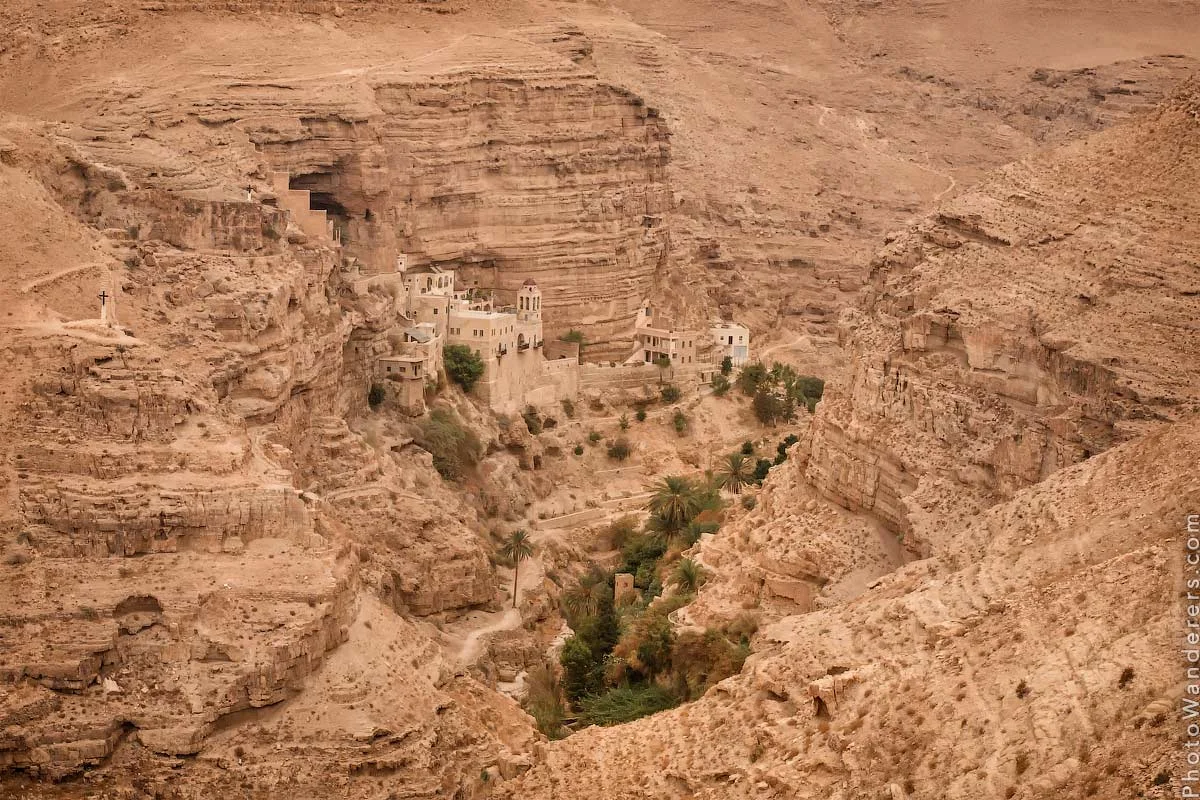
St. George's Monastery, Wadi Qelt. Around a bend in a narrow canyon, another cliff monastery appears. This one rises from a sheer wall of rock above a stream bed, its towers and domes stacked improbably against the cliff face. According to tradition, the Prophet Elijah hid in one of these caves for three and a half years, fed by ravens.
The canyon — Wadi Qelt — is one of the most dramatic landscapes I have ever stood in.
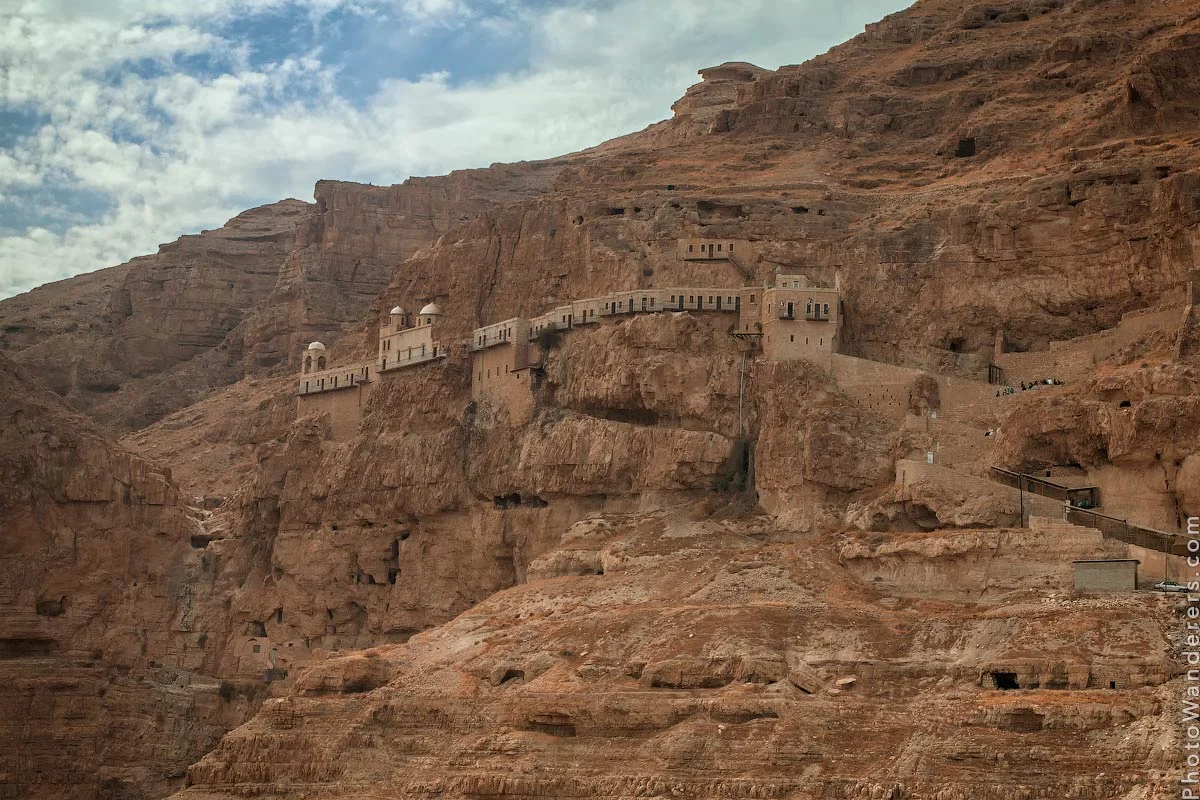
The Monastery of the Temptation, Jericho. This one is built on the mountain where the devil, according to the Gospels, tempted Jesus — showing him all the kingdoms of the world from the summit. You can take a cable car most of the way up. The view from the top shows Jericho below: one of the oldest continuously inhabited cities on earth, green against the desert. And beyond it: the Dead Sea, a flat silver mirror.
Sitting in a Café at the End of It
Somewhere near the end of it, I sat in a small café in Jerusalem, drinking coffee that tasted of cardamom and dark roast and something I couldn't name. Outside, the stone walls were turning gold in the last light.
It had been only half the trip. Already, I couldn't hold it all.
There's a particular kind of exhaustion that comes from too much beauty and too much history arriving at once. Jerusalem gives you that.
We hadn't seen everything. We'd barely scratched the surface. But some places don't need to be completed — they need to be felt. Jerusalem is one of those places.
Note: All place names used here are geographic only. No political statement is intended.
Comments
Leave a comment