
The Road North: Galilee, Masada, Caesarea, Acre, Jaffa, and the End of the World
Part 2 of 2 — Israel Travel Series
Leaving Jerusalem is hard.
You keep thinking of things you didn't do. One more walk through the Armenian Quarter. The Hasmonean Tunnel you never found. Standing at the Western Wall at dawn when it's quiet and the sky is turning pale above the rooftops. Jerusalem gets into you in ways you don't notice until you're driving away from it.
We drove north.
The Sea of Galilee
The water appears suddenly — a wide silver-blue lake in a valley of green hills. The Sea of Galilee. The Kinneret, in Hebrew. It doesn't look like the sea. It looks like the kind of lake a painter would invent: perfectly still, perfectly bright, perfectly surrounded by hills that roll down to the shore.
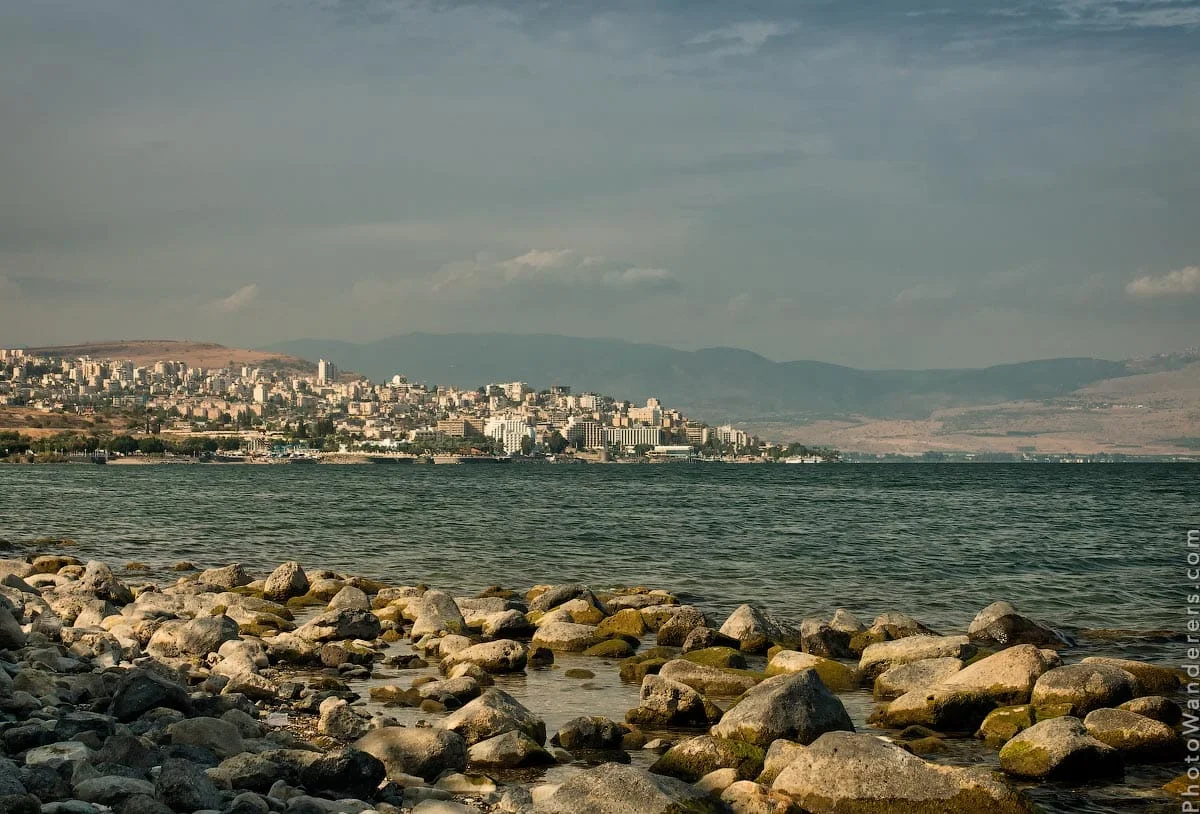
Almost every page of the New Testament that involves water involves this lake. Jesus walked across it, calmed a storm on it, fished it with his disciples. At the point where the Jordan flows out sits Yardenit — the traditional baptism site, where pilgrims in white robes wade in slowly, arms raised.
Ten cities once ringed this lake. Thousands of boats crossed it daily. All of them are gone now — only ruins and the modern city of Tiberias, which sits roughly where a Roman city of the same name once stood. The lake itself hasn't changed. The hills haven't changed. The light on the water in the early morning probably looks exactly as it did two thousand years ago.
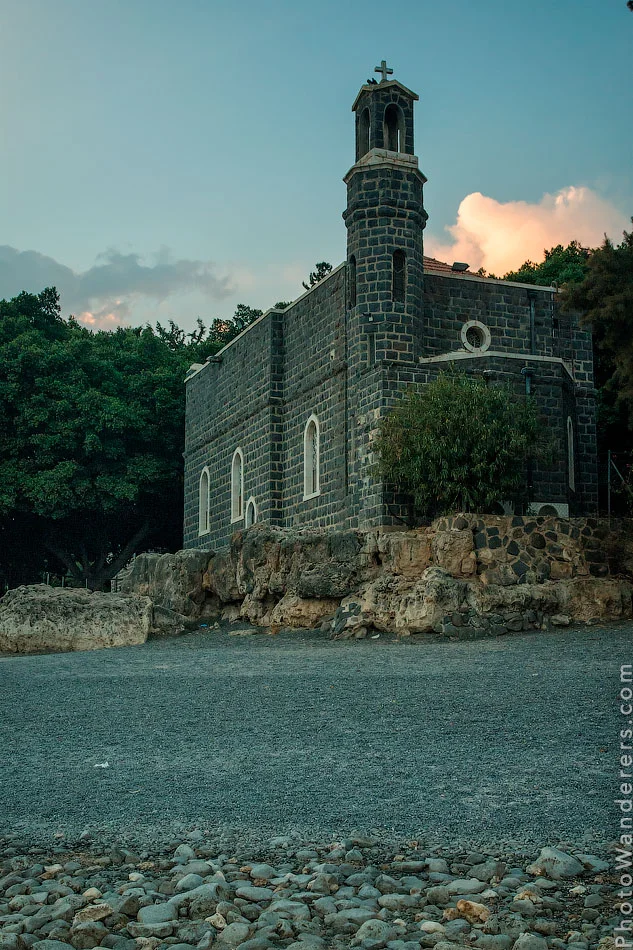
Masada
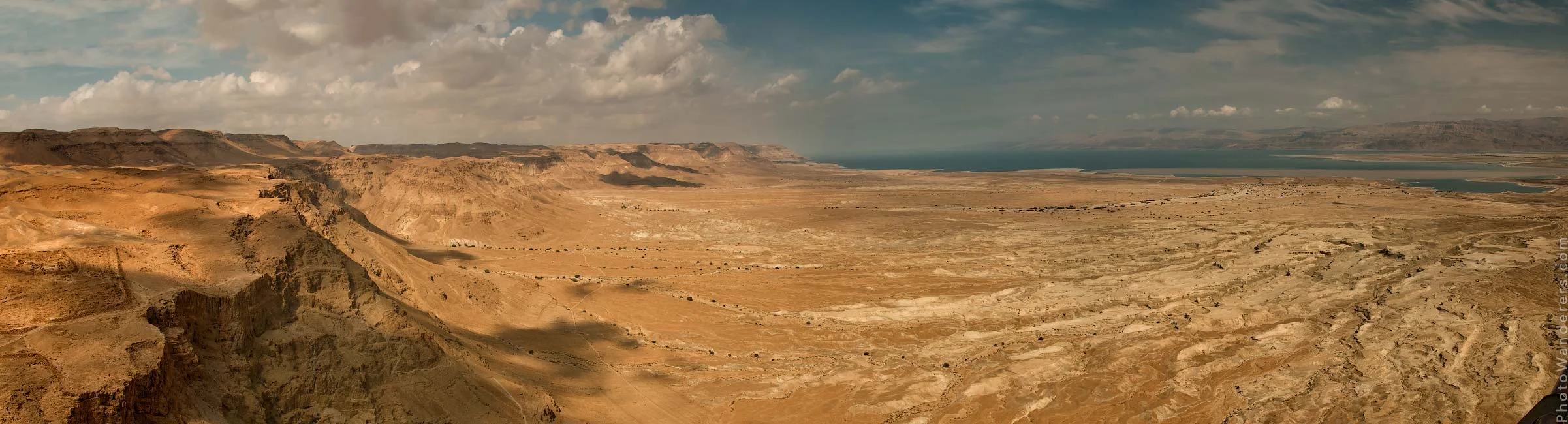
The fortress rises from a desert plateau above the Dead Sea like something out of a dream — or a nightmare.
King Herod built it in 25 BC. He chose the most defensible rock in the Judean Desert: a flat-topped mesa with sheer cliffs on every side, the Dead Sea glittering 400 meters below. He built palaces up here. Bathhouses. Cisterns. Storage rooms packed with enough food and water for years.
In 73 AD, a group of Jewish rebels made their last stand here against the Roman Empire. When the Romans finally breached the walls — after months of siege, after building an enormous earthen ramp up the western cliff face — they found almost everyone dead. Nearly a thousand people had chosen death over slavery. Masada has meant something in Jewish consciousness ever since.
You can hike up the Snake Path — a narrow trail that zigzags up the eastern face. We took the cable car. No apologies.
From the top: the whole Judean Desert stretches away to the horizon, bone-white and silent. The Dead Sea below looks like spilled mercury. You can see the rectangular outlines of the Roman military camps that once surrounded the base of the mountain, two thousand years later still perfectly visible in the dry earth.
The Dead Sea
The water is warm and almost syrupy, and holds you whether you want it to or not. Legs up. Hands up.
A few hours earlier, I had been standing where a thousand people chose death over slavery. Now I was floating involuntarily in a salt lake, staring at the sky, unable to do anything about it.
We barely made the last shuttle back to the parking area. A tractor-pulled cart, as it turned out — the kind of conveyance that seems to belong in a different century entirely. Israel does this to you. Millennia of history, then a tractor.
Caesarea
King Herod again.
Masada. The Temple Mount. And here, on the Mediterranean coast: an entire Roman city, complete with an artificial harbor that was, when he built it in 25 BC, one of the largest in the world.
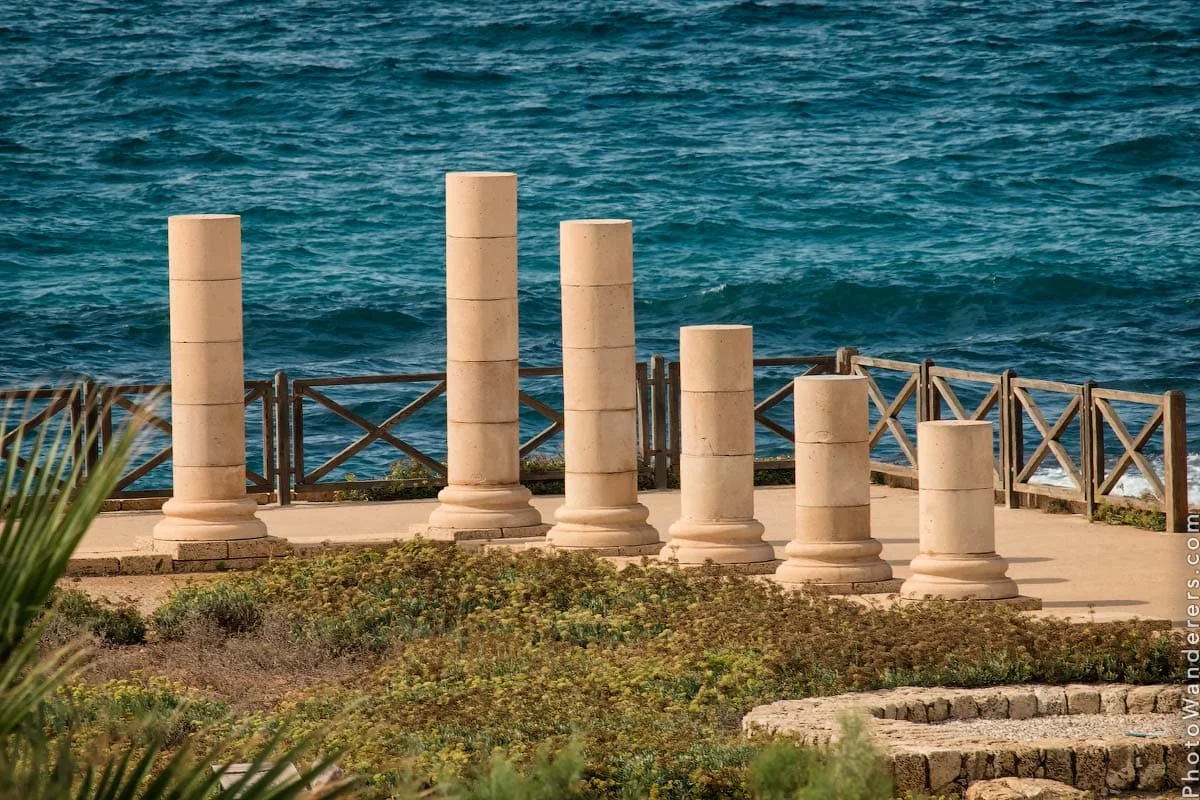
The harbor is gone now, sunk beneath the waves. But walking through Caesarea, you feel the ghost of the city it was. The paving stones of the main street are still there, worn smooth by two thousand years of feet. The theater is still standing — it hosts concerts now; the acoustics, apparently, are still excellent. The hippodrome that could hold ten thousand spectators stretches along the coast.
I walked the harbor promenade half-imagining the city back into existence — the creak of rigging, voices in Latin and Greek and Aramaic, the smell of fish and salt. At some point, I started singing, quietly, from Jesus Christ Superstar. I'm not entirely sure why.
I kept thinking: someone will walk through the ruins of our cities someday. Will they stand on what's left of our streets and try to imagine us back?
Acre — The Crusaders' City
Acre (Akko in Hebrew) is one of the strangest cities I have ever walked through.
Stand on the wall by the harbor and look at the skyline: minarets, church towers, the dome of a mosque. Walk the lanes of the old city and it shifts, era by era. Arab market. Turkish bathhouse. Then suddenly: the vaulted stone halls of the Crusader fortress, down a flight of stairs below street level — buried, then excavated, now open.
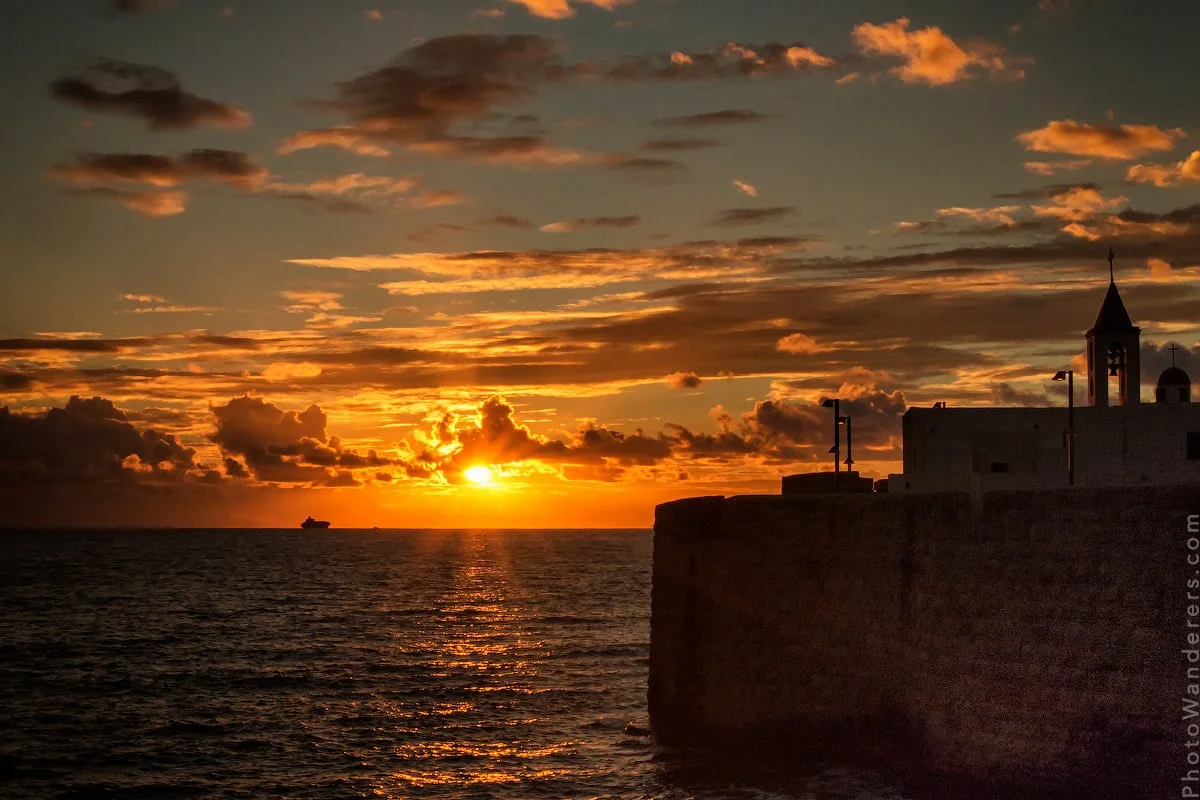
The Knights Hospitaller built their headquarters here. The Templars had their own quarter. The Teutonic Knights had theirs. For a century this was the most fortified city in the Holy Land — the last stronghold of the Crusaders after Jerusalem fell.
Then it fell too. And over centuries, a Muslim city grew on top of the stones.
Now it's both at once. Old Arab women carrying shopping. Tourists descending into the Crusader halls. A muezzin calling from a minaret just above a Crusader gateway. The city doesn't try to reconcile its own contradictions. It just contains them.
Jaffa
We stayed in the old city of Jaffa for five days, in an apartment close enough to the market that the noise started before dawn.
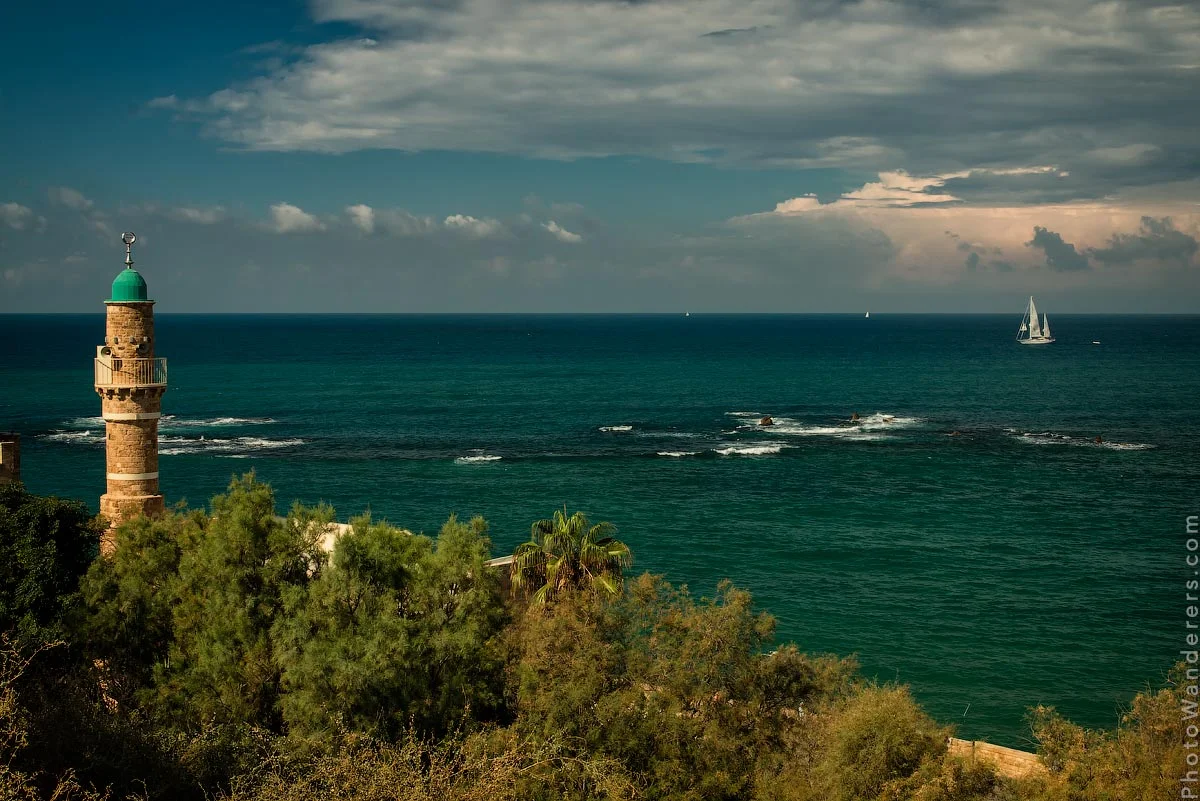
Greek mythology placed Andromeda here, chained to a rock just offshore, waiting for Perseus. The flood in Genesis is said to have stopped at its edges. You can see those rocks from the main square of the old city — low sea stacks in the harbor, dark against the water.
The old city itself is now an artists' neighborhood: galleries, studios, expensive restaurants in Ottoman-era buildings. But turn one corner and you're in the market — narrow, crowded, smelling of fish and spices and the sharp sweetness of fresh-cut fruit. The sounds overlap: Arabic pop from a phone, a vendor shouting prices, the distant roll of the Mediterranean.
Saint Peter once stayed here, in the house of Simon the Tanner. He had a vision in this city that changed the direction of early Christianity. The house is not easy to find — the old quarter is a labyrinth of stairs and arching openings in stone walls, half the streets going up, half going down. It is privately owned, someone's home. They wake up every morning in the same rooms, look out at the same sea, walk the same streets as a man who changed the world.
Nazareth
The roads to Nazareth are easy. The streets of Nazareth are not. They're narrow and steep and packed with tour buses, pilgrims on foot, souvenir sellers, motorcyclists, and everyone else who decided to visit at the same moment you did.
Inside the Basilica of the Annunciation, underneath the modern church, is the Grotto of the Annunciation — a small cave where, according to the Gospel of Luke, the Angel Gabriel appeared to Mary. The inscription in the stone floor is in Latin: Verbum caro hic factum est. The Word was made flesh here.
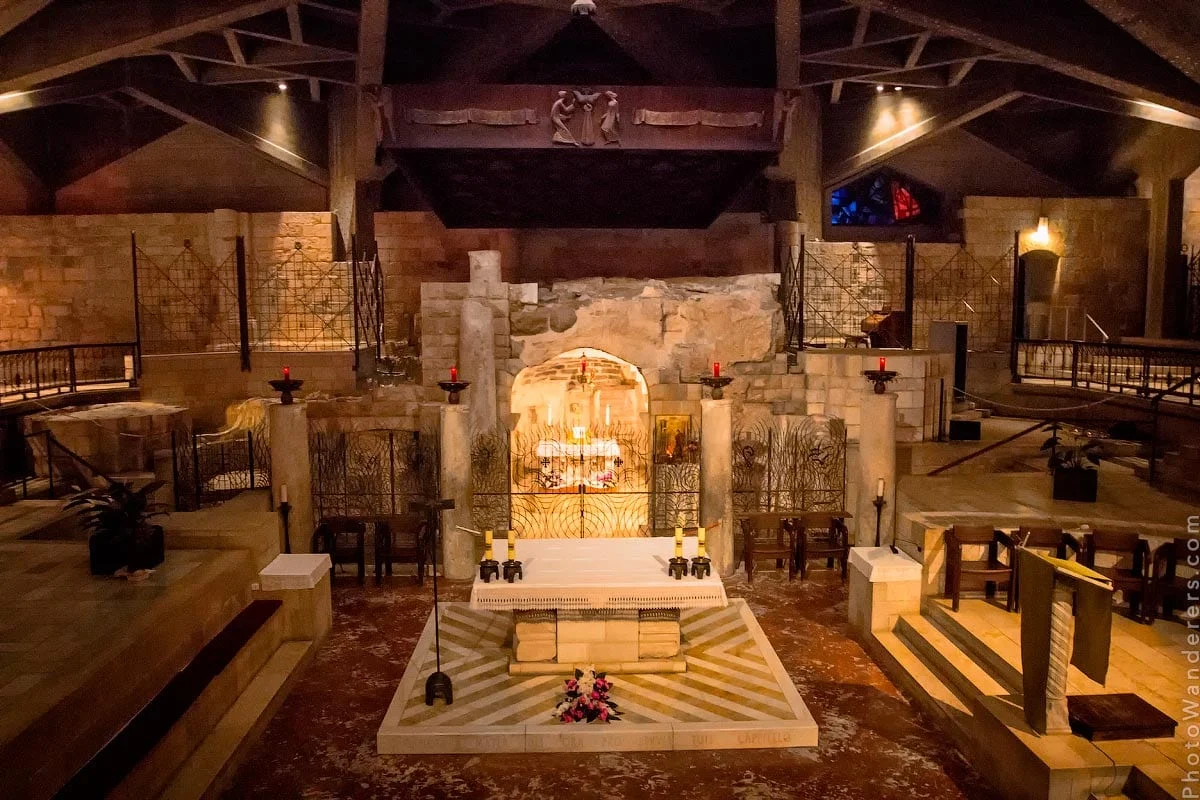
The smallness of the space is striking. History's hinge, and it's a cave.
Megiddo — Armageddon
The last tour groups were leaving when we arrived at the national park of Megiddo. A few local families were spreading picnic blankets on the grass at the base of the ancient mound — which struck me as wonderfully odd, given that this is, according to the Book of Revelation, the site of the final battle at the end of time.
Armageddon. The word comes from the Hebrew Har Megiddo — the Hill of Megiddo.
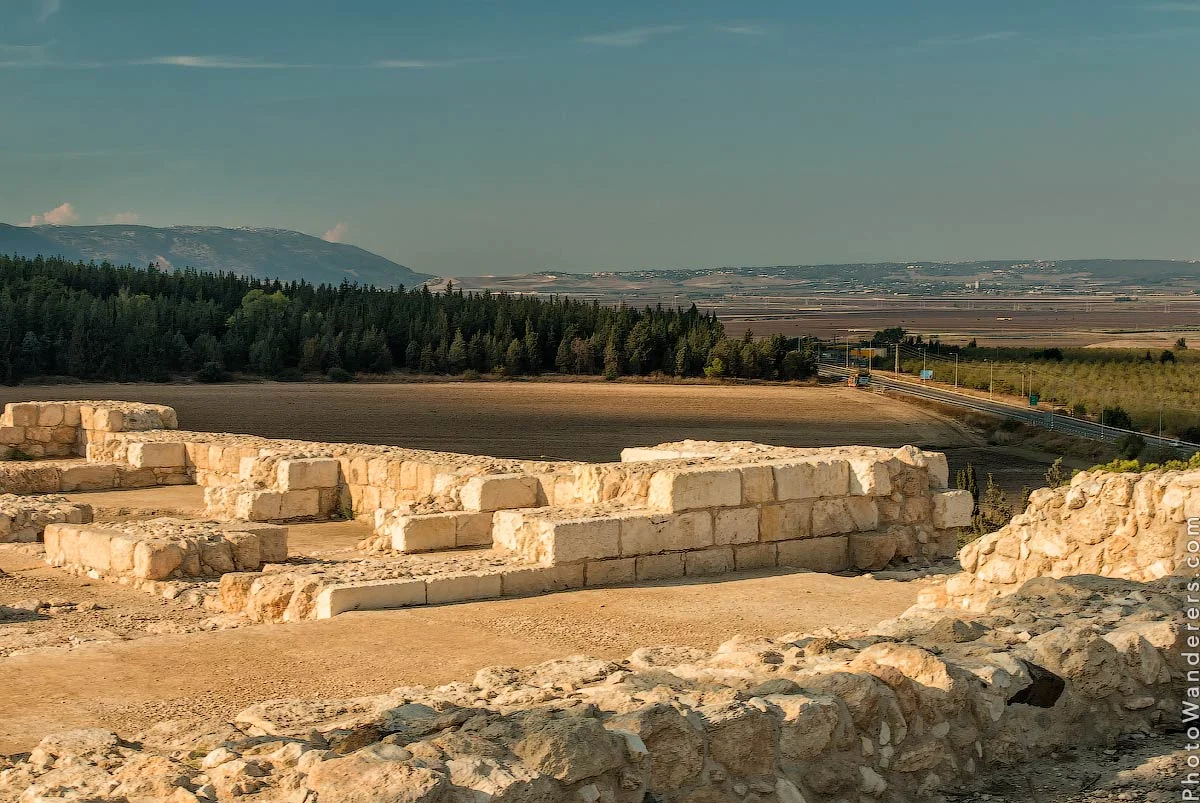
The city of Megiddo is among the oldest ever excavated. It was occupied continuously from around 7000 BC. It sat astride the ancient Via Maris — the main trade route connecting Egypt to the north — and whoever controlled Megiddo controlled the pass and the commerce and the armies that moved through it. Twenty-six layers of civilization have been found here, one on top of the other.
The last inhabitants left around 300 BC. Since then: silence.
The view from the top of the mound takes in the Jezreel Valley below — the valley that Revelation names as the gathering place for the final battle. It's very green and very peaceful in the afternoon light. Butterflies. Birdsong. A family unpacking sandwiches.
The apocalypse can wait, apparently.
The Last Day
On the final morning, I stood at the window of the Jaffa apartment watching the market stalls open below.
Two weeks in Israel and I had seen perhaps a third of what I'd wanted to see. The list of missed places was long. But the list of what I'd felt was longer.
This is a country that presses its whole weight on you. Every stone has a story. Every valley has a name from a text you've read. You walk through landscapes that exist simultaneously as geography and as scripture, as archaeology and as living faith — and the layers don't cancel each other out. They stack up. They become something that has no good name in any language I know.
I understood, suddenly, why people return here year after year. Why some never really leave.
I will go back.
Note: All place names used here are geographic only. No political statement is intended.
Comments
Leave a comment