
Mackinac Island, Michigan: A Step Back in Time
Every October, hundreds of romantics descend on Mackinac Island dressed in full Victorian costume. They gather to celebrate Somewhere in Time — a 1980 film starring Christopher Reeve and Jane Seymour, shot here when the island still looked exactly as it does today. They sip champagne on the Grand Hotel's porch. They attend lectures on corset etiquette and 19th-century manners. Then they sit down to a five-course dinner. "It's more than a movie," they say afterward. "It's about elegance. About becoming someone slightly better."
We didn't want to wait until October. We came in May.
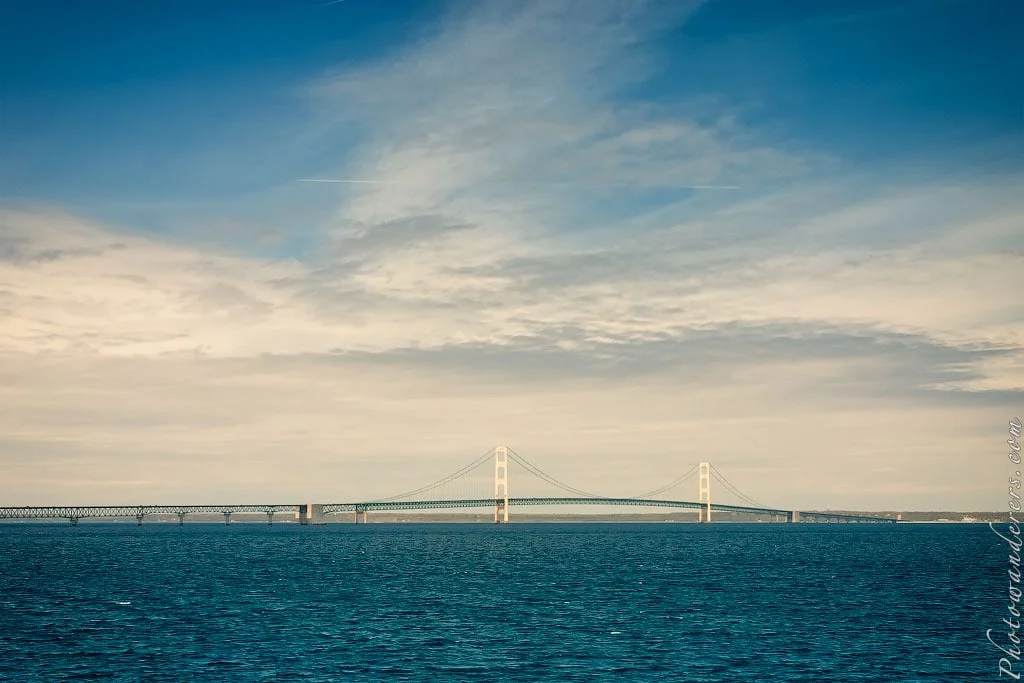
We left the car in Mackinaw City. Boarded the ferry. The Mackinac Bridge filled the horizon — massive, quietly beautiful, then gone behind us.
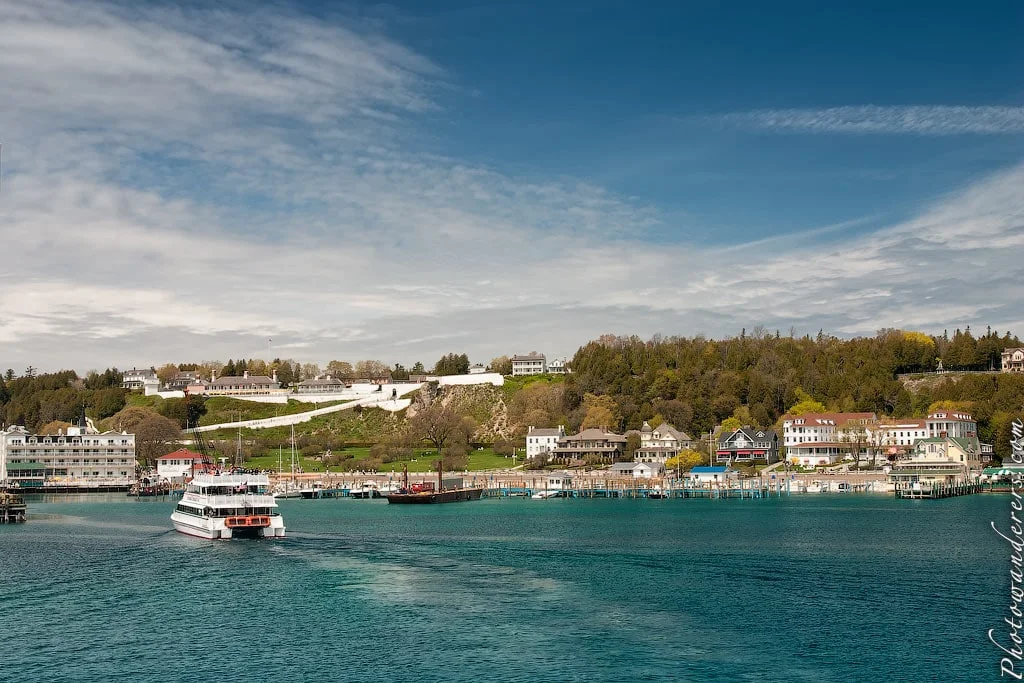
No Cars. No Engine Noise. Nothing.
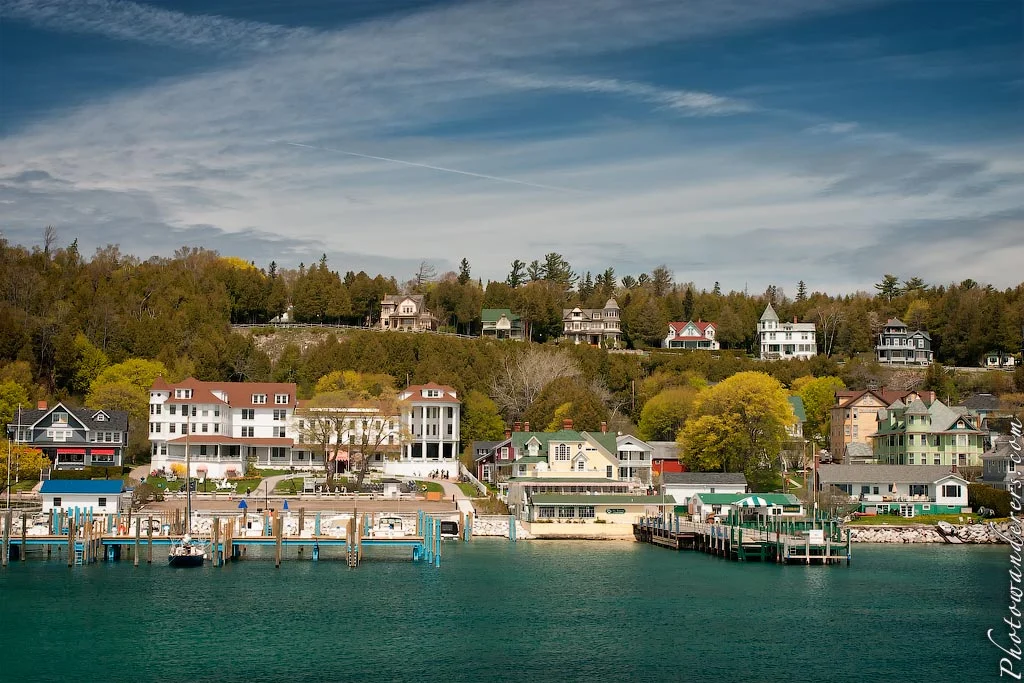
The first thing I noticed was the silence.
Not empty silence — full silence. Hoofbeats on cobblestone. Gulls. The creak of a wooden carriage somewhere ahead. And underneath it all, warm and sweet — the smell of fudge.
We stepped off the ferry and landed in 1890.
No cars. No engines. Nothing humming or honking or rushing past. Mackinac Island banned motor vehicles in 1898 — and meant it. Every building on Main Street went up before the 1930s. Victorian houses lined the waterfront in candy colors — pink, yellow, sage green — like someone had arranged them there just to be charming.
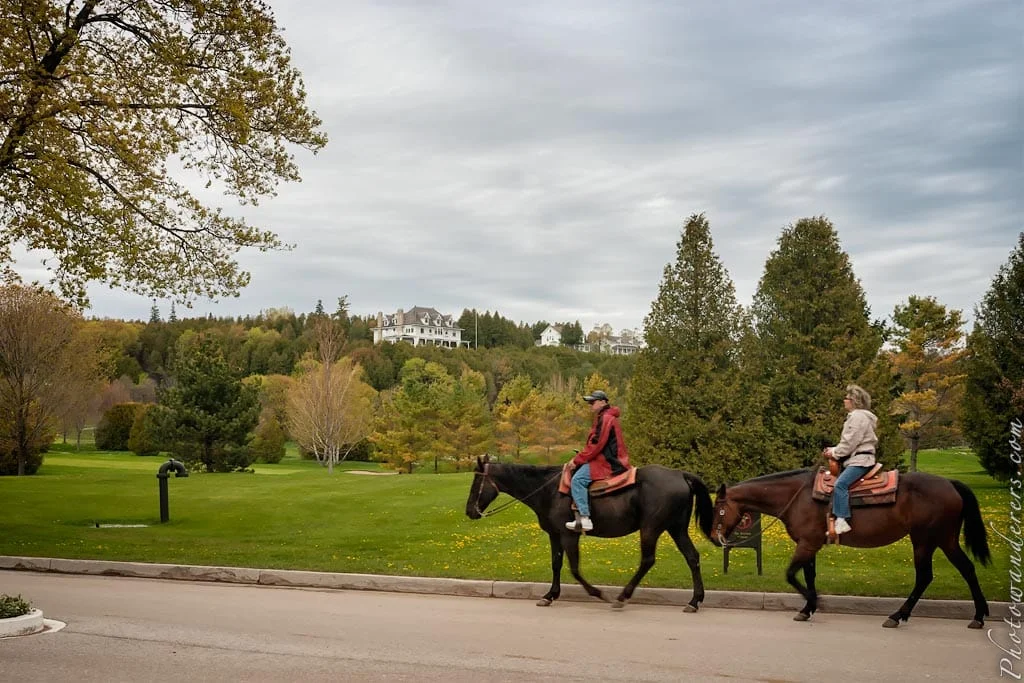
In summer, there are around 500 horses on the island. More horses than permanent residents. Percherons and Belgians mostly, big and calm, hauling carriages loaded with tourists and luggage and fudge. They work all summer and spend the winter on the mainland. Bicycles fill the gaps.
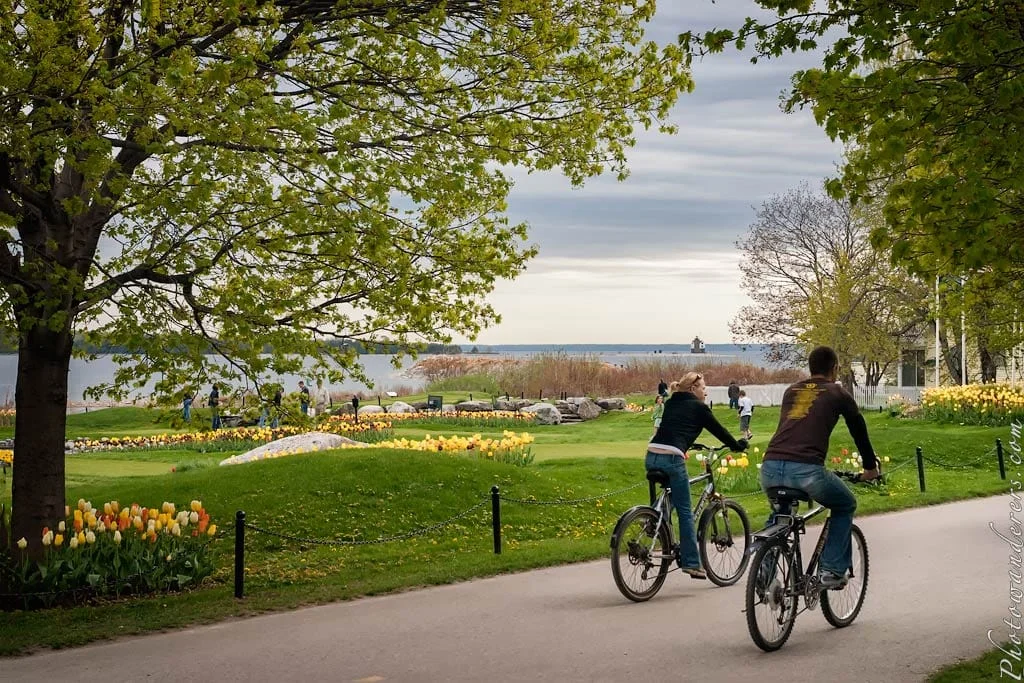
Nobody seems to mind the arrangement. Honestly, neither did we.
A Short History (the interesting parts)
The island has been worth fighting over for a long time. Native Americans paddled these straits in birchbark canoes for centuries before the French arrived, chasing fur and dreaming of China. The British came next, built a fort on the mainland, lost a war, and dragged the whole thing up to these cliffs — literally stone by stone — to stay out of American cannon range. Then lost it anyway. In 1796, they handed over the keys and sailed north.
History here has the quality of a bar fight that keeps spilling outside.
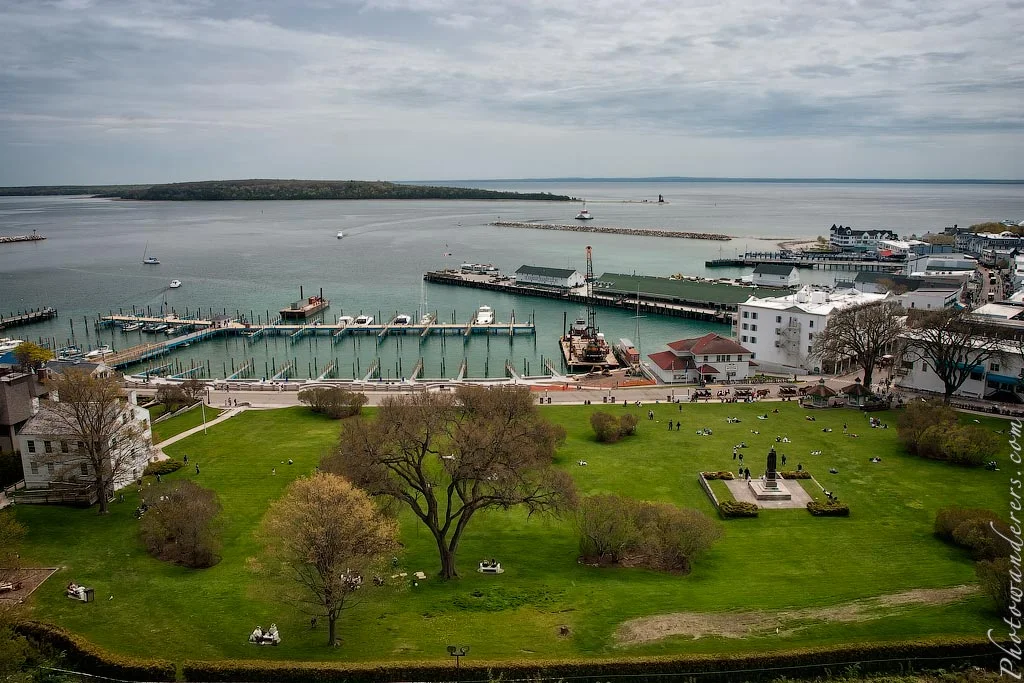
In 1875, the U.S. government made most of the island a national park — only the second in the country, after Yellowstone.
Fort Mackinac: Where History Gets Loud
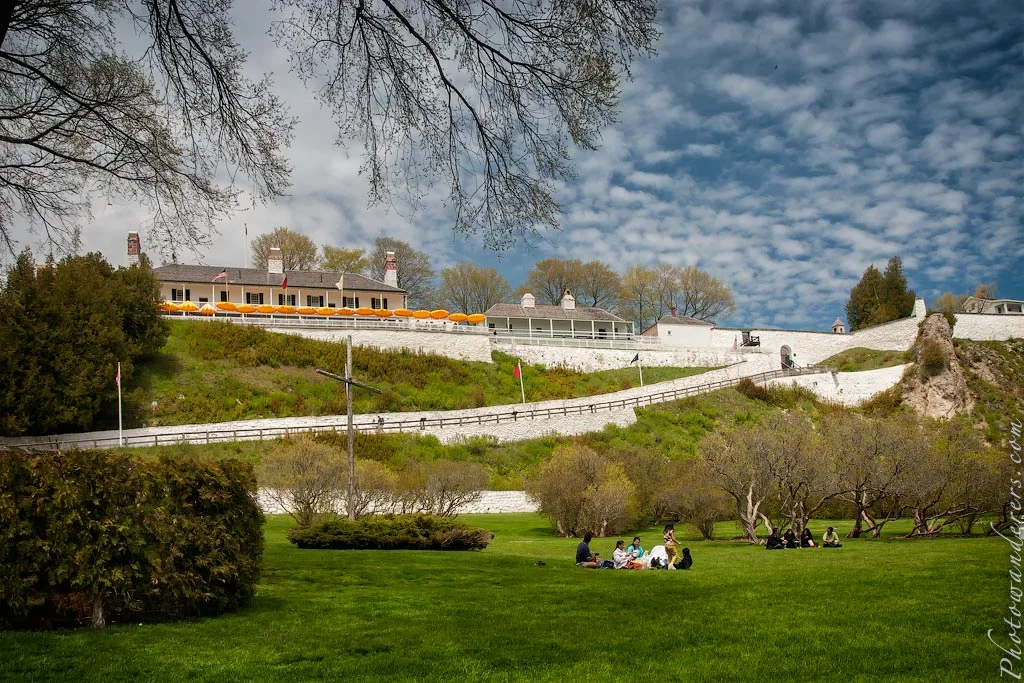
We climbed the steep path to the fort's southern gate. The walls are painted white. Blinding in the sun. From the ramparts, you can see the entire harbor and far out into Lake Huron — exactly why the British chose this spot.
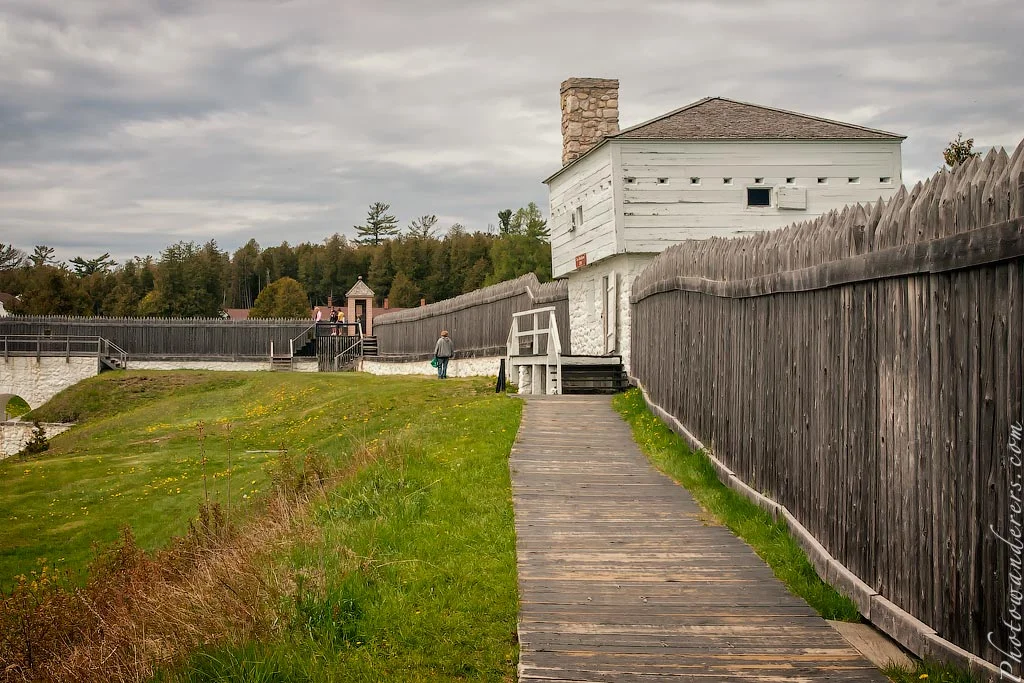
Inside, the restored buildings are small and precise. A schoolroom with wooden benches. An officer's quarters with a stiff wool uniform laid out on the bed. In the sergeant's room, a leather collar stiffener sits beside the mirror — because even in 1812, a man had standards.
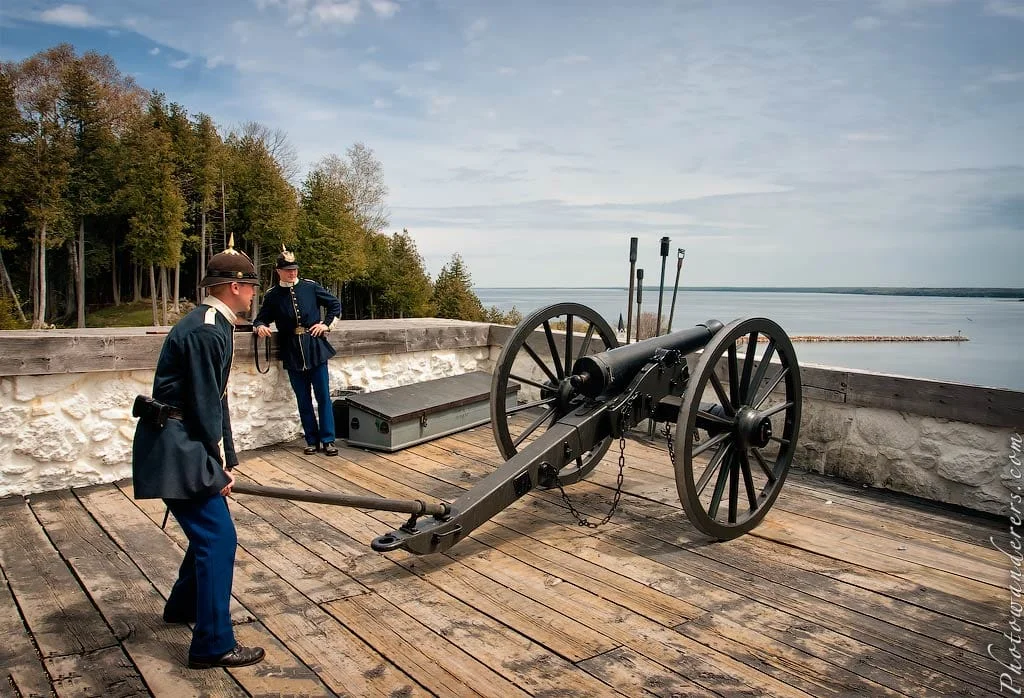
Then the cannon fires.
The boom rolls across the water and bounces off the trees. A few tourists flinch. The re-enactors in their blue Union uniforms look pleased with themselves. For $50, you can help load and fire it yourself. We watched from a safe distance.
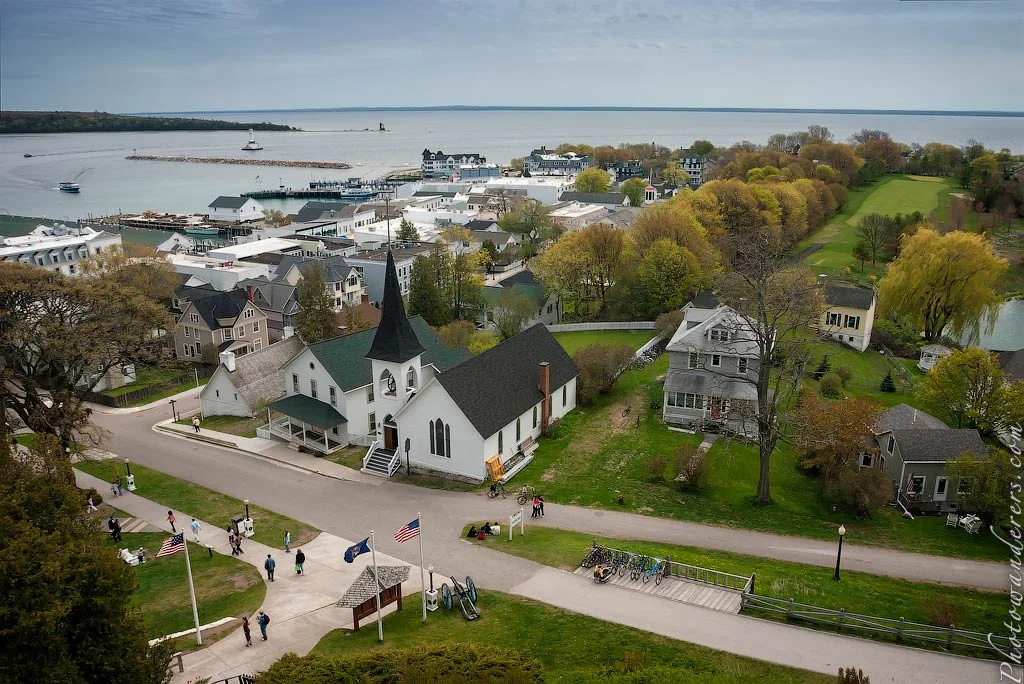
The view from the fort walls is worth the climb alone. The town below looks like a model — white church steeple, green lawns, docks, open water. A ferry cuts a white line across the blue.
The Grand Hotel
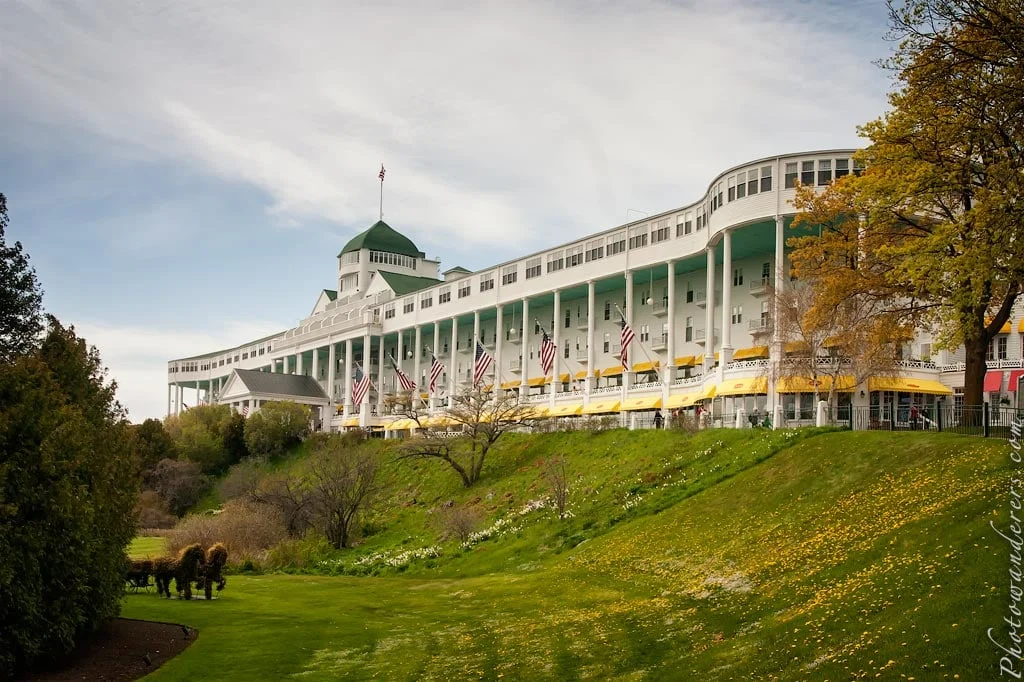
The Grand Hotel has been here since 1887.
White columns. Rocking chairs lined up along a porch so long you can't see where it ends. Thomas Edison stood on this porch and played his phonograph for a crowd who had never heard recorded sound before. Mark Twain told stories in the dining room.
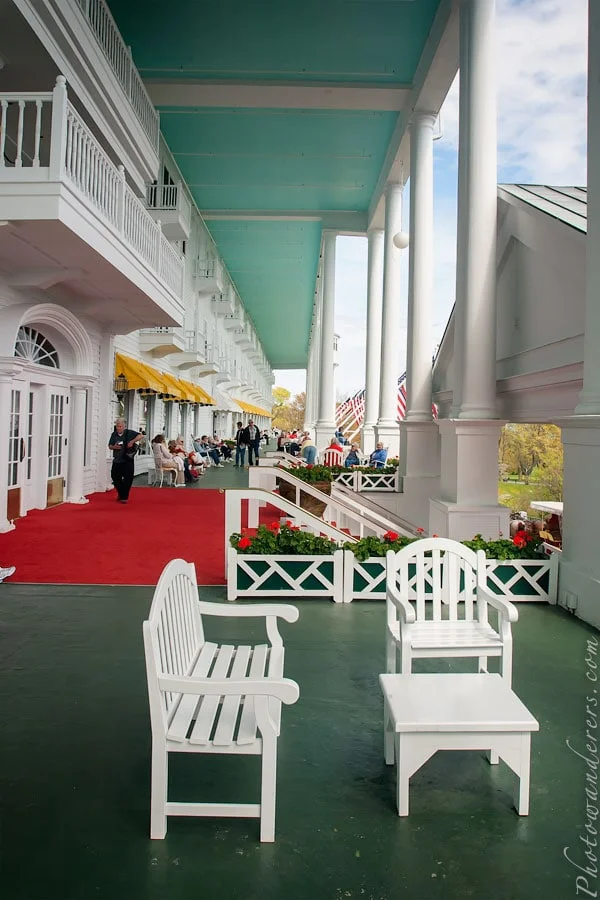
And somewhere in these corridors, Christopher Reeve walked back through time to find Jane Seymour. That last one was a movie. But the hotel has a way of making the impossible feel simply... delayed.
We didn't stay — maybe someday. We paid the $10 visitor fee to walk inside, and spent the next hour genuinely lost in the corridors, which felt like exactly the right thing to happen.
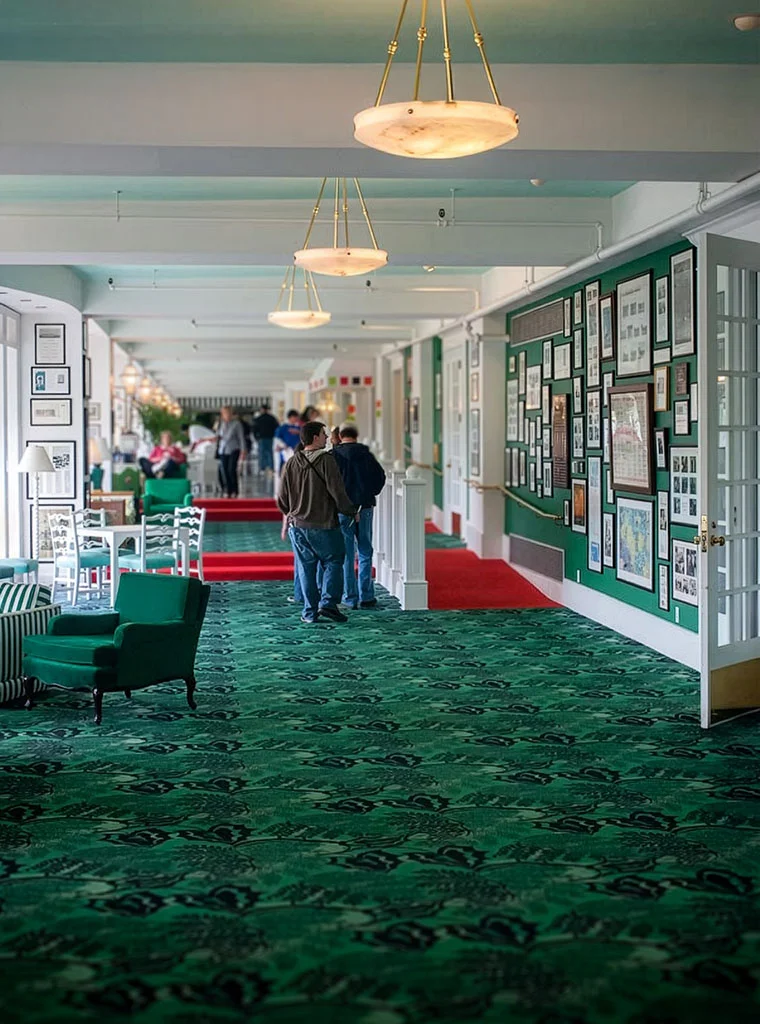
Inside — deep green carpet, walls covered floor to ceiling with framed photographs. Corridors that turned and stretched and made us lose track of where we started.
We found our way to the porch eventually. Sat down. Ordered something cold. Watched a carriage pull up below, the horses shifting their weight in the afternoon heat.
The afternoon slowed down on its own. We let it. I leaned back until the chair creaked. Alex looked over and smiled.
Getting Around
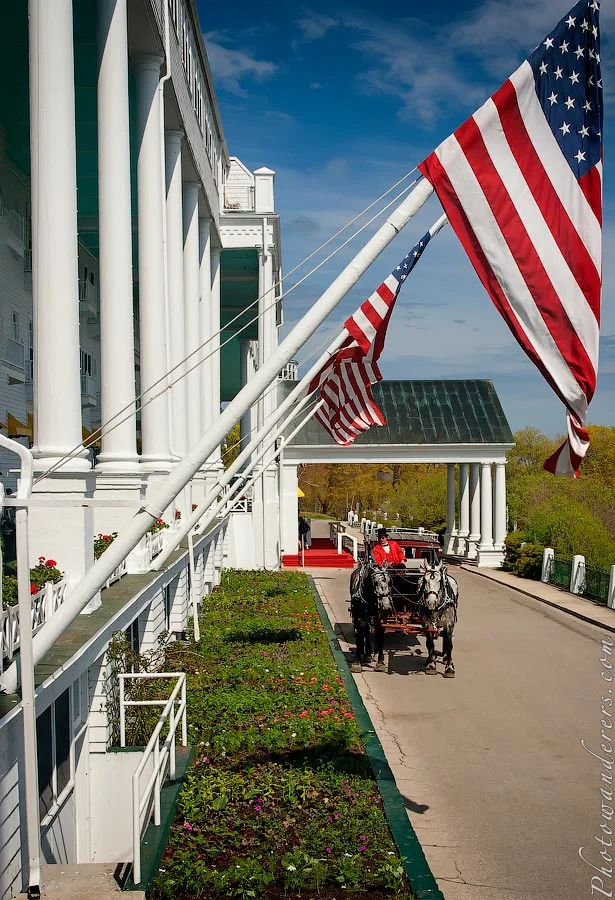
After the porch, we hired a single carriage — not a tour, just the two of us. I had ideas about how romantic it would be. The reality was bumpier. The warm afternoon turned cold the moment we started moving, the wind cutting straight through, and by the end, I was gripping the seat more than enjoying the view. Alex was polite about it.
We didn't try the horses. We spent the rest of the day on foot. Turns out that's the right way to see the island anyway.
Tulips and Fudge
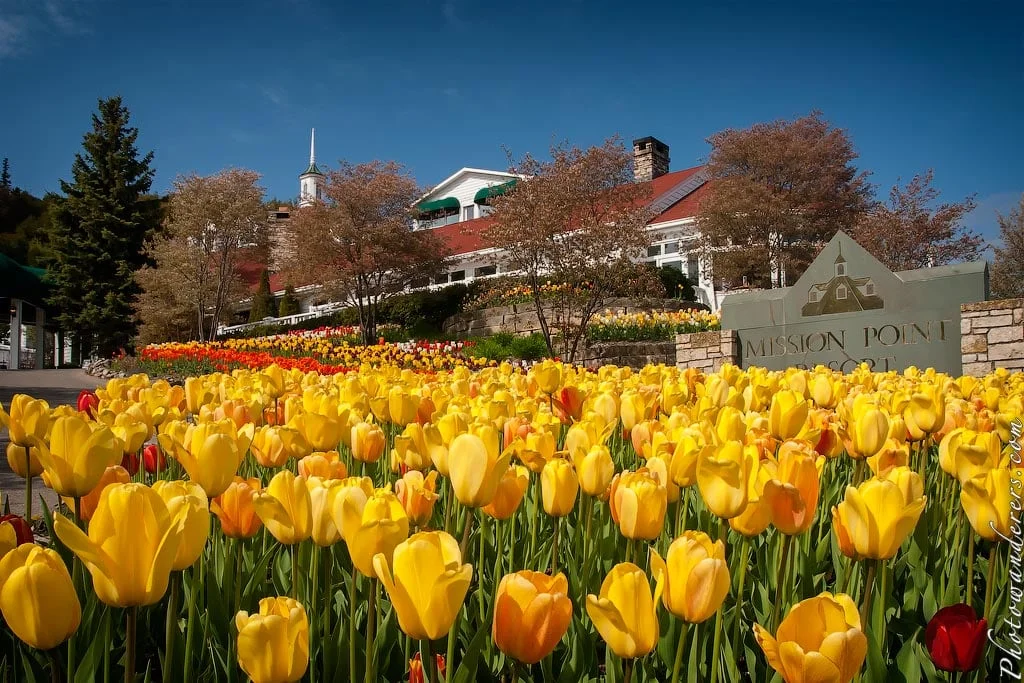
In May, the island smells like flowers. Every garden is a competition — literally. There's an annual flower contest, and the residents take it seriously. The tulip beds in front of Mission Point Resort stopped us in our tracks. Yellow and orange and red, thousands of them, against a deep blue sky.
Then the wind shifted and I smelled the fudge. Warm and sweet, like caramel and chocolate melting together.
Mackinac Island fudge has been famous since the 1880s. There are 15 fudge shops on an island you can walk across in 20 minutes. In Victorian times, candy was something you brought home from a journey. A souvenir you could eat. Something to remember the trip by.
That feeling hasn't changed.
Arch Rock
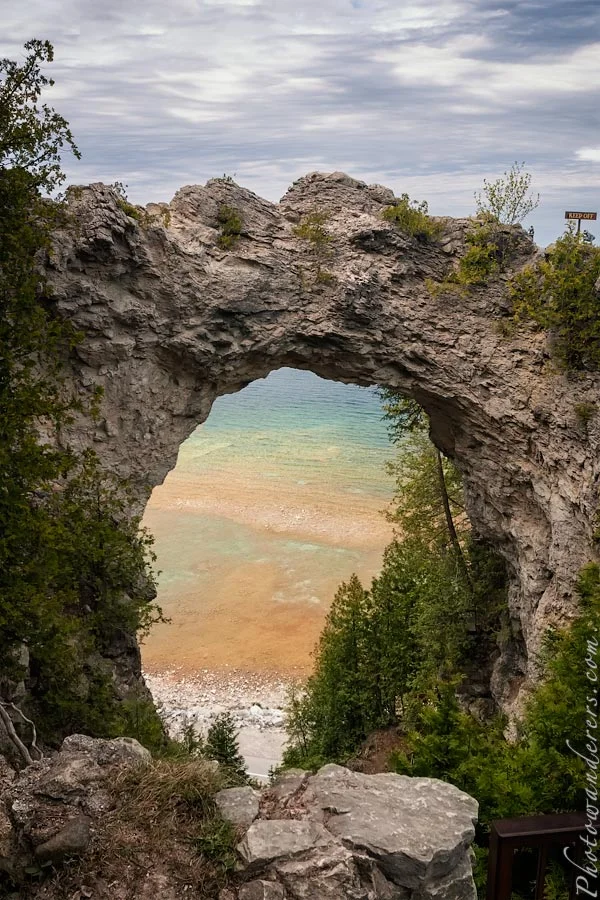
At 150 feet above Lake Huron, a natural limestone arch frames a perfect oval of turquoise water below. The colors through the arch look almost unreal — amber sand, green shallows, deep blue beyond.
There's a Native American legend. A young woman fell in love with a "sky man." Her father forbade it. He made her stand on a great rock and weep until she promised to give him up. Her tears slowly wore through the stone, carving the arch. In the end, her love returned and they rose together to the stars.
The geology says glaciers and 10,000 years of erosion. But the legend is better.
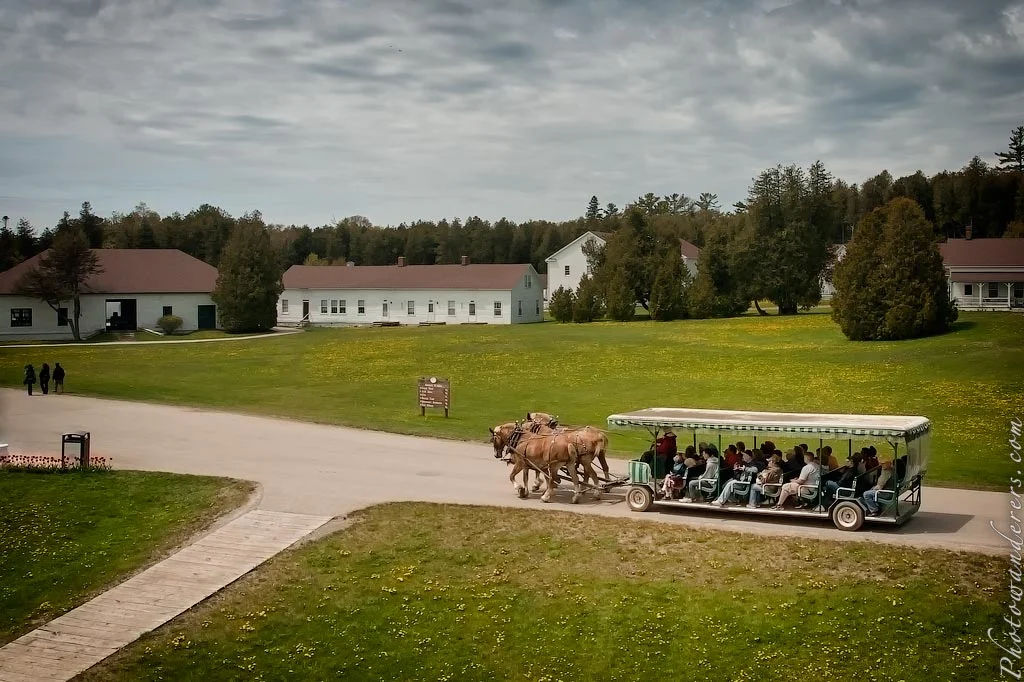
The horses pulling the tour wagons to Arch Rock, by the way, look considerably less exhausted than the hikers who climbed the stairs.
We left the island the same way we arrived — on the ferry, watching it shrink behind us. The white houses. The fort on the hill. The horses still moving slowly along the shore road, unhurried, as if time there runs on a different gear entirely. On the mainland, the first car we saw felt like an intrusion. Like we'd been caught somewhere we weren't supposed to be.
Some places make you feel like you've been somewhere. Mackinac makes you feel like you've been somewhen.
We already want to go back.
Mackinac Island is accessible by ferry from Mackinaw City or St. Ignace, Michigan. The island is open to visitors from May through October. Cars are not permitted — and after a few hours, you won't miss them.
Comments
Leave a comment