
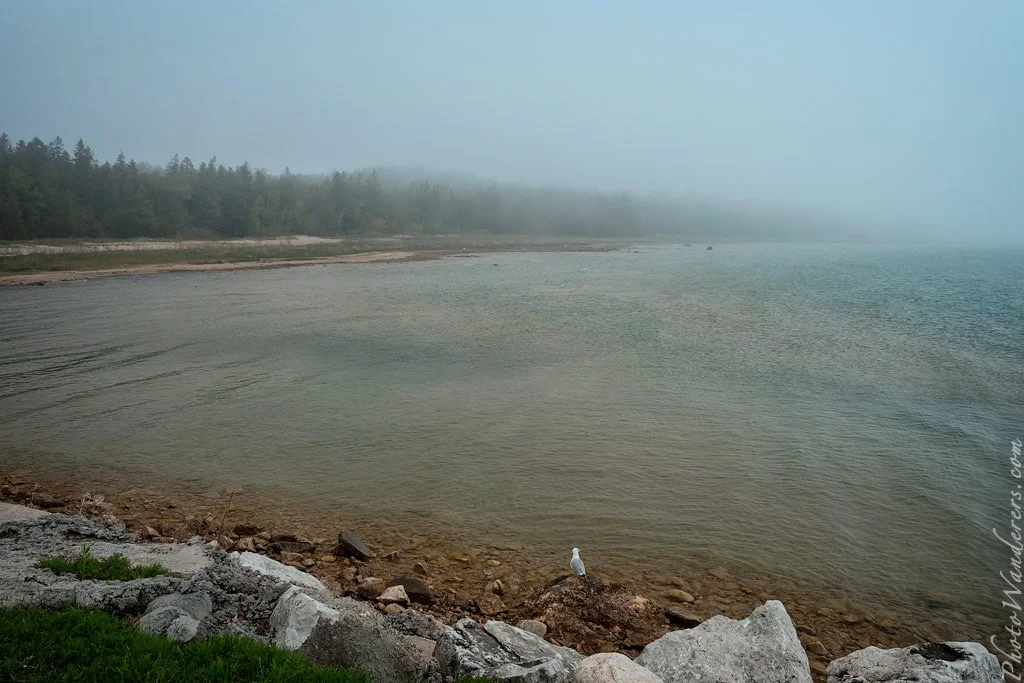
The day started with rain. Actually, the rain started the night before, quietly, while everyone slept. By morning, it had brought fog with it — thick and low, swallowing Lake Huron whole.
A lone seagull stood at the water's edge, staring into the fog. Unbothered. Patient. More prepared for the day than I was.
The easy choice was to stay in bed. Pull the blanket over your head. Disappear.
Instead, I grabbed my camera.
Through the viewfinder, the world looked different. Softer. The fog wasn't gloomy anymore — it was cinematic. And somewhere out there, just a short drive away, a 260-year-old fort was waiting in the mist.
I went.
A Game of Lacrosse. A Very Deadly One.
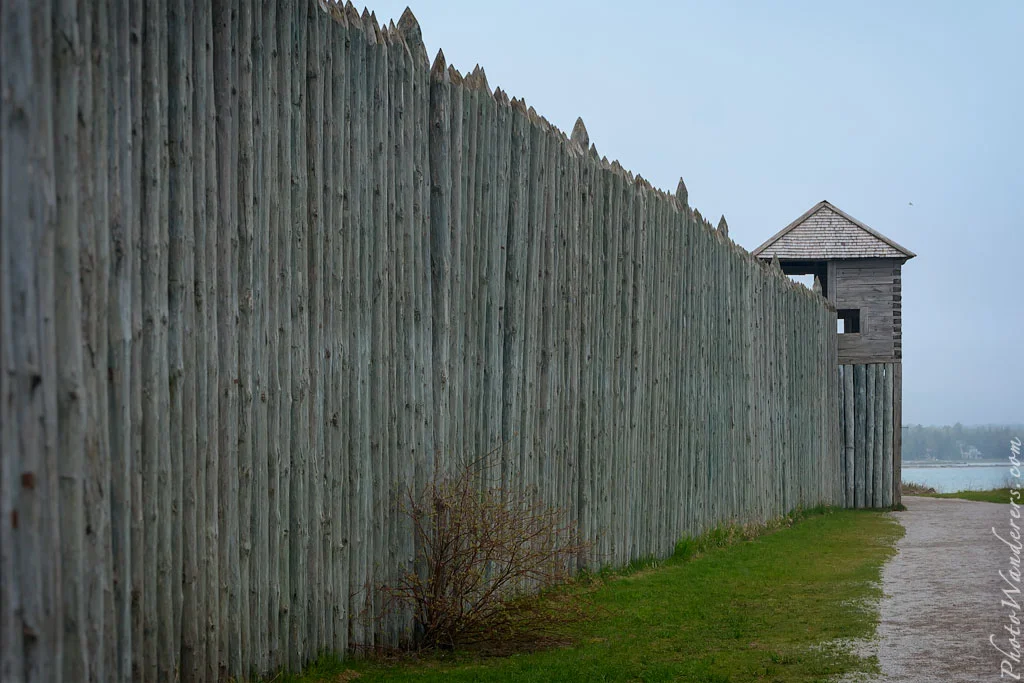
Fort Michilimackinac sits where Lake Michigan and Lake Huron meet — a narrow, wind-bitten strait at the top of Michigan's Lower Peninsula. The French arrived here first. They built a small fort and trading post, and for a time, things worked.
Three Indigenous nations had lived in this territory for centuries — the Ojibwe, the Odawa, and the Potawatomi. Together they were known as the People of the Three Fires. They traded willingly with the French. Furs for goods. A relationship built on mutual benefit and, importantly, on the French tradition of giving generous gifts to tribal leaders.
Then the British took over.
The British were stingy. No gifts. No ceremony. Just rules.
The Ojibwe had had enough.
On June 2, 1763, the Ojibwe organized a lacrosse match outside the fort gates. They invited the British commander, Major Etherington, and his soldiers to watch.
Etherington came out in his white dress wig. He brought most of the garrison with him. The soldiers left their weapons inside. The gates stayed open. All eyes were on the game.
Around 500 players took the field — more of a battle than a sport. The crowd roared. And nobody paid attention to the women gathering quietly near the fort entrance, wrapped tightly in heavy blankets. On a warm June day.
Then one player sent the ball arcing through the open gates.
The crowd surged after it.
The women opened their blankets. Passed knives and tomahawks to the players.
Screaming. Then silence.
A young English fur trader named Alexander Henry watched it happen from a window. He later wrote that he saw a crowd of Ojibwe inside the fort, "furiously cutting down every Englishman they found." A French neighbor's enslaved woman hid him in an attic. Henry watched through a crack in the wall.
He was found the next day. Taken captive, loaded into a canoe, headed toward an Ojibwe camp on Beaver Island.
Then the fog came in.
The same fog that had swallowed the lake that morning led the canoe off course — straight into an Odawa camp instead. The Odawa were furious. They hadn't been invited to the attack. They sent the prisoners back to the fort and allowed Etherington to send a courier begging for help.
At least 27 British soldiers died in the attack. More died in captivity.
By September, the British simply walked back in. The Ojibwe were gone. They had never wanted to occupy the fort — they wanted the British out of their hunting grounds. The fort was just a symbol.
It worked, briefly.
History That Breathes
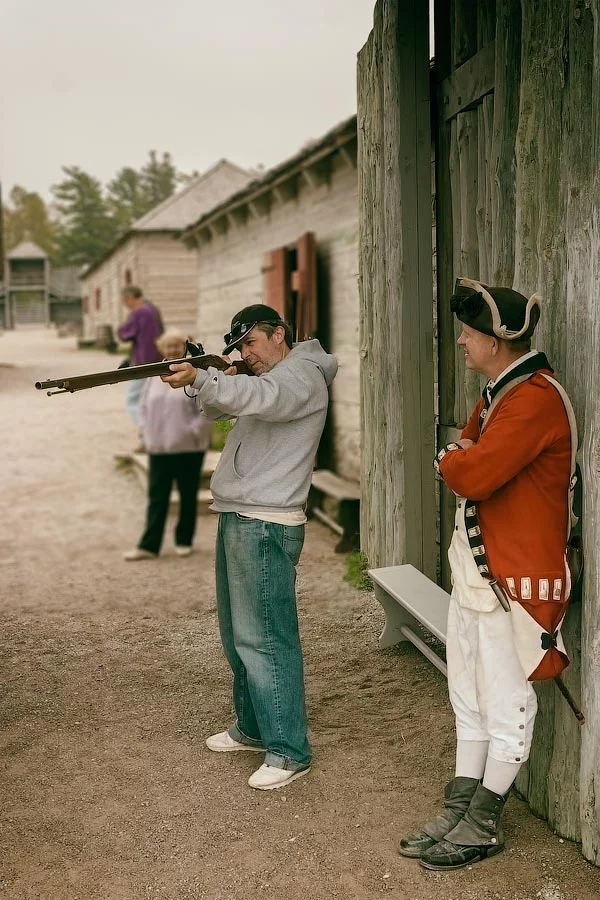
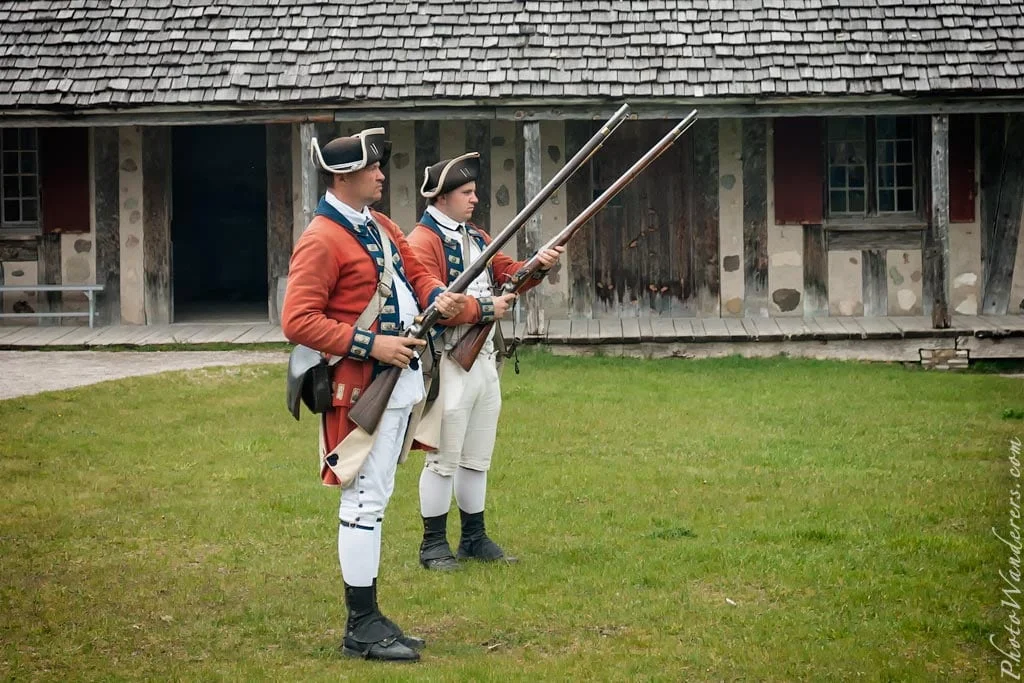
After all that blood and fog and silence, watching someone dip beeswax candles felt almost absurdly peaceful. A man in a British soldier's uniform met us at the gate. Red coat. Musket. Completely in character.
Fort Michilimackinac runs what's called a "living history" program — and there's an important difference between that and battle reenactment (if you mix them up at a history event, apparently, it's a whole thing). Living history interpreters are museum staff. Their job is to make the past feel real, not just visible.
The women were wearing full 1770s dress — linen shifts, fitted bodices, wool skirts, aprons, stockings, buckled shoes. Multiple layers. In a Michigan spring that couldn't decide if it was winter.
They were lighting fires with flint. Baking in cast-iron pots over hot coals. Dyeing wool. Dipping beeswax candles. Embroidering small pouches that tied at the waist — the 18th-century version of pockets.
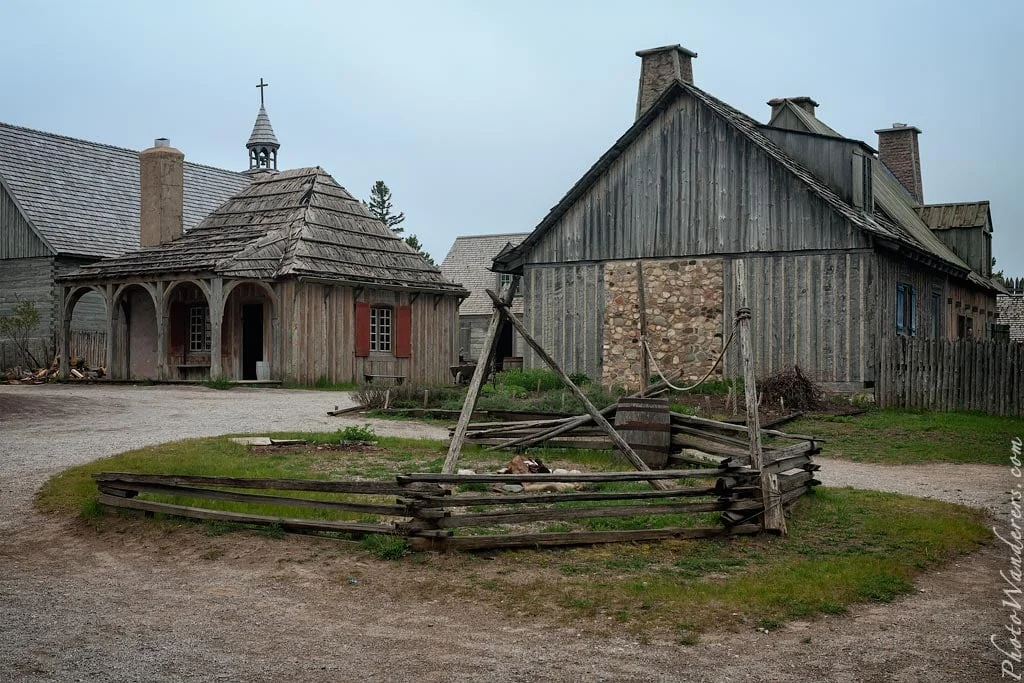
The rain had chased most visitors away. The fort felt almost abandoned — just a few of us wandering the muddy paths between low wooden buildings. The interpreters, robbed of a proper crowd, turned their hospitality toward us. Someone offered shepherd's pie, cooked over the fire from a period recipe.
It was exactly what a cold, grey morning needed.
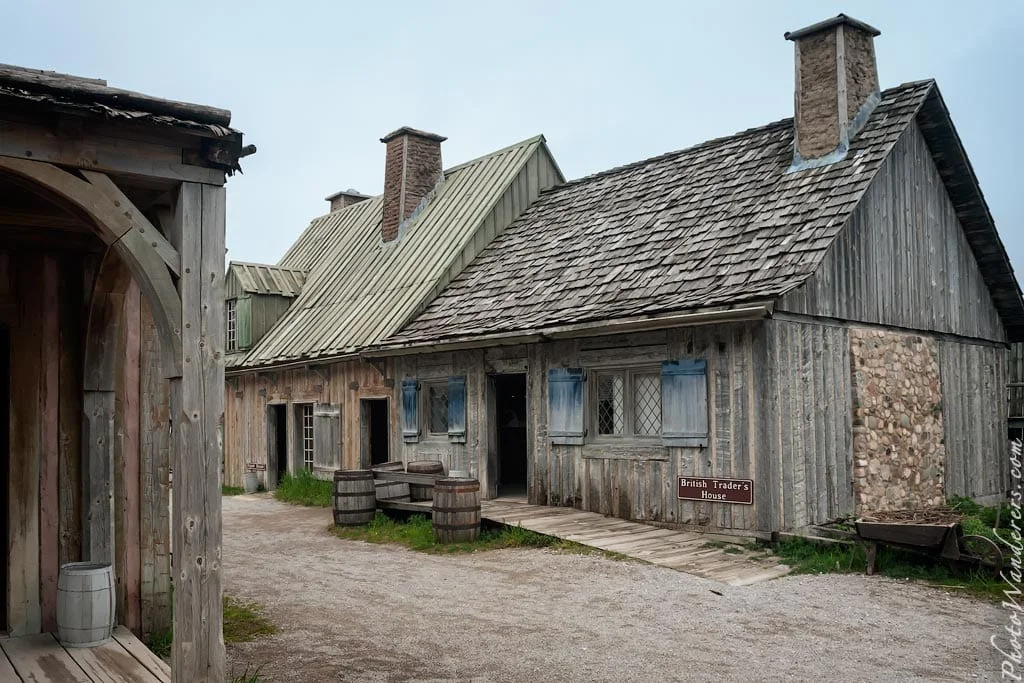
The male interpreters had the easier assignment. They played merchants, sitting in the trading post among fox pelts and wool blankets, tobacco and tea. Watching. Waiting.
Two muskets fired in the courtyard. The smoke didn't drift away. It hung there, grey and heavy, mixing with the fog.
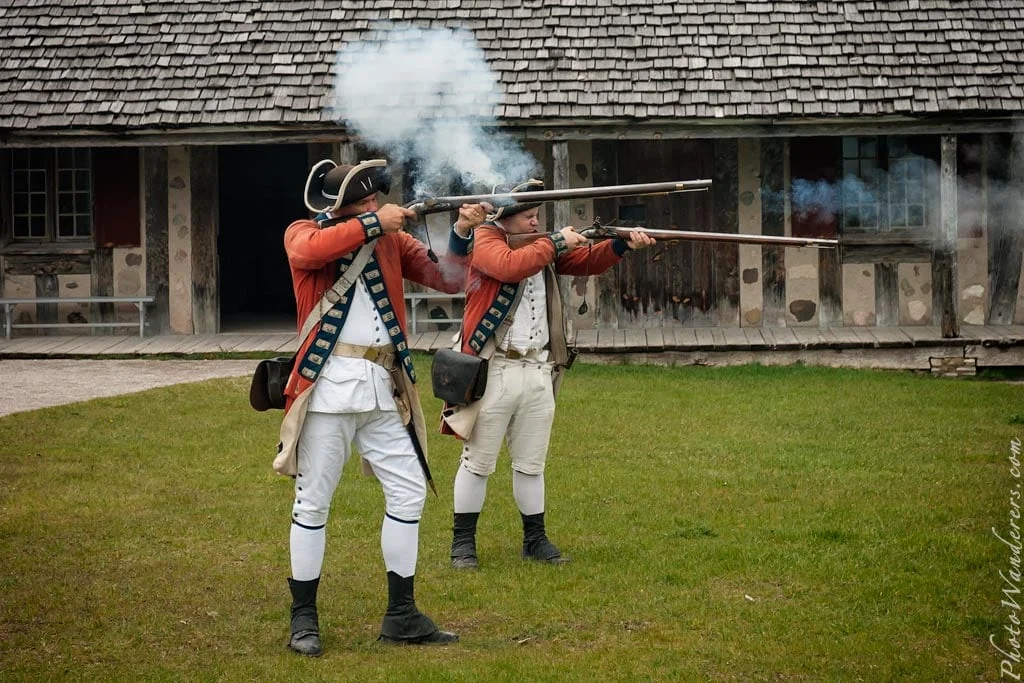
And then — the cannon.
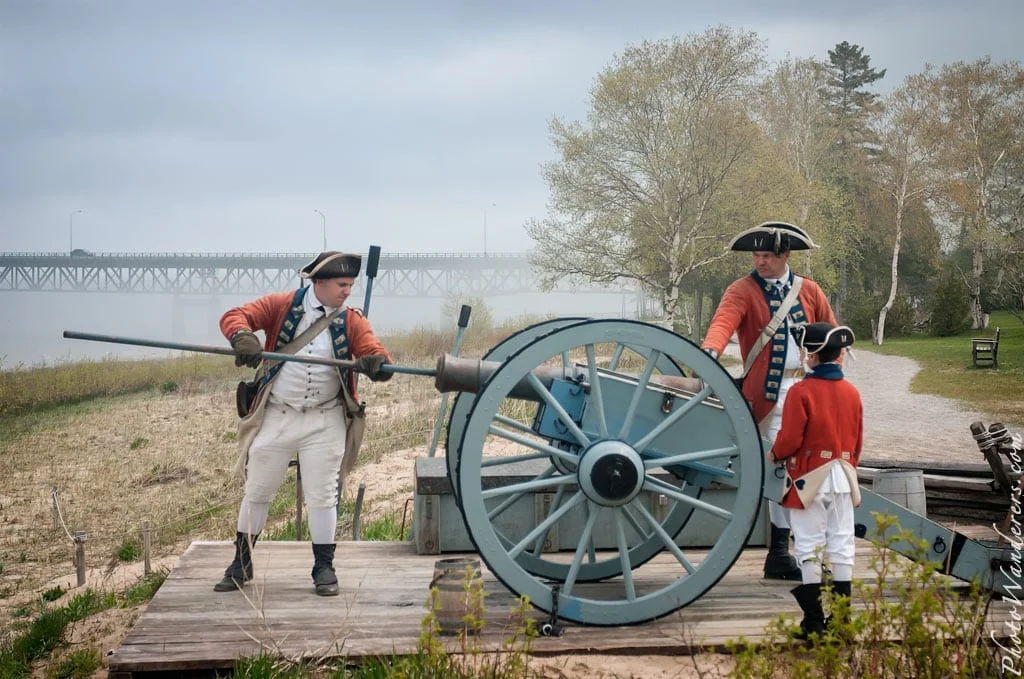
One of the redcoats was about four feet tall. Tricorn hat, full uniform, completely serious about the whole thing. Right up until the cannon fired.
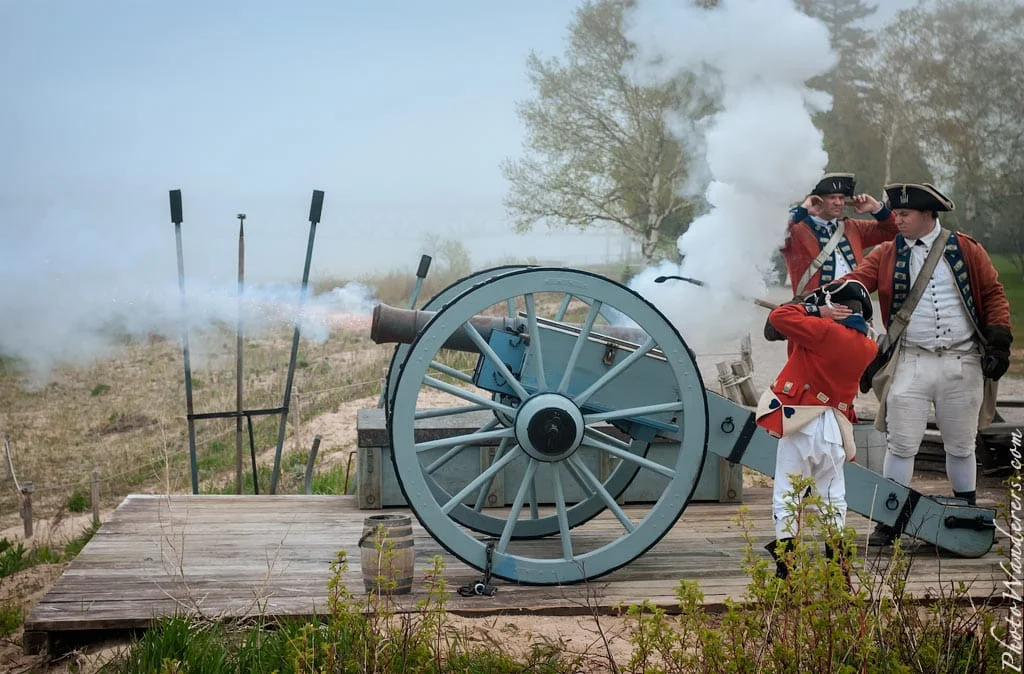
Imagine a real battle. Hundreds of muskets. A dozen cannons. Firing every twenty seconds. The smoke would have been so thick you couldn't see ten feet. That, the interpreter told us, is why the British wore red coats — so soldiers could find each other in the chaos.
The Lighthouse at the Edge of Things
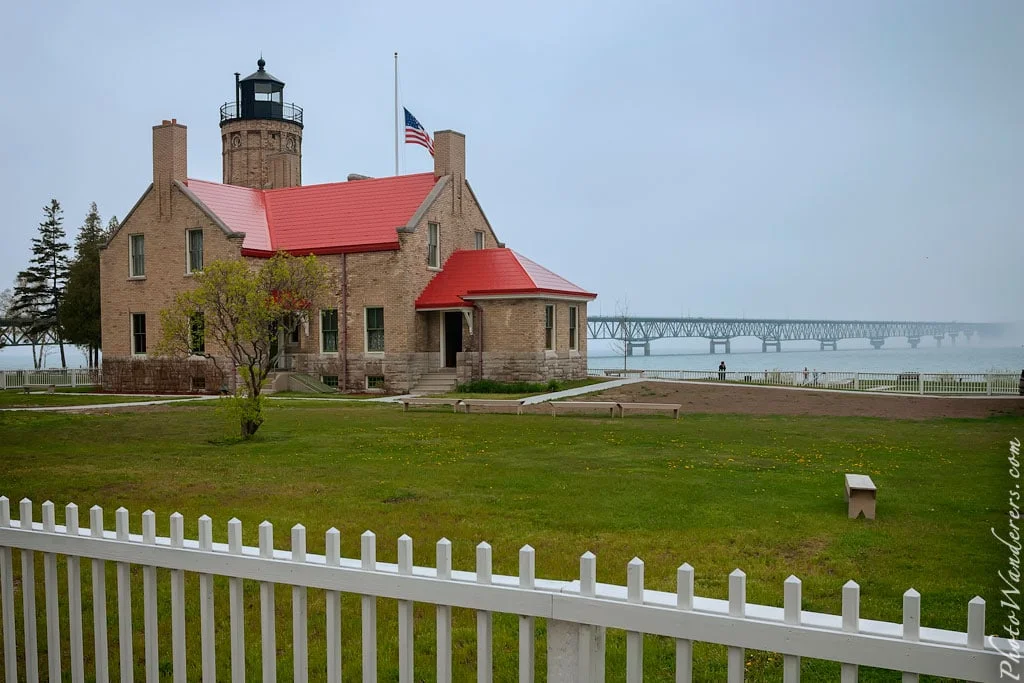
Just outside the fort stands the Old Mackinac Point Lighthouse, built in 1889. Red roof, pale brick, white picket fence — it looks almost too neat, too cheerful for something that guided ships through one of the most dangerous straits in the Great Lakes.
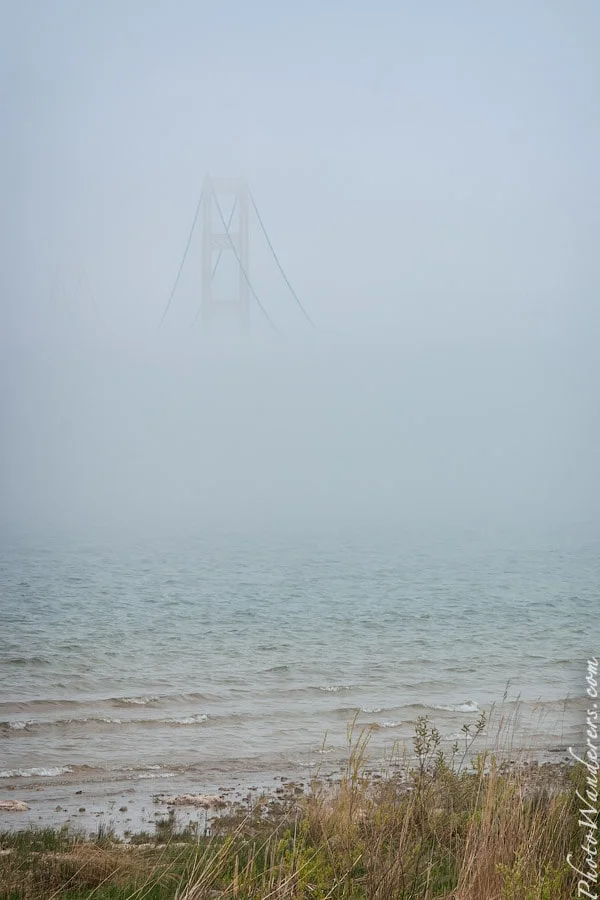
Behind it, barely visible in the grey morning haze, the long steel span of the Mackinac Bridge disappears into the water. Old and new, side by side, both still doing their job. Some forts never really close.
Fort Michilimackinac is in Mackinaw City, Michigan, open seasonally through summer. If you ever wanted to know what it felt like to reload a musket in a rainstorm, they're hiring.
Comments
Leave a comment