
Sleeping Bear Dunes: Sand, Wind, and a Mother's Grief
No cell signal. No GPS. Just trees on both sides and the occasional cow watching you drive by. I had downloaded the maps the night before. Smart.
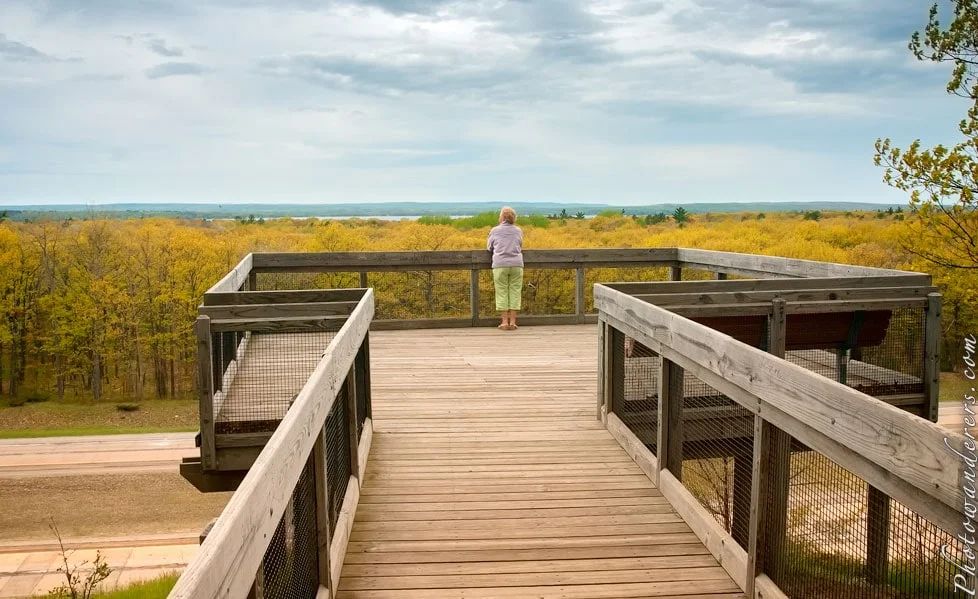
The first "Scenic Overlook" sign — we drove past it. The second one too. By the third, curiosity won. A short trail from a small parking lot led to a wooden platform. I climbed up. Looked around. Saw the tops of trees. And on the horizon, barely, a shimmer of water.
To really enjoy this view, you'd need to jump.
We kept driving.
The Place
Sleeping Bear Dunes National Lakeshore stretches 35 miles along the eastern shore of Lake Michigan in northwestern Michigan. It's a big, generous park — white sand beaches, towering dunes, inland lakes, dense forest, hiking trails, and campgrounds.
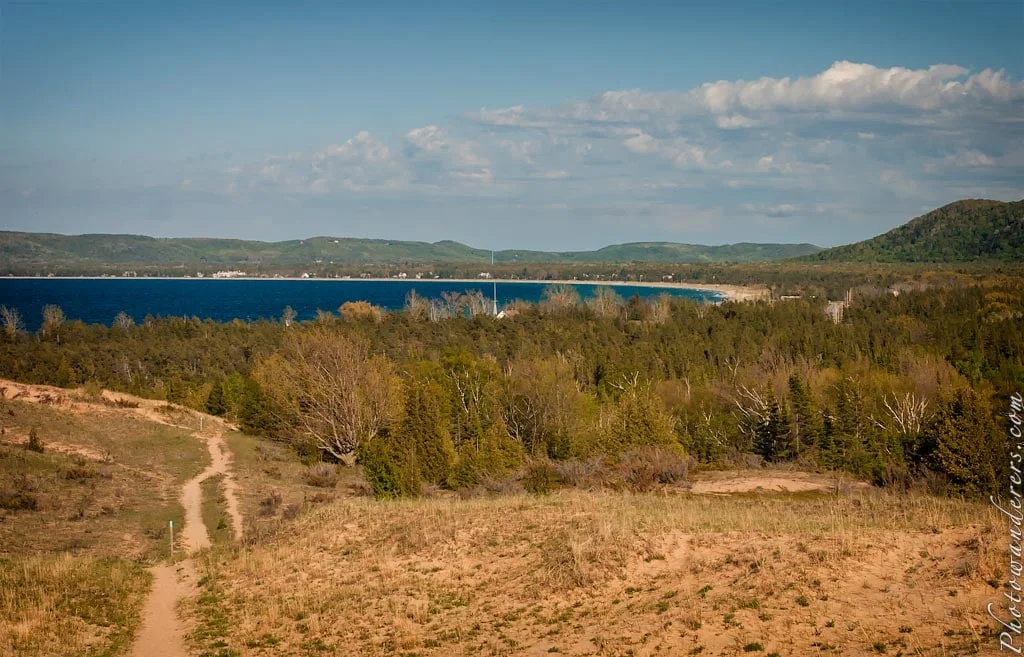
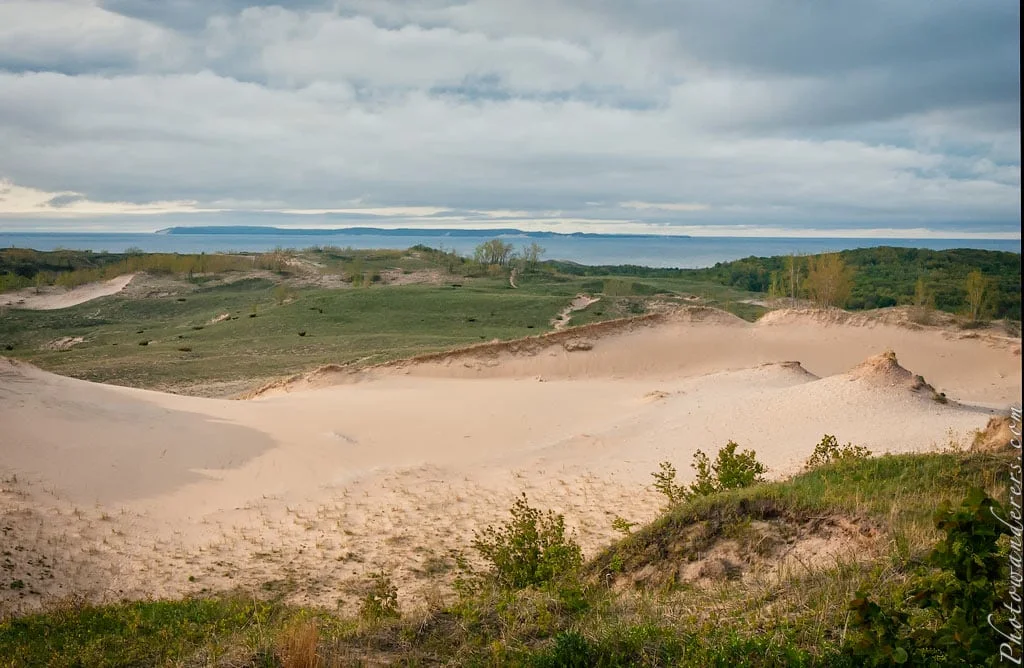
We visited in late May. The wind was cold and sharp. The kind that makes you think about hot tea, a fireplace, and not swimming. The trail through the dunes was edged with bearberry shrubs — small, stubborn, clinging to the sand. Even the plants here are named for bears.
How the Dunes Got Their Name
Before you climb anything, you need to hear this story.
Long ago, in the land that is now Wisconsin, a mother bear lived with her two cubs in a great forest. Fire came. A roaring, horizon-to-horizon wall of flame. It drove every living thing toward Lake Michigan. The mother bear knew bears can swim. She led her cubs into the cold water and pointed east.
They swam through the day. Through the night. By the following evening, the mother bear could see the high white dunes of Michigan on the far shore. She pulled herself onto the beach and turned around.
Her cubs were gone.
She called for them. Nothing. She climbed higher on the dunes to see farther. In the last red light of sunset, she spotted them — two small shapes still in the water, far from shore, paddling hard against the cold. One disappeared beneath the waves. Then the other.
She lay down on the dune and waited. Days passed. Nights passed. She never moved.
The Great Spirit Manitou was moved by her grief. He raised two islands from the lake — North and South Manitou — as a memorial to the brave cubs. Then, knowing the mother's heart would never heal, he let sleep take her and covered her gently with sand.
She is still there. Waiting.
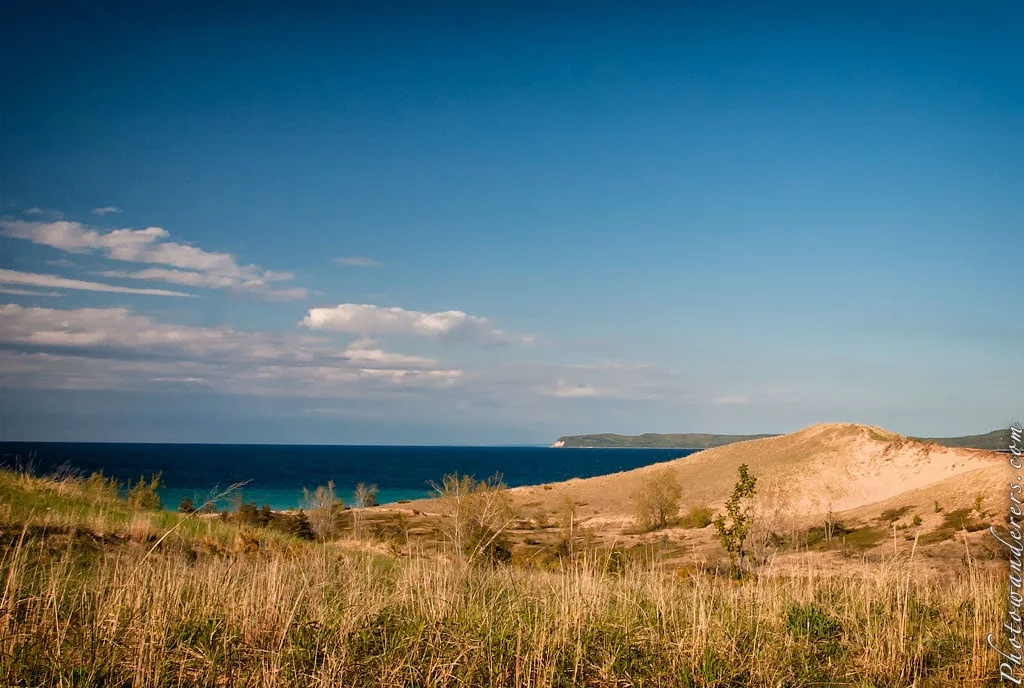
On a clear day from the overlook, you can see both islands sitting in the blue water. You can see exactly where she's looking.
Sand and Wind
The main attraction is called, simply, The Dune Climb. A 130-foot wall of fine white sand rising straight up from the road. It looks easy from below. It is not easy.
Every step forward, your foot sinks. The sand slides back under you. You gain half a step, lose a quarter. Your lungs start working harder than expected. Children charge ahead and tumble back laughing. Adults stop more often than they'd like to admit.
The trick: don't climb the ridge. Climb the slope. Slower, but steadier.
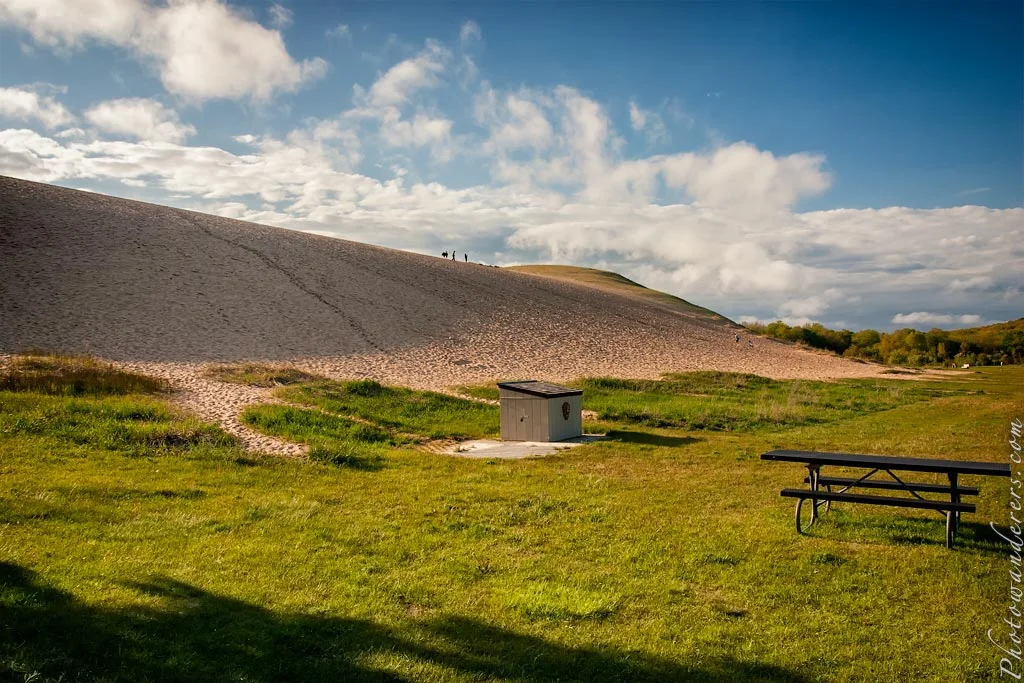
Coming down is pure joy. You lean back and let gravity take you. The sand is so soft, so fine — it doesn't hurt when you fall. And you will fall.
One warning: from the top, you can see the next dune. And you'll want to know what's beyond it. The answer is Lake Michigan. But it's 1.5 miles and five more dunes away. Bring water, sunscreen, and three hours if you want to make that trek. We saved it for next time.
If you have time for only one hike, take Trail #9 — the Sleeping Bear Point Trail.
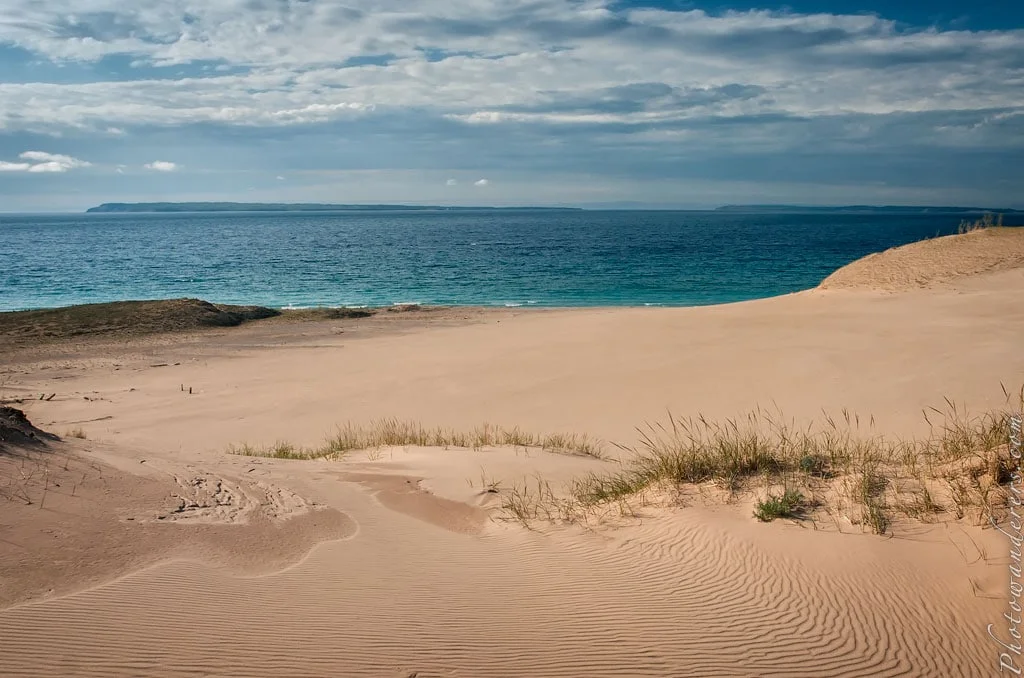
The park map calls it "challenging." After the Dune Climb, it just feels honest. The trail runs along an exposed ridge, wind hitting you from every direction. Only the toughest plants survive here. Sparse grasses. Bent little trees. Long stretches of bare sand, rippled by the wind into smooth waves — no footprints, no marks, just the shape the wind makes when left alone.
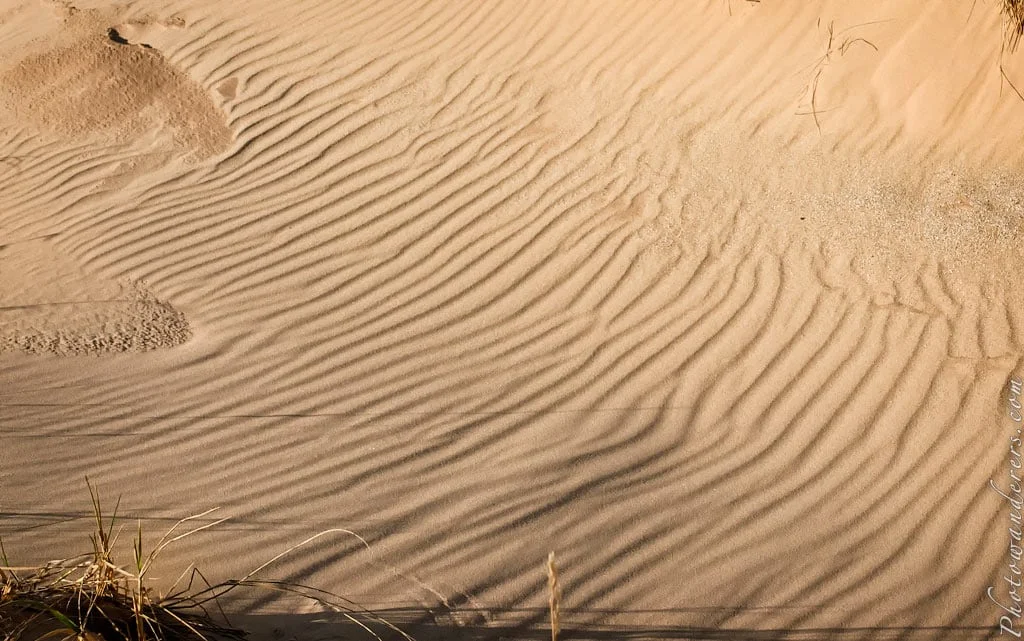
Pine resin. Dry sand. The sharp bite of lake wind. Nothing else for miles.
Pierce Stocking Scenic Drive
Late afternoon, we finally got in the car and drove the Pierce Stocking Scenic Drive — a 7.4-mile loop with 12 stops, each one different enough to make you get out.
Pierce Stocking was a logger who spent his life cutting down trees in northern Michigan. But he loved this land. He used to walk these ridges above Lake Michigan just to look — at the dunes, at the water, at the islands. He wanted other people to see it too. So he built the road himself.
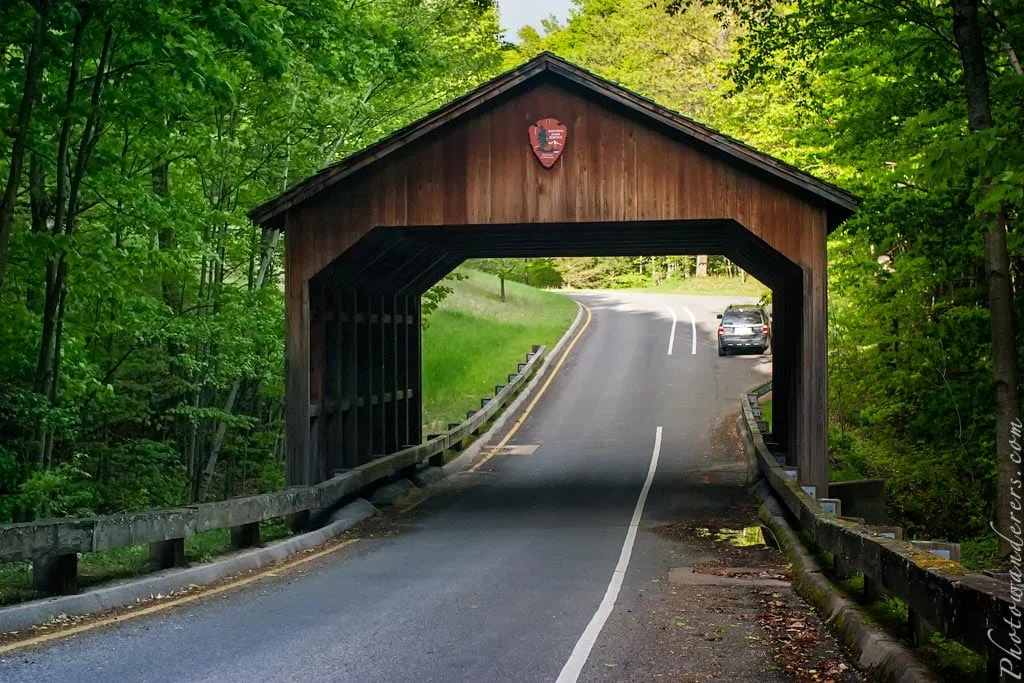
A park brochure mentioned that the original bridge had been completely destroyed by porcupines. I have many questions.
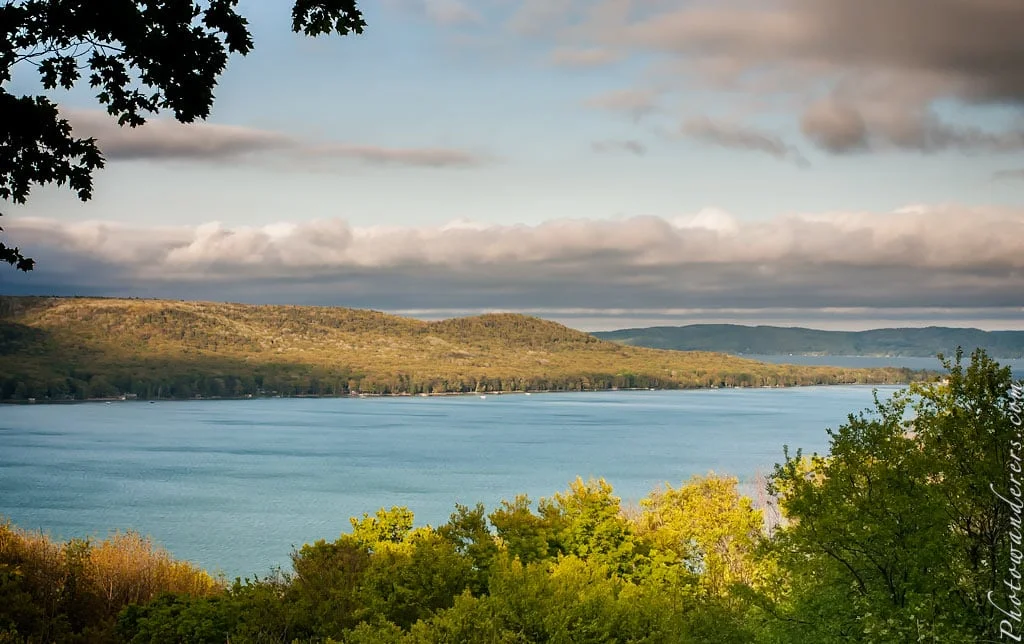
Glen Lake comes next. The water is every shade of blue and turquoise at once.
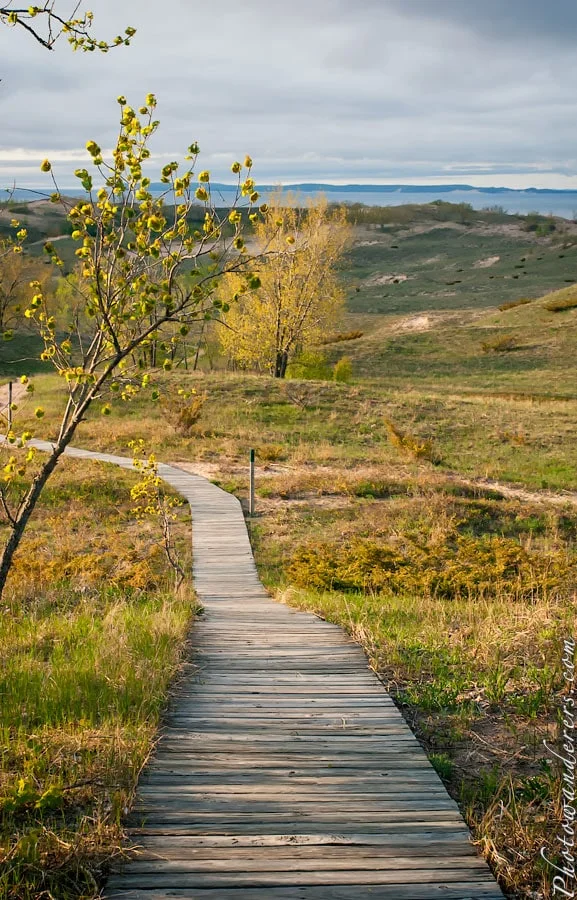
The Cottonwood Trail loops back, eventually, to the same dune we climbed that morning. The circle closes quietly.
The Drop
The Lake Michigan Overlook is the one that stops your breath.
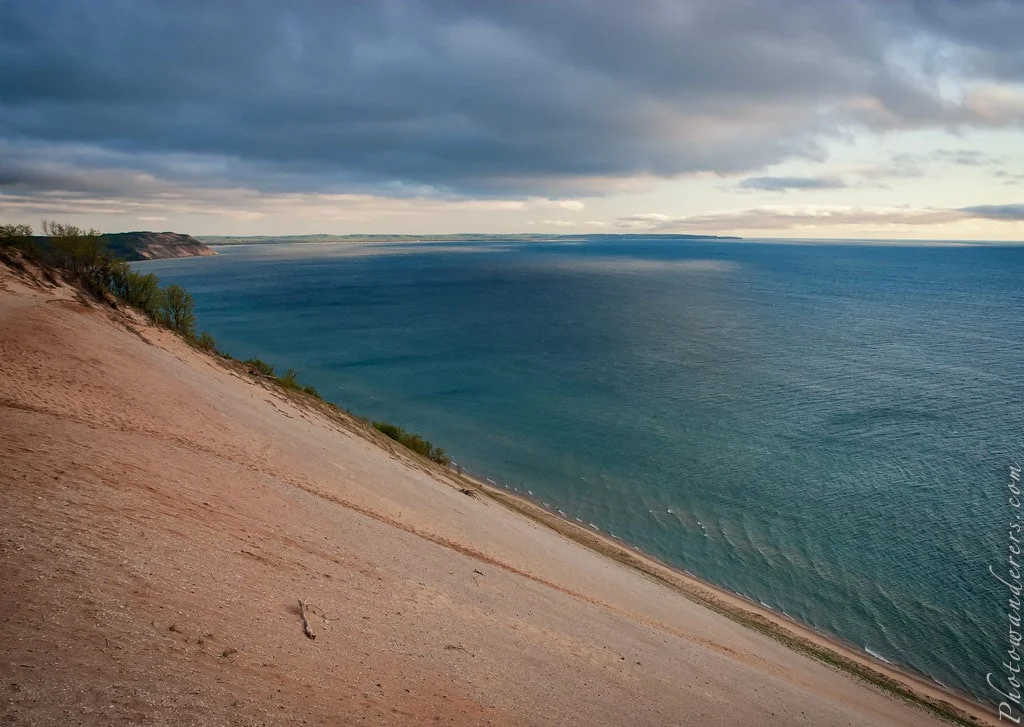
You walk from the parking area, come around a bend, and suddenly there's nothing between you and the horizon. The dune drops straight down — a sheer sand cliff falling to the beach far below. The water beyond it is the color of the Caribbean. Seriously. That blue.
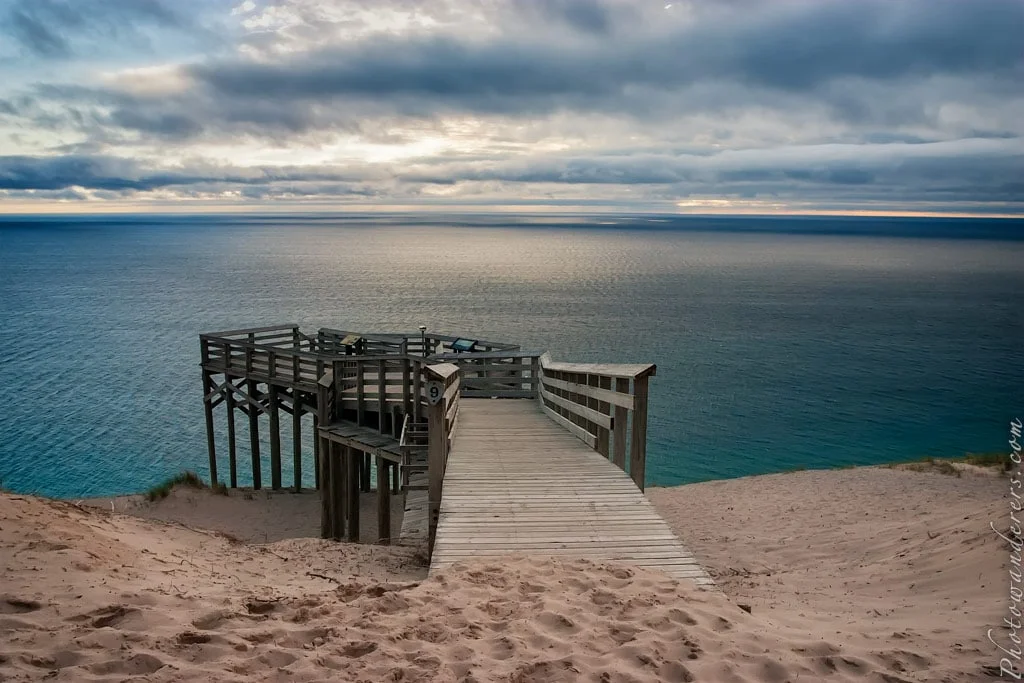
On a clear day, you can see Wisconsin across the water. That distant shoreline is where the legend says the fire started. Where the mother bear began her swim.
We stood very still for a moment. Then Alex said, "I'm glad we're too tired to go down."
The Dune Climb would look like a speed bump from here.
Sunset
The last stop is North Bar Lake — a small, warm lake separated from Lake Michigan by a narrow sand spit. Time and waves built that spit slowly, grain by grain. In summer, families swim here because the water warms up so much faster than the big lake.
We arrived at golden hour. The sun was low. Everything turned copper and rose — the sand, the water, the air itself.
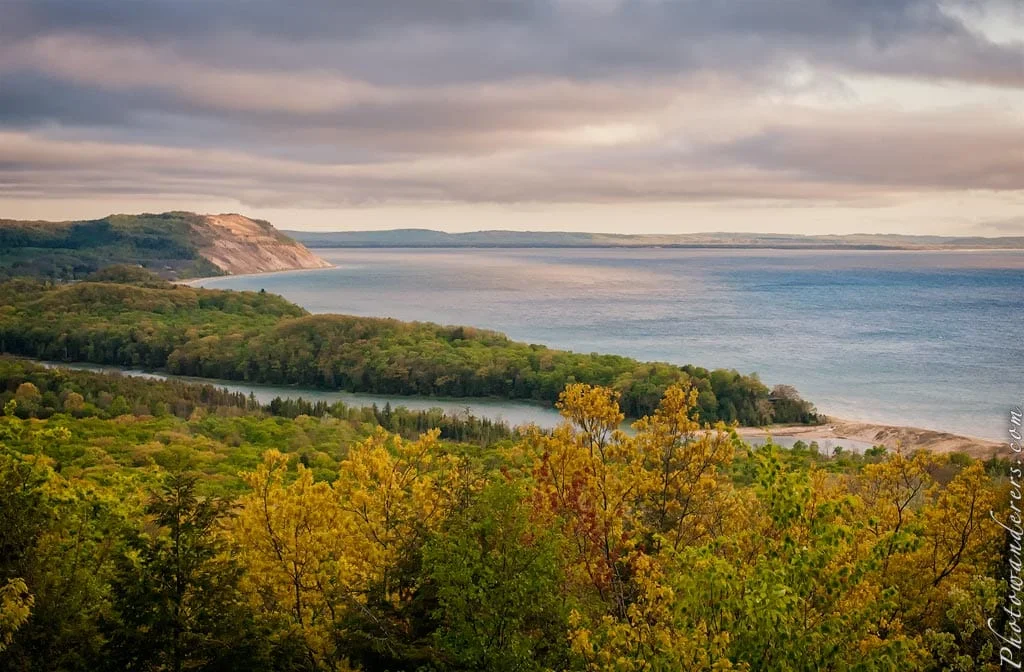
Nobody talked much. The light does that to you. It asks for quiet.
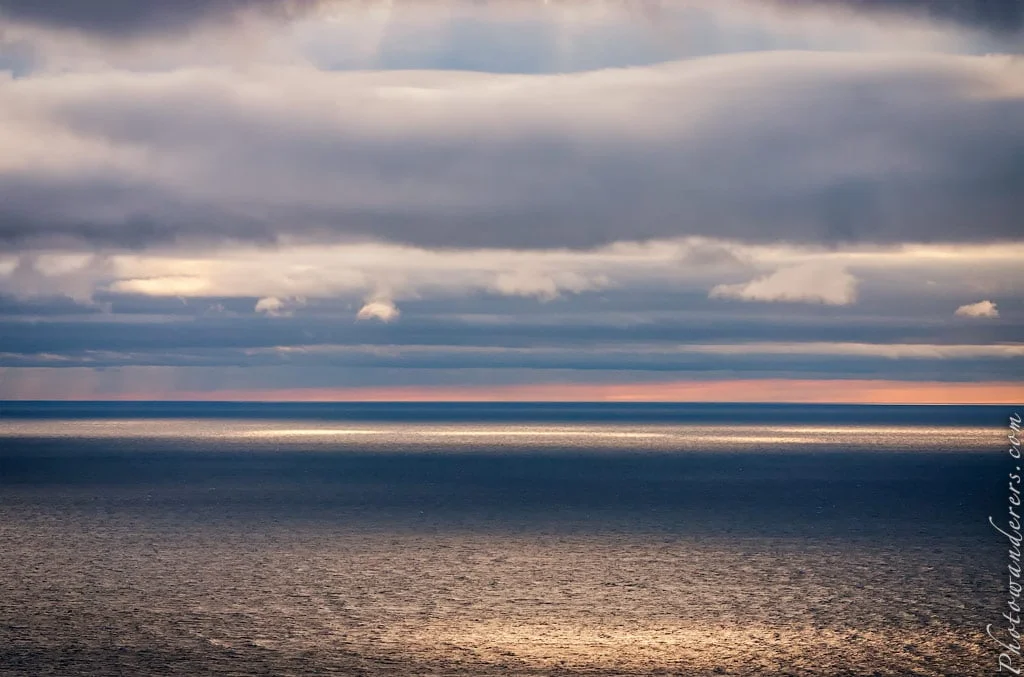
Then the sun touched the horizon, and someone started clapping. Others joined. It's apparently a local tradition — applauding the sunset. Thanking it for the day.
It felt right.
There's a line from a Ukrainian poet, Lina Kostenko, that I kept turning over in my head on the drive back:
The evening sun, I thank you for the day!
The evening sun, I thank you for my languor.
That's exactly it. Thank you for the sand in my shoes, the cold wind, the tired legs, the story of a mother who never stopped waiting.
Getting there: near Empire, Michigan, 25 miles west of Traverse City. Entrance fee applies — check nps.gov for current rates.
Comments
Leave a comment