
Venice: A Mosaic That Keeps Shifting
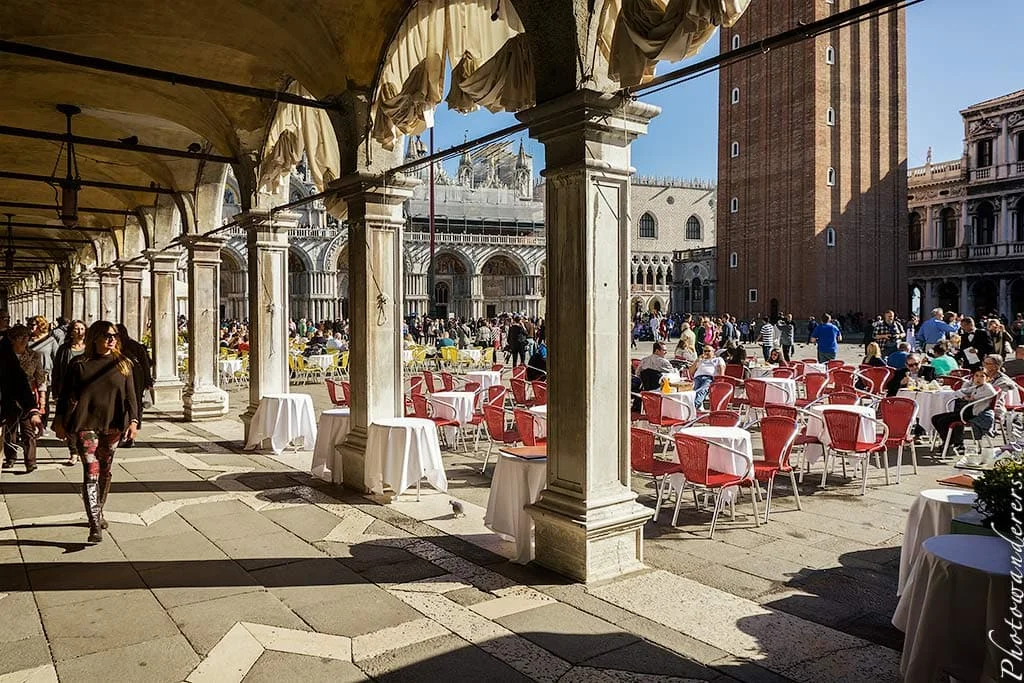
Small round tables scatter across the square like wildflowers. The air hums with half-familiar melodies — waltzes and nocturnes from another century. I'm sitting at Caffè Lavena on Piazza San Marco, right at the edge where the strolling crowds end and the elegant world of the café begins.
My eyes drift lazily across the golden mosaic tiles on St. Mark's Basilica. Across the turquoise water of the lagoon. To the two ancient columns standing at the water's edge. The sun catches the scales of a crocodile pretending to be a dragon on one of them. I wrap both hands around my hot chocolate — it smells of mint, warm and faintly sweet — and I still can't quite believe I'm back in Venice.
My first time here went by like a fever dream. One day. A blur of buildings, bridges, paintings, and crowds washing over this small island in the Adriatic. This time we came for a week. No car, no highway, no chasing the next destination. Just two feet and the water.
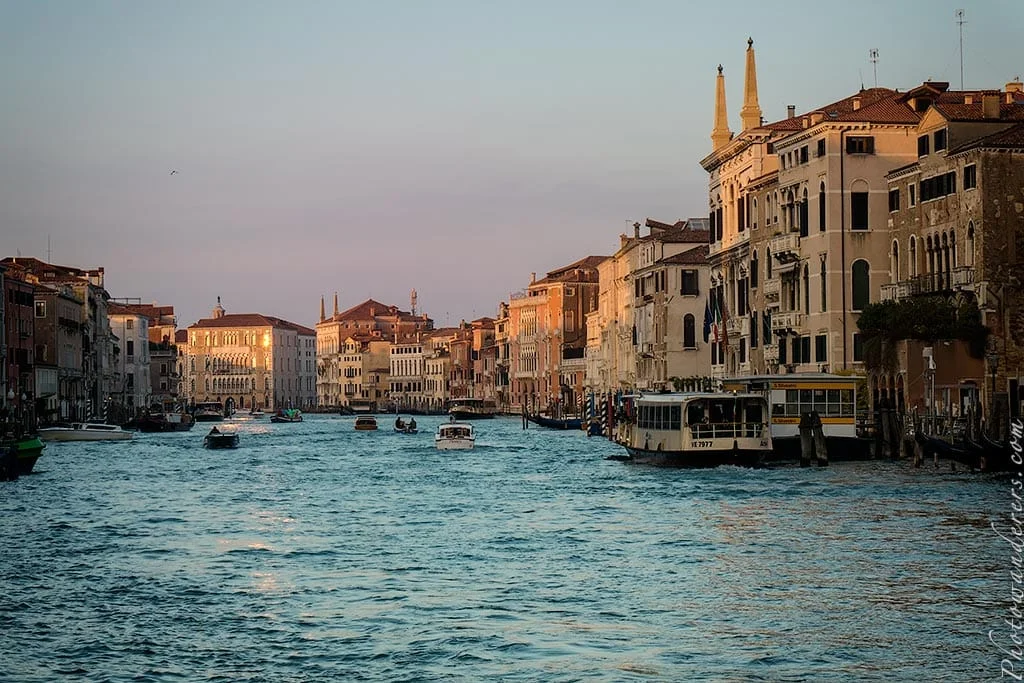
The Alilaguna water taxi from Marco Polo Airport glided across the lagoon and dropped us near the Rialto Bridge. From there, we walked. Or tried to.
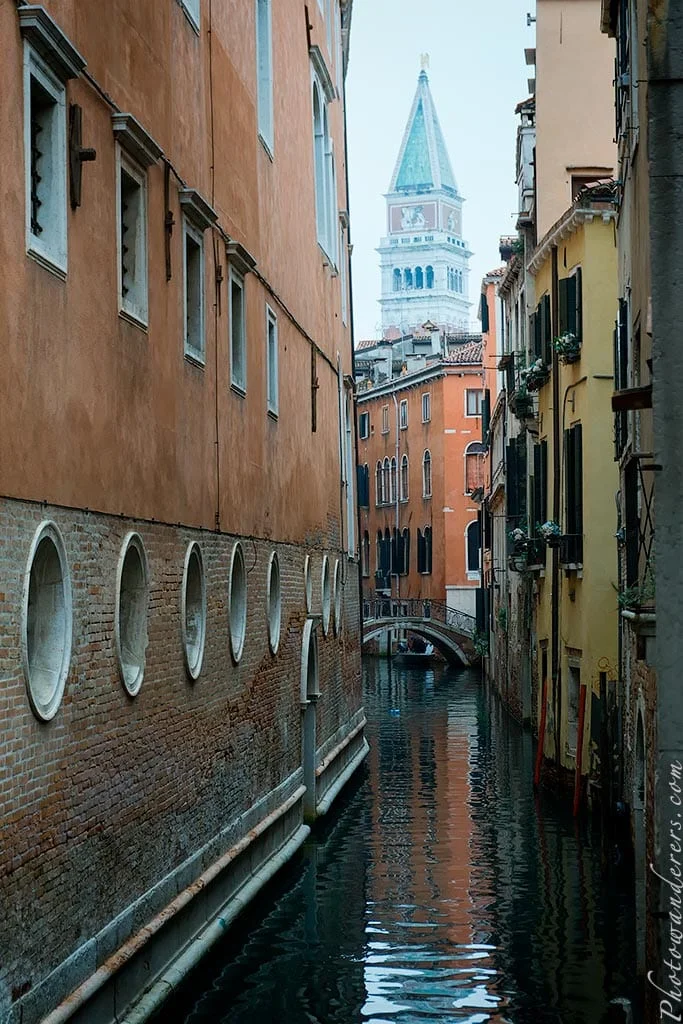
On the map, our hotel looked easy to find — turn your back to the Grand Canal, slip into one of the narrow streets toward Campo San Luca. We found the square no problem. But everything after that turned into a maze. We kept circling back to the same little square, dragging our suitcases across the same stones. Eventually, we parked the luggage and Alex went ahead alone. Minutes later, he returned with a porter who led us to a tiny ten-room hotel called La Scala. It hides at the end of a dead-end alley that opens onto a canal. No sign you'd notice. No reason to look. If you don't know it's there, it simply doesn't exist.
Hidden Rooms and Secret Histories
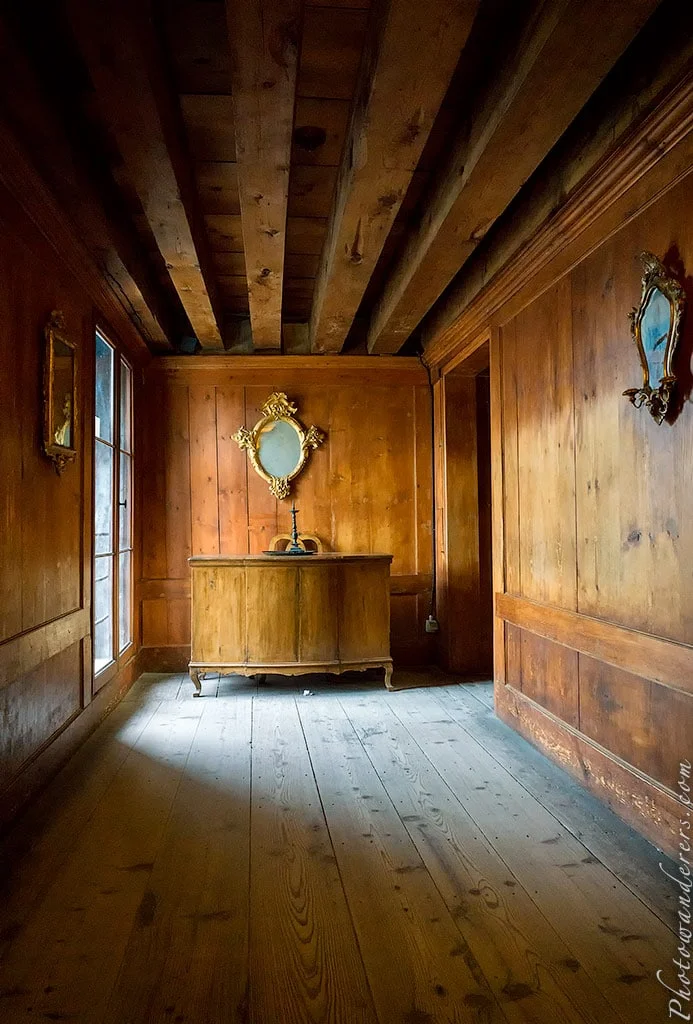
The Doge's Palace looks exactly as you'd expect — overwhelming, gilded, built to impress. We skipped the grand halls and took the Secret Itinerary tour instead. Narrow corridors. Low ceilings. Rooms tucked behind walls where no visitor was supposed to look. This is where Venice was actually run. Where the Council of Ten met in candlelight. Where the Republic's secrets were kept.
Coming back out into the sunlight of the Piazzetta felt like surfacing from deep water. We wanted sky.
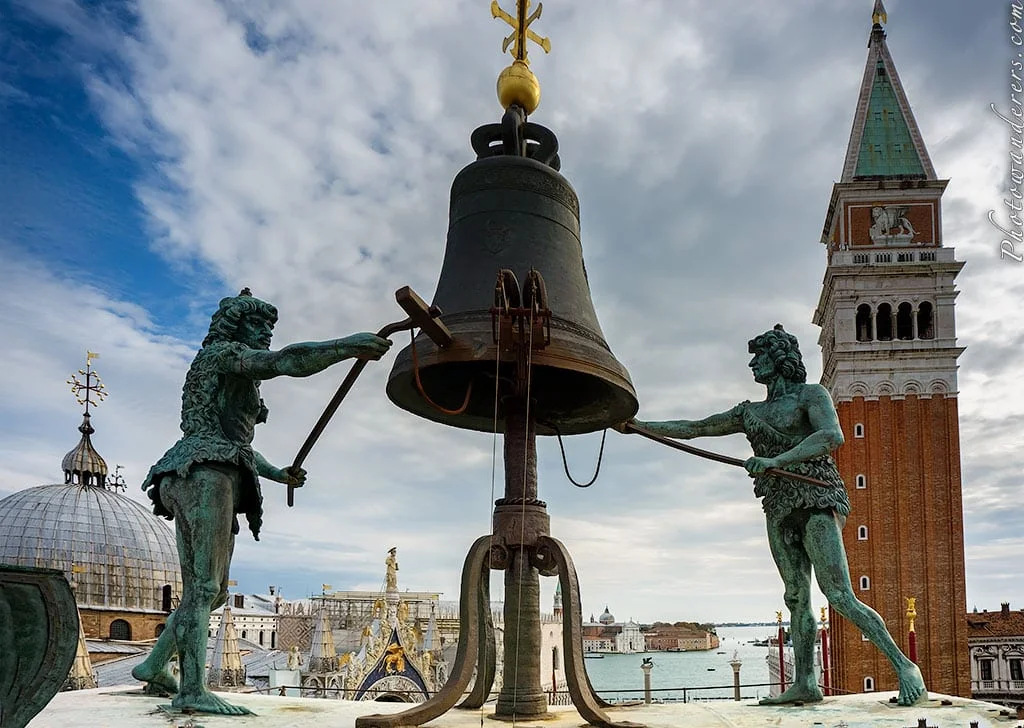
Instead of climbing the Campanile — the obvious choice — we went up the Clock Tower, Torre dell'Orologio. At the very top, two bronze Moorish figures stand ready to strike the bell on the hour. From up there, San Marco and the lagoon spread out below us, framed between their dark silhouettes. Strange and beautiful at the same time.
Tintoretto's Ceiling
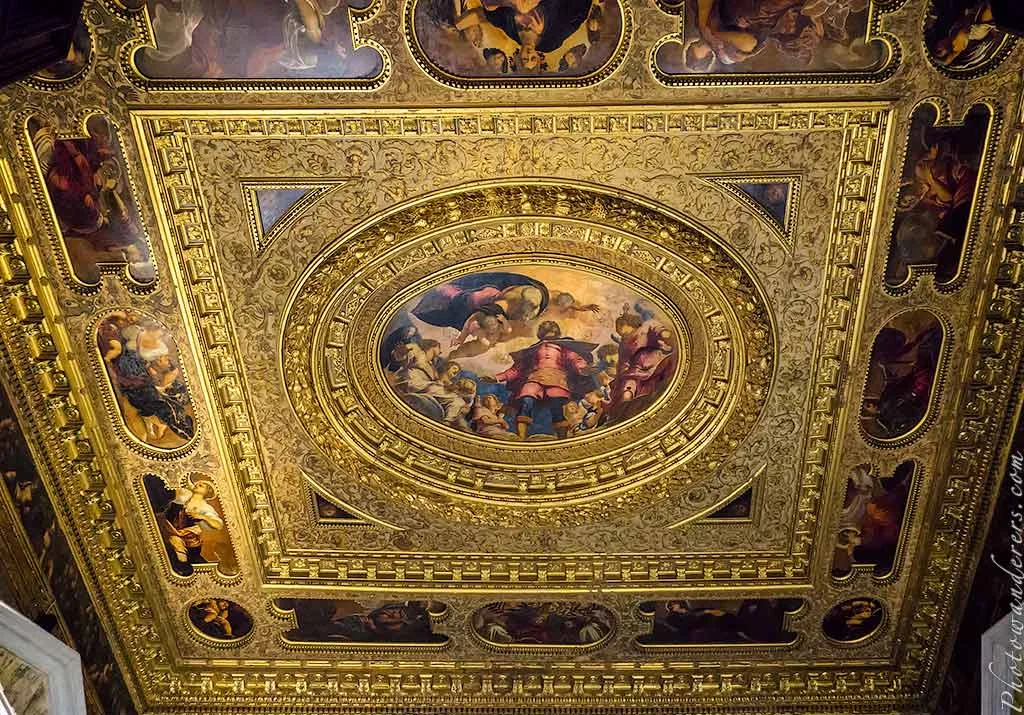
The Scuola Grande di San Rocco is sometimes called the Sistine Chapel of Venice. It's not an exaggeration. Room after room, floor to ceiling, every surface painted by Tintoretto. The scale alone is staggering. On the upper floor, the ceiling is one enormous canvas — the entire Book of Exodus unfolding above your head. The museum thoughtfully leaves mirrors on a table in the corner, angled upward so you can stare at the paintings without breaking your neck.
Voices in a Polyphony
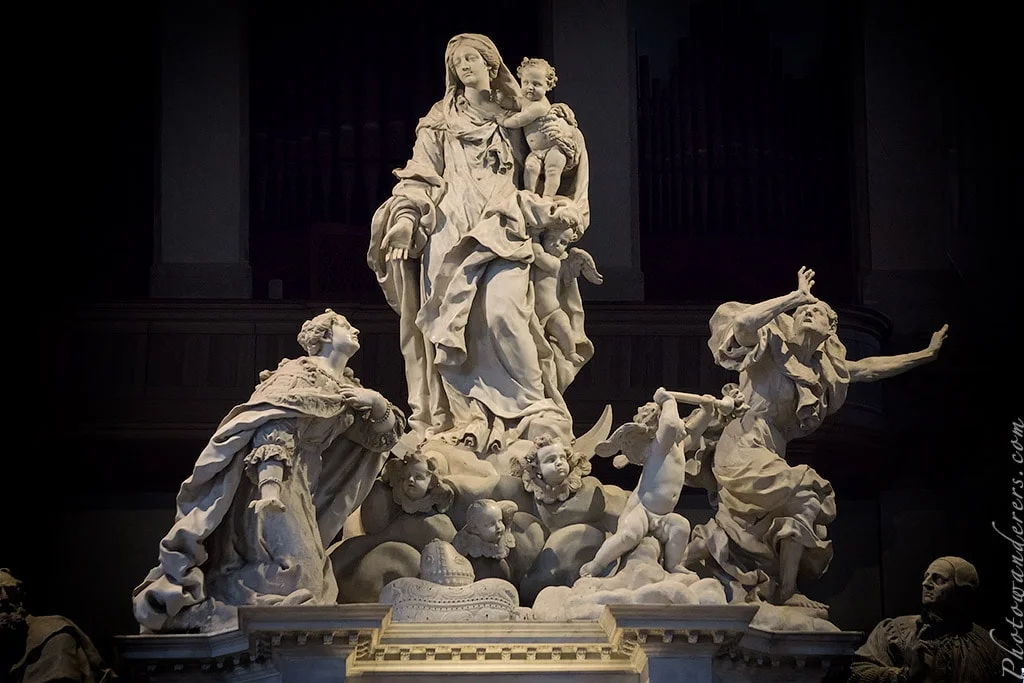
Venice feels like Vivaldi's music to me. The canals are the staff lines. The bridges are rests between the notes. The pointed arches are cadenzas. The gondolas are quarter notes. The church spires are chords. And the churches themselves — one after another, a narrow calle, a bridge, a campo, another door — are voices in a polyphony. Each one distinct. Each one adding its own melody to the whole.
Santa Maria della Salute stopped us at the door — that impossible dome rising straight from the water. San Zaccaria held us in its cool silence.
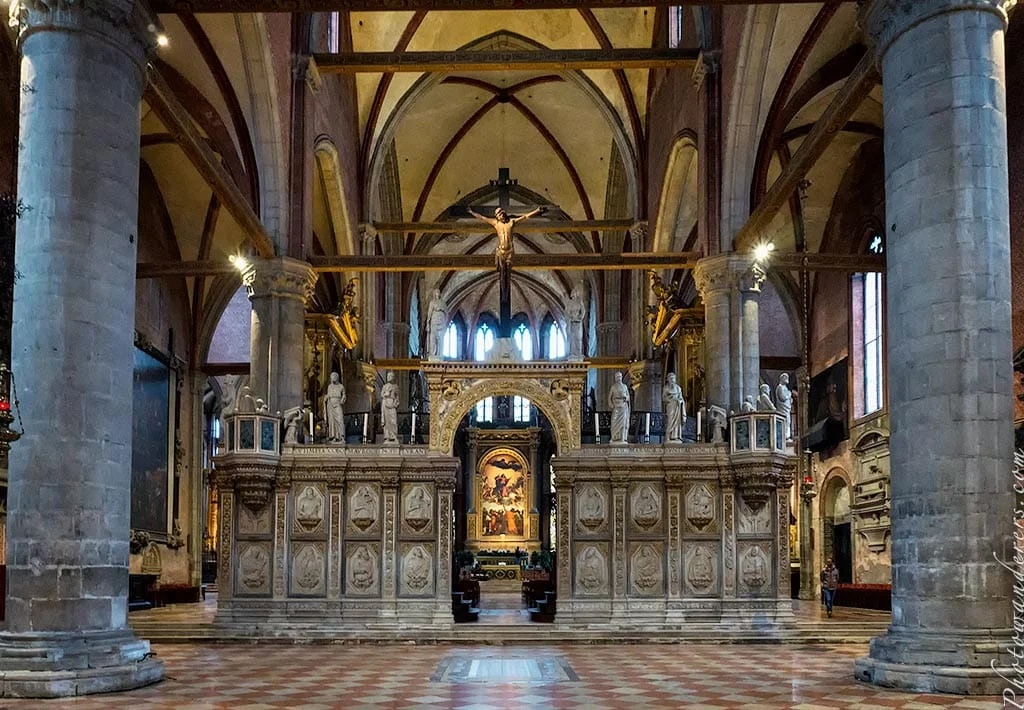
The one that stayed with me longest was the Frari — the Basilica di Santa Maria Gloriosa dei Frari. I walked through the main doors and there it was at the far end: Titian's Assumption of the Virgin, glowing in the half-dark of the basilica as if it has its own light. The painting is framed by the arches of the choir stalls and the central apse. I didn't move toward it. I just stood there.
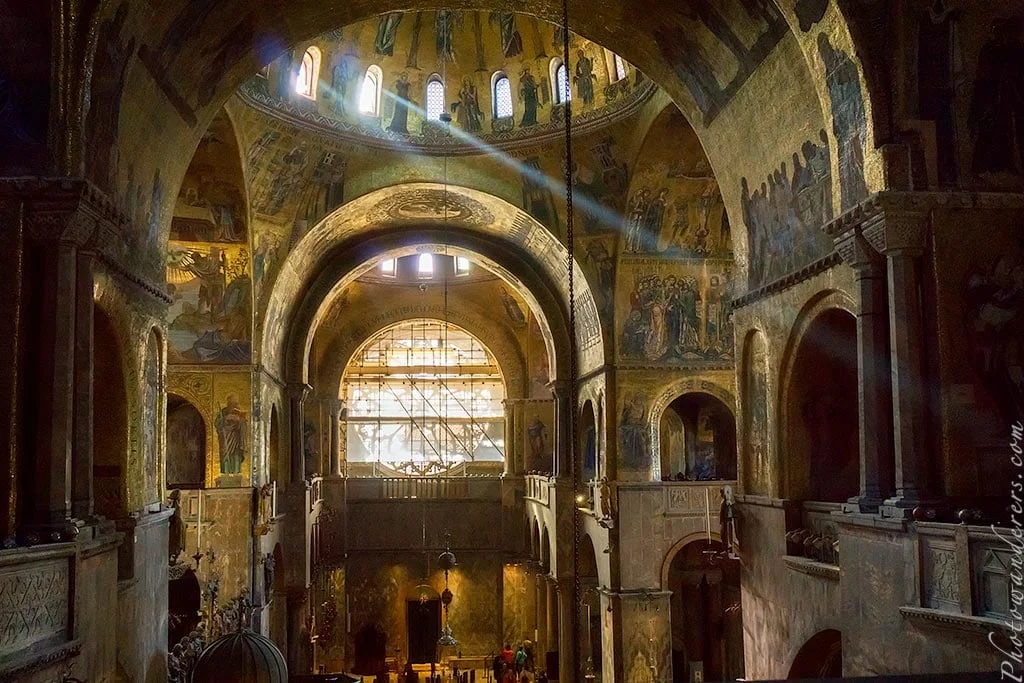
St. Mark's Basilica was surrounded by water the day we visited. Acqua alta — the seasonal flooding that fills the square ankle-deep. Tourists were balancing on raised wooden walkways or simply jumping between puddles. Inside, after the brightness of the flooded square, your eyes need a moment. The first thing I noticed was the mosaic floor — intricate, almost hypnotic, like an Escher drawing in stone. Then a ray of sun found its way through a high window and the gold mosaic on the walls, arches, columns, and domes came alive. Soft golden light, everywhere at once.
Out on the Lagoon
When the fog rolled in and the air turned cold, we took a vaporetto out into the lagoon.
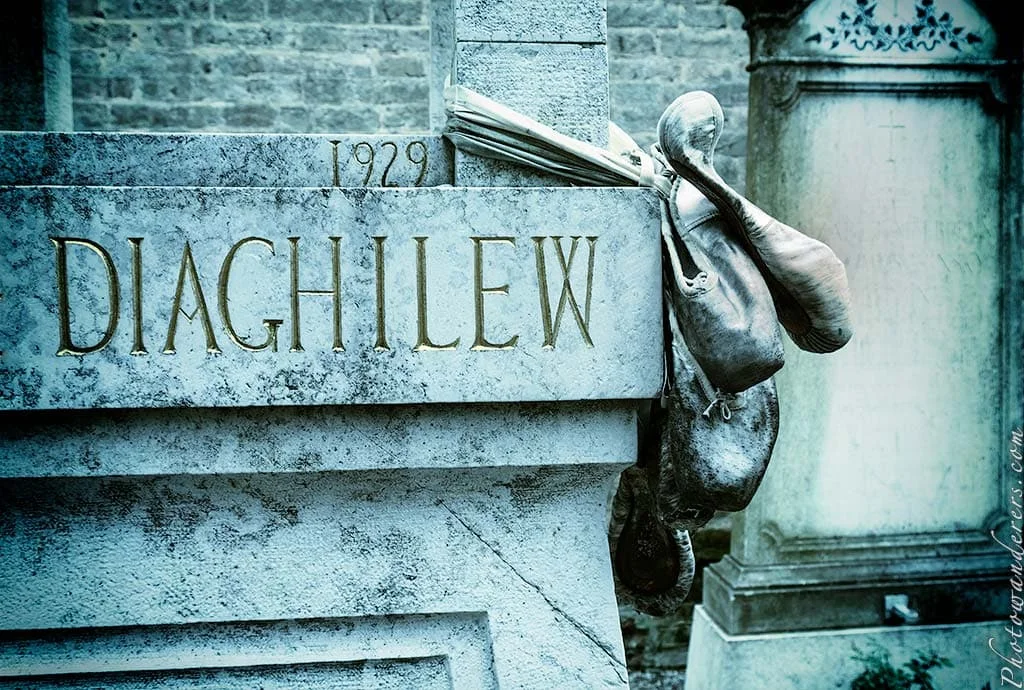
San Michele is the cemetery island — a walled garden of the dead floating in the water just north of Venice. Many famous exiles are buried here: people who couldn't go home, or who chose this city as their last address. Stravinsky. Ezra Pound. And Sergei Diaghilev, the impresario who brought Russian ballet to the world and died in Venice in 1929. Dancers still leave their ballet shoes on his grave.
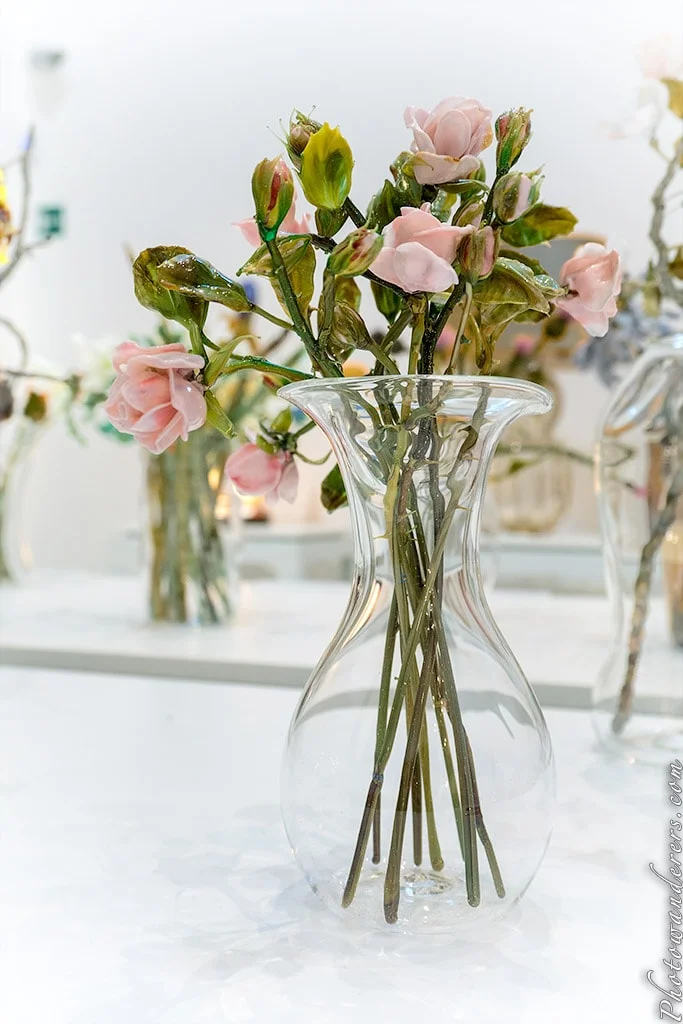
Murano was still wrapped in fog when we arrived. But the glass shop windows glowed through the mist — amber, cobalt, emerald — and tourists drifted toward them the way moths drift toward a light. It's impossible not to stop. We were inside before we'd made any decision at all. We left lighter.
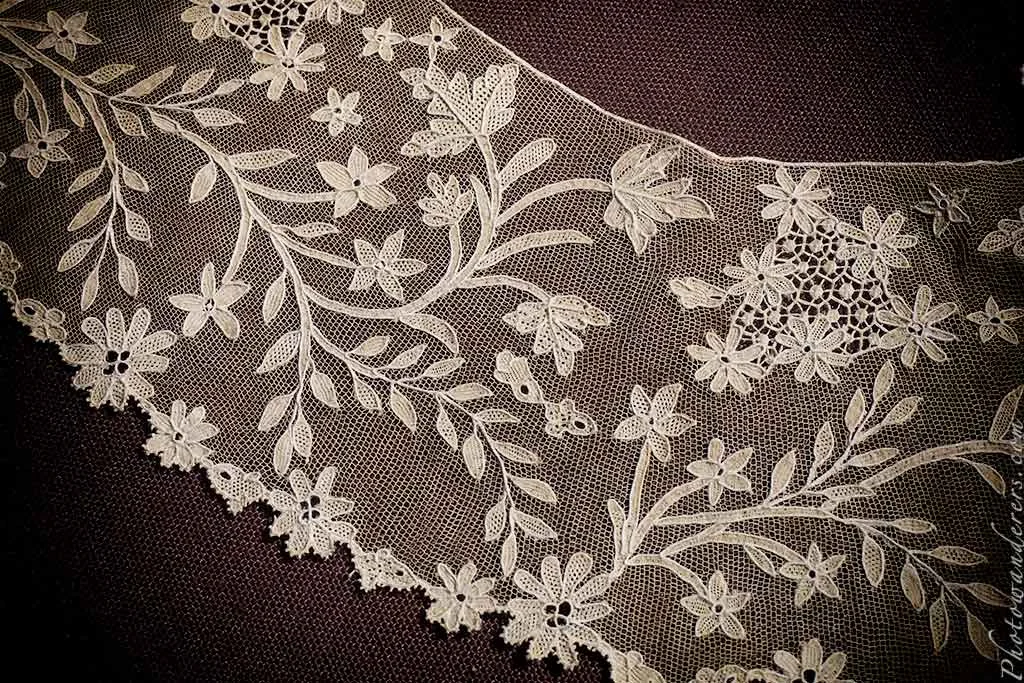
Burano is the one that hits you like a surprise. After the pale stones and grey water of Venice, you round a corner and suddenly: pink houses, yellow houses, turquoise houses, red houses. Fishing nets drying in the cold air. Cats sleeping on doorsteps. And in the shop windows, lace — handmade, impossibly fine, as if woven from moonlight and air. It once dressed the wardrobes of kings and queens. Today each piece is worth a small fortune, still sought by the great fashion houses.
The days dissolved like morning fog on the lagoon.
On the morning we left, before the city woke up, I walked out to Piazza San Marco one last time. The square was empty. The water was still. The gold mosaics on the basilica caught the first pale light.
Venice is the kind of city you leave already planning how to come back.
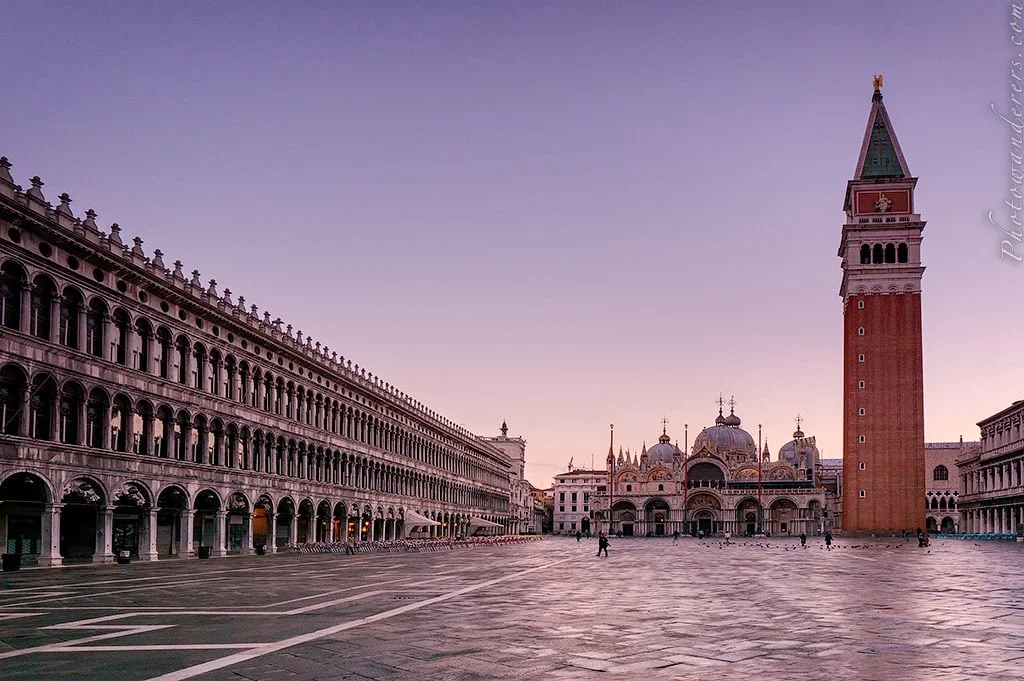
"When they returned to Venice, music thundered on the Piazza. The night was blue, like the Madonna's cloak in the mosaic at Torcello. Only softer, lighter, more luminous."
Comments
Leave a comment